REVIEW
8.1· Great
Botany Manor Review: A Victorian Puzzle Masterpiece in 2026
Botany Manor review reveals a serene Victorian puzzle gem. Does this 1890s botanical mystery still captivate players today? Discover the answer now.

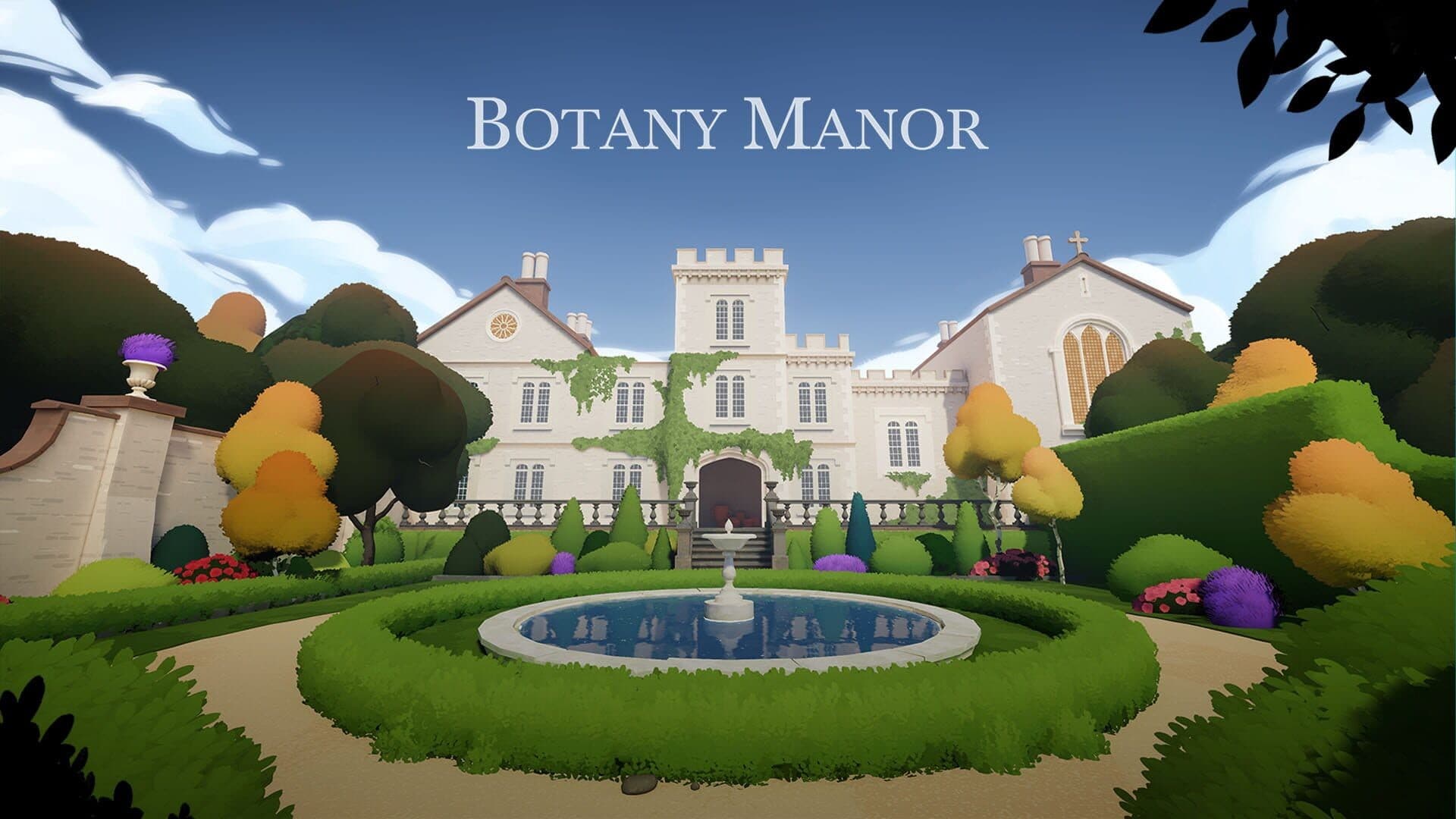
The most satisfying moments arrive without words. Botany Manor is a quietly confident botanical deduction game set in 1890 Somerset. Each plant requires its own environmental recipe: light at one angle, warmth at another, perhaps music to coax the bloom from resistance. The manor itself opens room by room as Arabella finishes Forgotten Flora, and the architecture rewards curiosity with keys tucked behind solved puzzles rather than quest markers on a minimap. In an era of noise, this British indie earns its place through observation alone.
Game Snapshot
| Developer | Balloon Studios |
| Publisher | Whitethorn Games |
| Release Date | 9 April 2024 (PC, Switch, Xbox One/Series X|S); 28 January 2025 (PS4, PS5); 5 February 2026 (Android, iOS) |
| Platforms | Nintendo Switch, Microsoft Windows, Xbox One, Xbox Series X|S, PlayStation 4, PlayStation 5, Android, iOS |
| Price | £19.99 | $24.99 |
| Rating | PEGI 3 | ESRB Everyone |
The most satisfying moments arrive without words. Botany Manor is a quietly confident botanical deduction game set in 1890 Somerset. Each plant requires its own environmental recipe: light at one angle, warmth at another, perhaps music to coax the bloom from resistance. The Victorian estate unfolds gradually as each chapter of Arabella’s botanical study completes, rewarding exploration over linear progression. In an era of noise, this British indie earns its place through observation alone. Period settings that carry weight recall other quiet period pieces like A Plague Tale: Requiem.

Botany Manor wears its Victorian identity openly. The English country estate is rendered with the warm, detailed texture of a period piece: wood-panelled rooms, heavy curtains, brass lamps that cast yellow light against deep greens and mahogany furniture. Each area has a distinct personality shaped by function rather than decoration alone. The library reads like a scholar’s retreat; the greenhouses operate as functional laboratories where foliage spills across workbenches in controlled chaos.
The visual identity extends to the plant specimens themselves. Forgotten Flora is an illustrated research book, and each successfully grown plant fills its corresponding page with detailed botanical art that doubles as narrative reward. The manor unfolds like a physical puzzle box. New wings open once Arabella completes specific entries: keys appear where foliage recedes or hidden doors swing wide after environmental triggers resolve. It communicates without UI clutter. No quest markers litter the screen, and no waypoint system directs exploration; the environment telegraphs what needs adjusting through visual cues alone. A lamp that flickers under a plant pot suggests temperature is the variable. A window shutter blocking sunlight points to light as the solution. The world speaks clearly.
Arabella Greene inherits Botany Manor in 1890, a Somerset estate she must use to complete her botanical research book, Forgotten Flora. The premise is simple: find clues scattered across the grounds and apply environmental conditions to grow rare plant specimens. What follows is not a conventional narrative but a series of quiet revelations pieced together from letters, books, and posters left behind in rooms that open only after each puzzle resolves.
Balloon Studios delivers this story without dialogue or voice acting. The game relies entirely on text, music, and the environment to tell Arabella’s history: a retired botanist navigating professional marginalisation within Victorian England’s male-dominated scientific community. Clues are not just growth instructions; they carry weight about what it cost her to produce this work.
The structure suits the medium. Each plant entry in Forgotten Flora doubles as both puzzle solution and story beat, rewarding completion with narrative context rather than cutscenes. Progression is gated by these discoveries: finishing a specimen unlocks new areas of the manor, expanding the setting as Arabella’s history deepens. The pacing respects the player’s time at approximately four hours for most runs.
 The story earns its place in 2026 by trusting silence over exposition. Players who expect cinematic drama will find it absent; players who follow the trail of letters and research notes discover a precisely drawn portrait of ambition under pressure. The restraint is deliberate and effective. For puzzle games that lean into narrative through environmental storytelling, our best cosy games of 2026 covers the strongest examples in the genre this year.
Value
At £19.99/$24.99 Botany Manor delivers approximately four hours of focused puzzle content for most completions: three to four hours for the main story alone, with a thorough run extending slightly beyond that mark. A completionist playthrough requiring every clue and plant entry pushes towards five hours depending on how quickly environmental puzzles resolve without external guides. There are no DLC plans confirmed at time of writing.
The runtime is short by design rather than omission. Each chapter delivers self-contained satisfaction, and the manor’s room-by-room structure ensures progression feels earned rather than padded. The price reflects that scope honestly: this is a compact experience whose value rests in precision rather than volume. Replay potential sits in speedrunning or clue hunting for those drawn to botany lore; first-time players will find the single-player campaign complete as delivered. For anyone who values their time at four hours of focused, quiet problem solving, that is exactly what this asks. It occupies similar territory to The Case of the Golden Idol, where a single sharp idea sustains the entire runtime without overstaying its welcome.

Technical Notes: Botany Manor Review 2026
Botany Manor runs on Unity and supports PC, Switch, Xbox One, Series X|S, PS4, and PS5, with Android and iOS versions arriving February 2026. No performance modes or resolution targets have been confirmed across platforms. Patch 1.0.3 addressed item persistence bugs where saved objects disappeared upon loading; patch 1.0.2 resolved broader unnamed issues reported at launch. Install size has not been publicly documented for any platform. Load times and frame rate data are unavailable from official sources. The game requires single-player access only with no multiplayer functionality.
FAQ
How long is Botany Manor?
Most players complete the main story in three to four hours. Finishing every optional specimen adds roughly an hour, bringing total completion time to approximately five hours for thorough runs. The pacing suits single evening play sessions or spreading exploration across two shorter visits. No DLC has been announced, and the base game contains all available content at launch.
Does Botany Manor have any combat?
Botany Manor has no combat whatsoever. Every interaction is environmental puzzle-solving: adjusting temperature, triggering sound, positioning light sources to grow plant specimens. There are no enemies, no fail states for any action, and no character progression systems tied to combat mechanics. Players expecting action elements will not find them here; the game focuses entirely on observation and deduction within its single-player structure.
Is Botany Manor available on all platforms?
Botany Manor launched 9 April 2024 on PC, Nintendo Switch, Xbox One, and Xbox Series X|S, with PlayStation versions arriving 28 January 2025. Android and iOS releases followed on 5 February 2026. The game runs on Unity across all platforms in single-player only mode. Patch 1.0.3 addressed item persistence bugs where saved objects disappeared upon loading; no platform-specific performance modes or resolution targets have been confirmed by the developer.
Is Botany Manor difficult?
Botany Manor offers a clear and straightforward approach to its puzzle design with no difficulty settings available. Players must deduce growth conditions from scattered documents without explicit instructions or quest markers, which rewards careful observation over trial and error. The game does not punish mistakes: there are no fail states, and the environment telegraphs what needs adjusting through visual cues alone.
8.1
Great
SpawningPoint Verdict
Review summary
Botany Manor is a precisely tuned puzzle box that respects the player's time and intelligence in equal measure. The Victorian estate expands piece by piece as she fills her research book, with each new plant specimen unlocking further wings of the manor rather than gating progress behind arbitrary keys. Four hours at £19.99 is compact but honest: no filler, no padding, just a sequence of environmental puzzles that reward observation over brute force. The absence of dialogue or voice acting suits the setting and story without exception. For anyone drawn to quiet investigation in 1890 Somerset, this British indie delivers exactly what it promises.