
Game Snapshot
| Developer | Capcom |
| Publisher | Capcom |
| Release Date | 24 March 2023 (PS4, PS5, Xbox One, Windows, macOS) |
| Platforms | PlayStation 4, PlayStation 5, Xbox One, Windows, macOS |
| Price | £49.99 | $59.99 |
| Rating | PEGI 18 | ESRB M (Mature 17+) |
| Genre | Survival horror / Action |
| Length | ~16 hours main story; ~22 hours main + sides; ~36 hours completionist |
| Install Size | ~50 GB (PC) / ~67 GB (PS5) |
Presentation and World Design

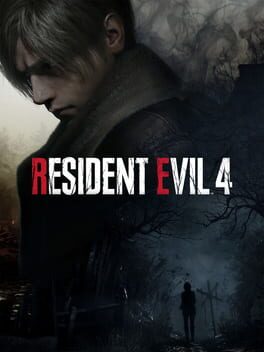
Resident Evil 4 Remake runs on the RE Engine, Capcom's proprietary technology used across recent Resident Evil entries. The engine delivers character models with detailed facial animation and environments that recontextualise original locations into modern survival horror spaces. Leon S Kennedy's expressions convey tension during close encounters; Ashley Graham's reactions to danger carry more weight through improved performance capture work. Villagers in the rural Spanish setting exhibit disturbing detail, turning once-stiff enemy models into grotesque figures whose movements and forms communicate infection visibly. The RE Engine handles foliage rendering, volumetric lighting, and weather effects across outdoor sections without compromising frame stability on supported platforms. Capcom developed this title for PlayStation 4, Xbox One, Windows, and macOS alongside current generation hardware, scaling visual quality accordingly per platform capabilities. World design follows the original's structure faithfully whilst expanding environmental storytelling through object placement and background detail. Each location retains its identity from the source material but feels denser with interactive elements that reward exploration beyond the critical path. The presentation does not reinvent Resident Evil 4 visually; it clarifies what the original intended to show. For how Capcom's RE Engine compares across current horror releases, our Atomfall review covers a different approach to environmental storytelling in the same genre.
Gameplay and Combat
The parry mechanic transforms how encounters play out against melee threats. Leon's knife blocks attacks from single enemies reliably; chainsaw swings require precise timing, and missed attempts penalise heavily. The risk creates tension in every room. Gunplay remains the foundation of each section, but aiming now requires more deliberation than simply pointing a reticle at heads. Enemies stagger under shotguns or rifles, creating openings for melee follow-ups that save ammunition when supplies run thin.
Inventory management operates through the Attache Case grid system familiar from 2005. Weapons occupy multiple slots based on size and power; consumables stack in shared spaces. Organising this space before each area transition forces planning rather than improvisation. The case demands constant attention. Merchant upgrades apply improvements cumulatively, so investment decisions carry weight across chapters. A poorly spent upgrade chain leaves later sections frustratingly scarce of firepower options.
Ashley's escort sections integrate with combat through contextual prompts and scripted sequences that expand her character arc beyond passive vulnerability. She avoids becoming a liability by contributing to puzzles or distracting enemies at key moments. Luis S. Sera appears in story-critical chapters, his presence shifting the tempo from solo survival horror towards narrative-driven action set pieces. The shift works. Mercenaries mode unlocks separately as an optional wave-defence activity for players who complete the main campaign and seek additional challenge without narrative context. Aim assist options accommodate different skill levels whilst keeping the core mechanical loop intact across all difficulty settings.

The combat loop draws comparisons with other action-heavy releases in our 2025 games coverage, where positioning and resource management define the difficulty curve.
Story and Characters
Leon S Kennedy, a US government agent six years after the Raccoon City disaster, travels to a remote Spanish village searching for Angela Winslow, daughter of president Doris Sherwin. He finds her kidnapped by villagers controlled by Las Plagas parasites rather than zombies. The parasite mechanic reframes the horror: enemies speak, coordinate, and wield tools instead of shuffling aimlessly. This shift makes every corridor crossing feel calculated rather than automatic.
The story unfolds through playable chapters, cutscenes, and environmental storytelling. Luis S. Sera, a former researcher tied to the organisation behind Las Plagas, appears in mid-game sections to deepen lore context without slowing Leon's momentum. The script clarifies character motivations that felt thin in 2005 while retaining the camp tone of the original. Ada Wong returns as an enigmatic operative whose loyalties shift between employers across the narrative, introducing stealth interludes and different enemy types. Osmund Saddler, leader of Los Iluminados, provides a named antagonist with clear ideology rather than acting as a generic boss figure.
The remake's story earns its runtime by grounding bizarre set pieces in stronger character writing. The plot is not complex: it is legible. Leon's reactions to the village reveal human cost behind the action, making his rescue mission feel personal rather than procedural. The narrative delivers what survival horror needs: enough context to make each area transition meaningful and a villain whose plan justifies why this specific setting exists.

Value and Longevity
The main campaign runs approximately 15 to 20 hours depending on difficulty and side content completion. Speedrunners clear it faster; thorough players exploring every corner will extend that runtime closer to the upper end of that range. Mercenaries mode adds replay value through unlockable characters, weapons, and challenge maps for post-completion engagement. The loop is satisfying.
New Game Plus carries over upgrades, treasures, and unlocked weaponry from previous runs, encouraging multiple playthroughs with different loadouts or higher difficulties. Separate modes such as Professional offer a harder experience without New Game Plus perks for players who want to restart from scratch under tougher conditions. Treasure hunting across chapters adds collection depth beyond the main story path.
At its base price point, the content-to-cost ratio is solid. The length sits between most AAA releases and shorter indie experiences, but replay features extend value meaningfully. Completionists can log dozens of hours without exhausting available activities. Players who engage only with the core narrative will spend less time than competitors at similar prices, though quality outweighs raw runtime here.

The value proposition is straightforward: a tightly paced campaign backed by replay modes that reward investment rather than padding runtime. Mercenaries is the strongest post-story option, with unlockable characters and maps providing a distinct scoring-focused loop. New Game Plus and Professional difficulty offer further reasons to return, particularly for players chasing rare treasures or attempting speedruns. For context on how RE4's replay structure compares with current releases, our Assassin's Creed Shadows review covers a very different approach to longevity.
Technical Notes
The RE Engine remains Capcom's strongest technical asset, delivering fast load times and stable performance across platforms. Frame rate options range from quality modes prioritising visual fidelity to performance settings that favour responsiveness at the cost of resolution clarity. Ray tracing adds subtle depth to environments but requires more hardware resources on PC. The install footprint sits around 50 GB depending on platform and installed content packs, which is reasonable for a modern release. Minor bugs appear occasionally in physics interactions or AI pathfinding during chaotic encounters, though they rarely disrupt progression. No critical launch issues reported.
Final Word
The moment the Red9 kicks in after a precise reload, everything clicks into place. Resident Evil 4 Remake earns its price through parrying mechanics that turn frantic encounters into rhythmic puzzles and atmosphere that makes every door feel like a gamble. Skip it if you demand full narrative transparency; Ada's motivations will frustrate rather than intrigue. Play it for the kind of action horror where resource management bites back, forcing hard choices between saving ammunition or spending treasure on upgrades. This is Capcom at its most confident, delivering remakes that outshine original inspirations through mechanical depth and tonal consistency across every chapter.
FAQ
Resident Evil 4 Remake takes approximately fifteen to twenty hours for a first playthrough on standard difficulty. Completionists targeting all collectibles, side quests, and achievements will reach closer to thirty hours. Mercenaries mode adds indefinite replay value through score-chasing runs. New Game Plus carries over weapons and upgrades, speeding subsequent completions while unlocking additional content.
Standard difficulty balances survival horror tension with accessible combat for most players. Professional difficulty strips healing items to a single slot and enforces permadeath in Mercenaries mode, demanding mastery of the parry system and resource management. Assisted difficulty reduces enemy aggression and increases ammunition drops for those who prefer story over challenge. Multiple options ensure broad accessibility across skill levels.
The remake replaces fixed camera angles with a fully controllable third-person perspective and introduces contextual melee counters via the knife parry mechanic. Environmental puzzles have been reworked for greater complexity, while Leon's movement set gains sprinting and dodging options absent from the 2005 release. The RE Engine rebuilds every location with modern fidelity without sacrificing the original game's gothic atmosphere or chapter structure.
Please note that some links in this article are affiliate links. If you found the coverage helpful and decide to pick up the game, or anything else for your collection, through one of those links, we may earn a commission at no extra cost to you. We use this approach instead of filling Spawning Point with intrusive display ads, and rely on this support to keep the site online and fund future reviews, guides, comparisons and other in-depth gaming coverage. Thank you for supporting the site.