
Opening
Wytchwood is the only cosy game where the reason to gather ingredients is not profit but justice. Purpose makes all the difference. Canadian developer Alientrap replaces the farm with a forest and the farmer with a bad-tempered elderly witch who wakes up owing a demon twelve wicked souls. Most cosy titles ask you to tend, wait, and repeat: plant the seed, harvest the crop, buy the upgrade, begin again. Wytchwood asks you to brew a curse for the greedy and bake a pie for the arrogant. Four years on from its December 2021 launch, this gothic outlier remains the sharpest answer for anyone who wants the meditative loop of foraging and crafting without the passivity that accompanies it, and 2026 is the right time to find it.
Game Snapshot
| Developer | Alientrap Games |
| Publisher | Whitethorn Games |
| Release Date | 9 December 2021 (PC / consoles) |
| Platforms | PC (Steam, GOG, Epic), macOS, Nintendo Switch, PS4, PS5, Xbox One, Xbox Series X/S, Android, iOS |
| Price | £15.49 | $19.99 |
| Rating | ESRB Everyone 10+ | PEGI 7 |
| Genre | Crafting adventure |
| Length | ~10 hours (main story); ~10–15 hours (main + side content) |
| Install Size | ~1 GB (PC) |
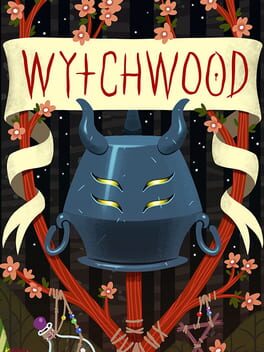
Wytchwood's most immediately striking quality is its art direction. The game uses a paper-doll aesthetic, layering flat illustrated characters against richly detailed environmental backgrounds drawn in an autumnal palette of burnt oranges, deep greens, and ink-dark blues. The style evokes a storybook left out in the rain: colourful, slightly uncanny, and consistent in tone across every biome. Characters are memorable on sight. The witch herself, with a kettle on her head and a permanent scowl, is one of the most distinctive protagonists in the genre.
The world spans roughly eight distinct areas, including a swamp, fields, a village, a market, a graveyard, the docks, and forested mountain passes. Each biome has its own colour register, ambient population, and ingredient set, and the game unlocks them progressively as the witch fulfils her contract's demands. Fast travel between discovered locations prevents backtracking from becoming the chore that kills pacing in similar titles. The areas are compact: Wytchwood is not interested in a sprawling open world. It is interested in a thoroughly inhabited small one.
A Witch Eye Sense mode highlights ingredients and interactive objects in a soft environmental glow, reducing the trial-and-error that makes ingredient-hunting tedious in crafting games. One limitation is that interior spaces, which the game's exterior environments suggest are rich and detailed, rarely live up to that promise. The contrast between the ornate world outside and the occasionally sparse interiors is a recurring minor inconsistency across the game's runtime.
Wytchwood Gameplay and Crafting
##IMAGE:Wytchwood — Grimoire crafting system and soul collection gameplay mechanics:wytchwood-02-1920.jpg##
There is no combat in Wytchwood. None. The witch's power comes entirely from preparation: what she has brewed, what she has gathered, and what she can conjure from her Grimoire when a villain stands between her and a soul. This is Alientrap's defining creative commitment, and it holds.
The Grimoire is a recipe book that expands as the witch surveys creatures, flora, and objects in the environment. Recipes unlock progressively, each requiring gathered ingredients that can only be found in particular biomes. A completed recipe produces a potion, spell, or enchantment that advances a quest, solves a puzzle, or transforms a problem character. The cauldron, accessible anywhere once materials are gathered, allows fast item production in the field.
Each of the twelve souls the witch must collect drives a miniature quest chain: a wrongdoer exists in a specific biome, their weakness requires a specific preparation, and the path to that preparation threads through other biomes for component ingredients. One ingredient leads to a recipe, the recipe leads to a confrontation, the confrontation leads to a soul. Purpose is never absent from the gathering.
Each villain encounter requires a crafted solution rather than a button sequence: baking a pie to humble an arrogant character, brewing a transformation potion for a greedy one, crafting a curse to expose a deceiver. The solutions are telegraphed clearly enough to feel fair without eliminating the satisfaction of working them out. Foraging as the basis for problem-solving gives the gathering loop a weight that farming sims rarely achieve.
Where the momentum breaks is in the closing hours. Required ingredients become rarer, gathering spots grow farther apart, and the previously purposeful system stiffens into repetition. The best cosy games of 2026 include longer experiences without this problem, but few maintain Wytchwood's narrative momentum through the first two-thirds of the game.
Story and Characters
##IMAGE:Wytchwood — gothic fable story characters and witch protagonist in the demonic contract narrative:wytchwood-03-1920.jpg##
Wytchwood's premise positions it inside a gothic fable tradition. The witch wakes from a long sleep to find a demon goat has claimed her debt: deliver twelve wicked souls or remain bound. She is not heroic. She is pragmatic, irritable, and not particularly interested in the moral complexity of the people whose fates she decides. That unsentimental quality is what distinguishes the narrative from the cheerful register of most cosy games. The tone is closer to Angela Carter than Studio Ghibli.
Each of the contract's twelve targets is drawn from a familiar fairy-tale archetype given a dark contemporary twist. The writing handles this with dry wit, leaning into the contradiction between the witch's monstrous methods and her evident care for the ordinary people those methods protect. The payoff scene involving the Sleeping Maiden and the game's reveal about the witch's true nature lands well, though it requires a patience with exposition-heavy dialogue that not every player will share.
The supporting cast is thinner than the premise promises. Individual characters receive strong introductions and clear motivations, but the game's brevity means few of them develop beyond their defining trait. This is characteristic of a ten-hour experience: the scope does not allow the layered characterisation of longer games like Venba, though both share the instinct to use a craft-based mechanic as the primary storytelling vehicle.
Value and Longevity
##IMAGE:Wytchwood — value and runtime on PC Steam and Nintendo Switch:wytchwood-04-1920.jpg##
Wytchwood is a short game. The main story runs approximately ten hours, with thorough side exploration extending that to twelve or fifteen hours at most. At £15.49 / $19.99 it is priced above comparable short experiences in the indie cosy space, though the price has been discounted heavily and frequently since launch, often reaching 75% off on PC. At full price, the hours-per-pound ratio is thinner than Dorfromantik or Unpacking at equivalent price points.
Steam holds 93% positive from over 2,700 reviews. There is no DLC and no post-launch content has been added. Replayability is limited: the Grimoire fills on a fixed path, the souls are collected in a set order, and there are no branching outcomes or alternative endings that encourage a second run. For players who prefer a focused, complete short experience over an open-ended long one, that is a fair trade. For players expecting ongoing engagement or replay motivation, the value calculation is less favourable.
Technical Notes
Wytchwood runs cleanly across all supported platforms. On Switch, the paper-doll art style scales to both handheld and docked output without degradation, and the compact install size keeps load times brief. On PC, system requirements are minimal. The soundtrack is a strength: a gentle acoustic score shifts register between biomes, and multiple reviews cite it as the game's most consistently effective element.
A subtle frame-rate jitter on Switch has been noted in reviews, though it does not affect gameplay. The game has no accessibility options beyond subtitle display and basic audio settings, which is a notable gap for a title with a text-heavy narrative. Controls are remappable. The February 2024 mobile port for iOS and Android runs well, placing Wytchwood in the conversation for top Switch 2 cosy picks and mobile recommendations for 2026.
Final Word
Wytchwood's ten hours deliver something genuinely uncommon in the cosy genre: a gathering system where every ingredient serves a specific act of justice rather than a market stall. The clearest image: the moment you hand a character a pie brewed from a dozen foraged ingredients, watch their arrogance crumble, and feel the satisfaction not of winning a fight but of solving a person. That specificity of purpose is what makes Wytchwood worth finding in 2026, even if the closing section overstays its welcome and the price-to-length ratio demands a sale. Seek it out if passive farming loops leave you cold and action games ask too much. This is the space between, and Wytchwood occupies it alone.
Please note that some links in this article are affiliate links. If you found the coverage helpful and decide to pick up the game, or anything else for your collection, through one of those links, we may earn a commission at no extra cost to you. We use this approach instead of filling Spawning Point with intrusive display ads, and rely on this support to keep the site online and fund future reviews, guides, comparisons and other in-depth gaming coverage. Thank you for supporting the site.