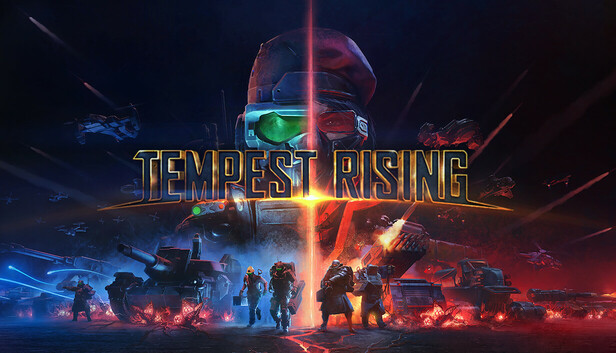
Tempest Rising feels like the game many real-time strategy fans quietly hoped someone would make once Command & Conquer went dormant. Slipgate Ironworks and 3D Realms have built a deliberately old-school, base-building RTS that borrows freely from Westwood’s playbook, then layers on modern production values, an Unreal Engine 5 backbone, and a hearty 22-mission campaign across two playable factions.
This is not a reinvention of the genre so much as a carefully tuned celebration of it. You unpack an MCV, string power lines, harvest glowing Tempest vines, and trade artillery barrages over key choke points, all to a pounding soundtrack led by C&C legend Frank Klepacki. The question is not whether Tempest Rising feels familiar. It is whether that familiarity is sharp enough to matter in 2025.
Game Snapshot
Developer: Slipgate Ironworks & 2B Games
Publisher: 3D Realms & Knights Peak
Release Date: 17 April 2025 (Windows)
Platforms: PC (Windows, via Steam and other stores)
Price: £34.99/$39.99 (Standard Edition RRP)
Rating: PEGI 12 (no confirmed ESRB rating at time of writing)
Genre: Real-time strategy (classic base-building RTS)
Length: ~15-20 hours (both story campaigns on standard difficulty) and ~25-30 hours (campaigns plus skirmish and challenge content)
Install Size: ~45 GB on PC (SSD recommended)
Presentation and World Design
Set in an alternate 1997 where the Cuban Missile Crisis escalated into a nuclear third world war, Tempest Rising’s fiction leans into cold-war pulp: irradiated landscapes, mysterious Tempest vines, and two superpowers locked in a proxy conflict over a miracle energy source.
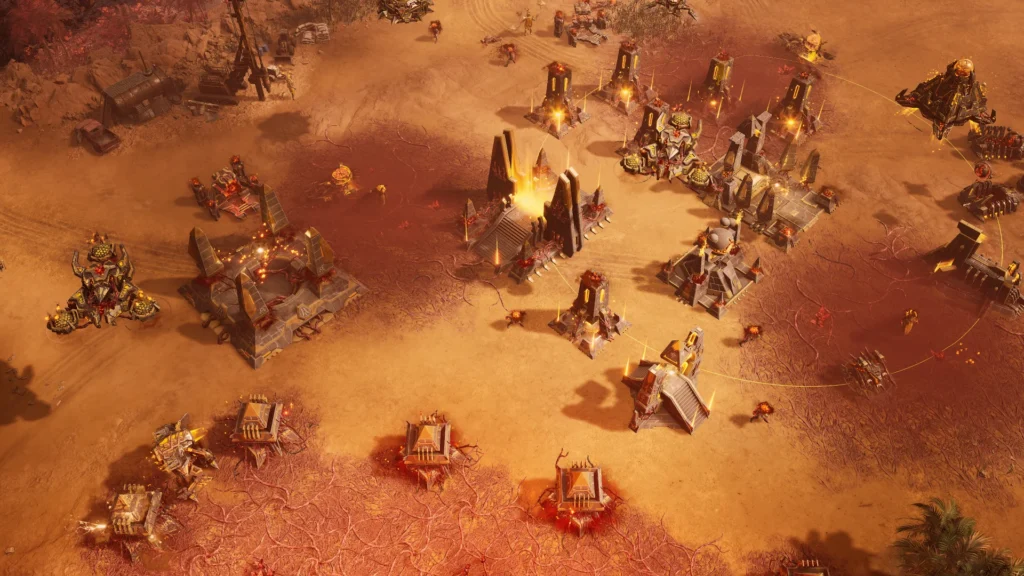
The isometric presentation is unapologetically retro. Bases are crisp and readable, with clear silhouettes and exaggerated faction identity: GDF’s clean high-tech architecture against the Dynasty’s brutalist war machines. Explosions shower sparks across the battlefield, vehicle headlights rake through smoke, and Tempest fields pulse with an eerie green glow. Digital Foundry notes that, while the game skips headline UE5 features like Nanite and Lumen, the end result is a clean, performant look that suits an RTS camera far better than many over-ambitious experiments.
Story sequences are rendered in-engine as briefing rooms and tactical maps rather than FMV, and character models are detailed enough to sell the fiction even if you occasionally miss the hammy acting of 90s C&C. A few blemishes remain, such as half-rate animations on some units and occasional texture pop-in when flicking across the map, but overall presentation lands squarely in the “modernised classic” sweet spot.
Gameplay and Combat
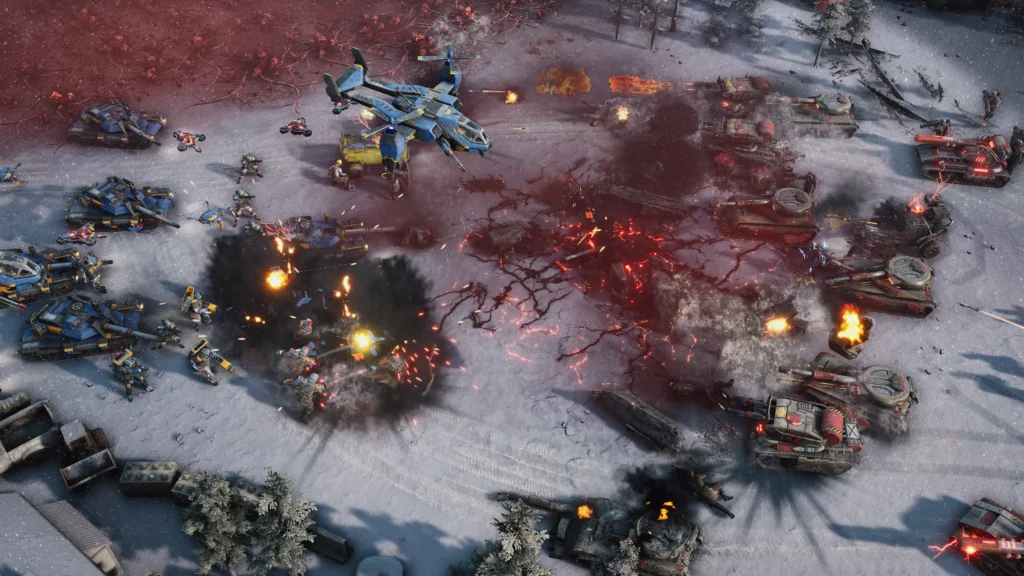
At its core, Tempest Rising is comfort food RTS. You unpack an MCV, lay out power and production buildings on a grid, and then race to secure Tempest fields that fuel your economy. Each structure slot, support power, and tech unlock feeds into the familiar rhythm of expanding your base while probing the enemy’s defences.
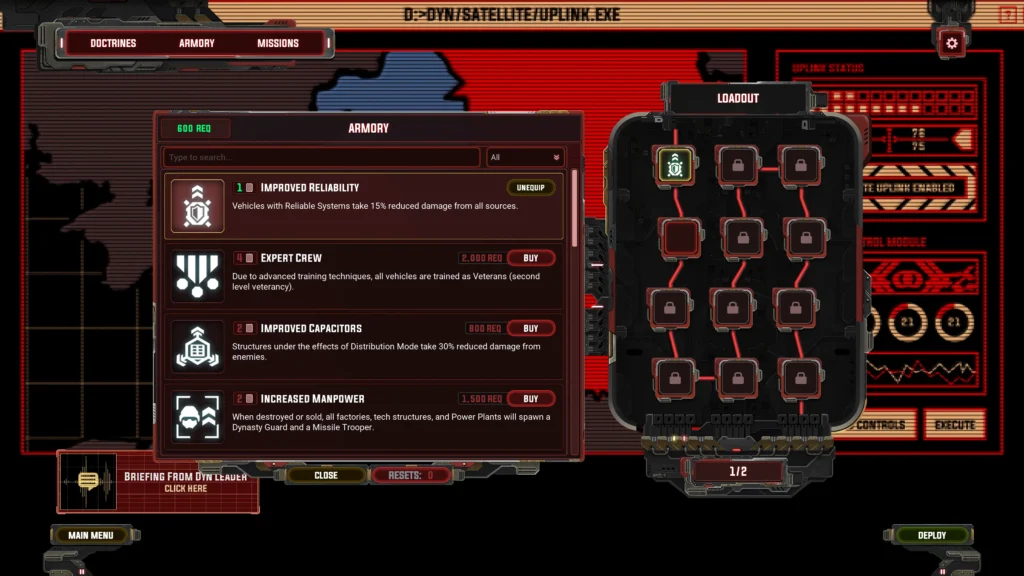
The two playable factions, Global Defence Force and Tempest Dynasty, play differently enough to matter. GDF leans into mobility and combined-arms synergy, with flexible armour and powerful support powers, while the Dynasty favours heavier armour, flamethrowers, and brutal, attritional pushes. Tech trees and unit abilities add a dash of Blizzard and Relic-style depth on top of the C&C scaffolding, creating a satisfying layer of micro choices in otherwise familiar engagements.
Mission design across the two 11-mission campaigns provides welcome variety: tight defensive stands, infiltration ops with limited forces, and sprawling base-trading slugfests. Difficulty ramps up sharply, particularly on higher settings where constant multi-front pressure and aggressive AI can overwhelm rusty commanders. Several reviewers and players highlight just how demanding the game becomes once you are juggling economy, tech, and multiple attack groups in real time.
Multiplayer gives you standard skirmish, ranked 1v1 and 2v2, and now 3v3 matches after a series of post-launch updates, alongside sandbox options and adjustable population caps. Balance patches like the “Rally and Recon” update have significantly refined tech pacing and faction identity, and continued support keeps the meta evolving.
Story and Characters
Tempest Rising’s story is more than dressing but less than the star of the show. The broad strokes are appropriately pulpy: the GDF, a NATO-style coalition, and the Tempest Dynasty, a bloc of states scarred by nuclear fallout, both see the Tempest resource as their key to survival and dominance. Campaigns alternate between these perspectives, letting you see the conflict from opposing ideological angles.
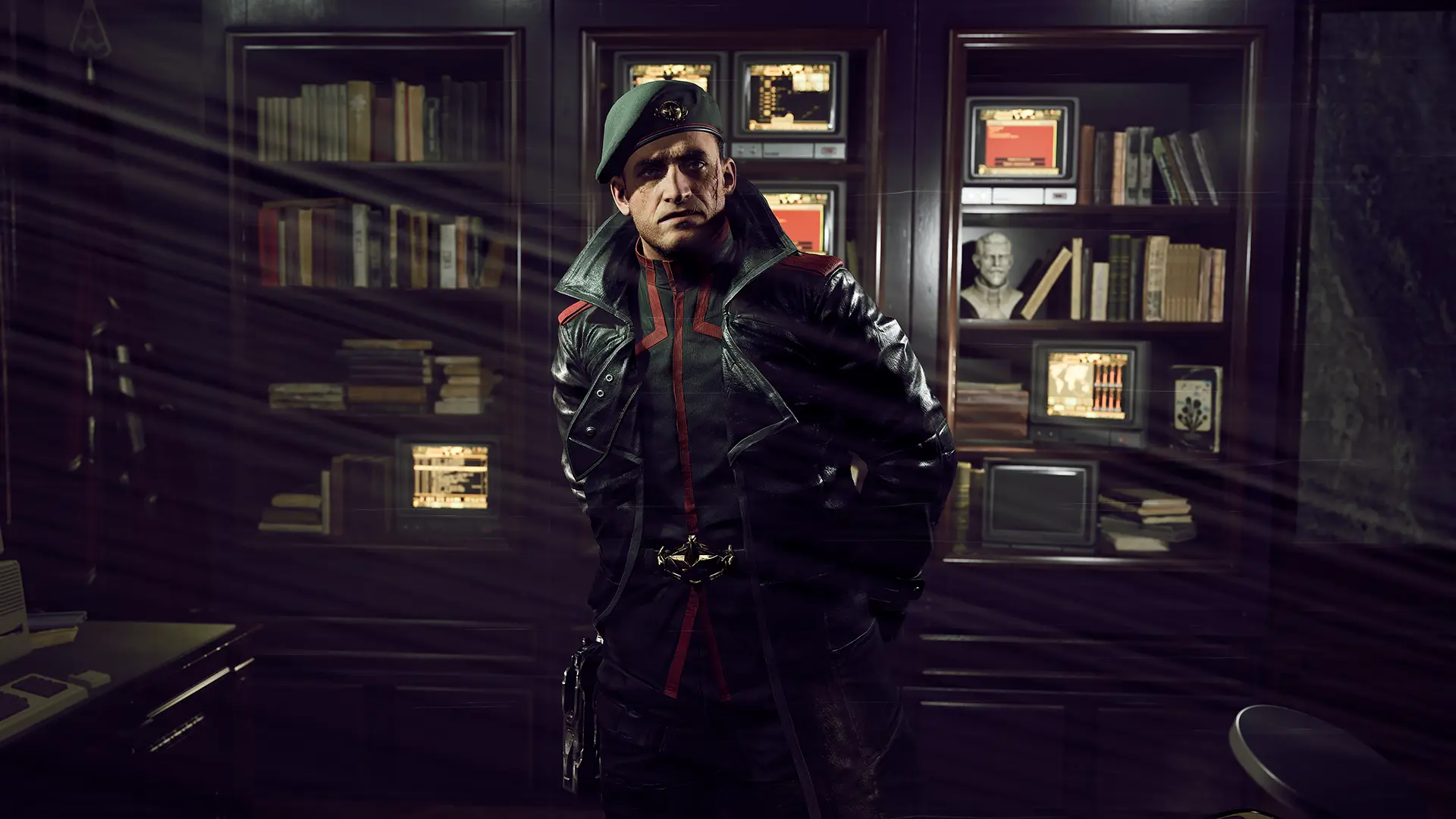
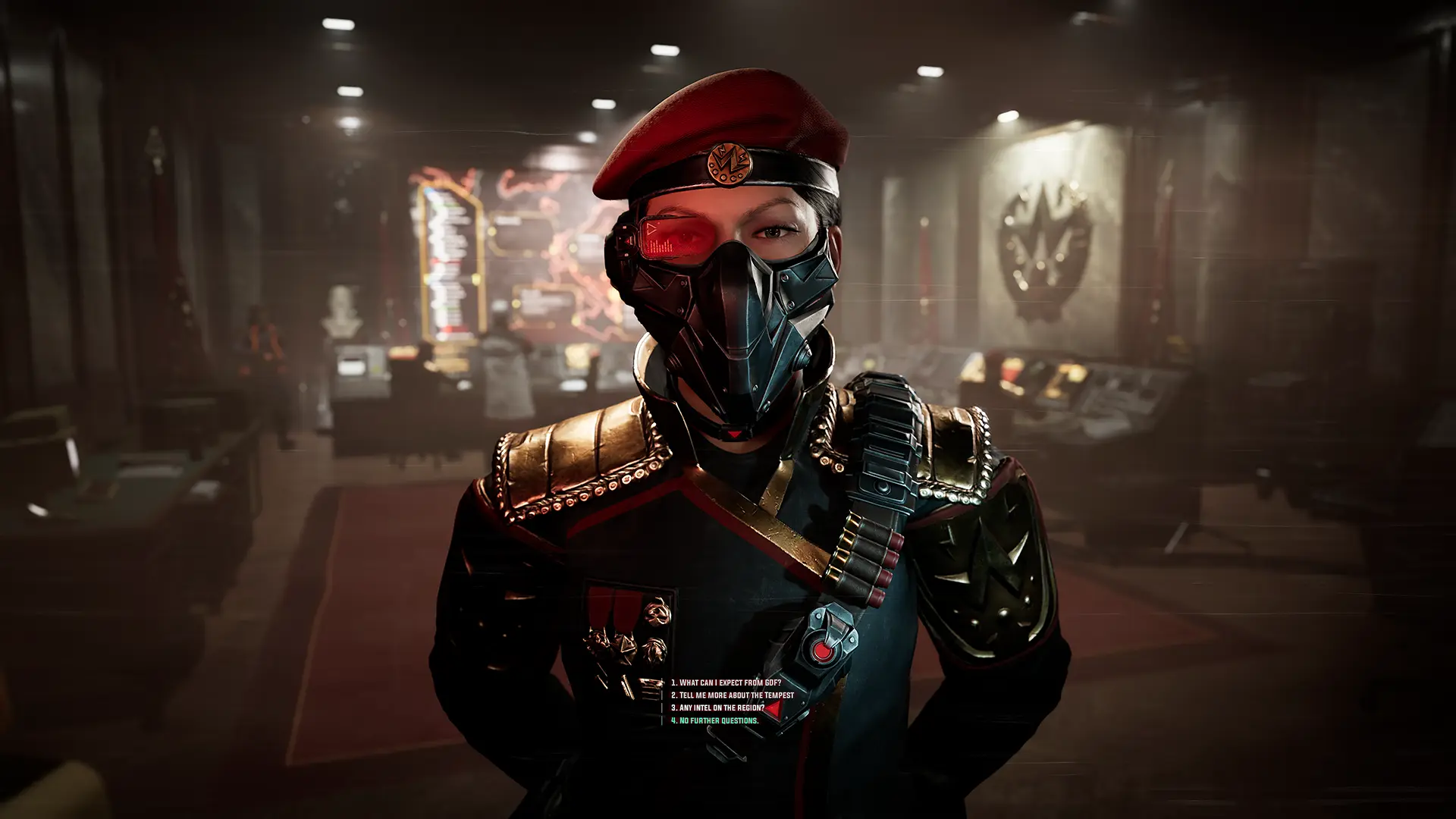
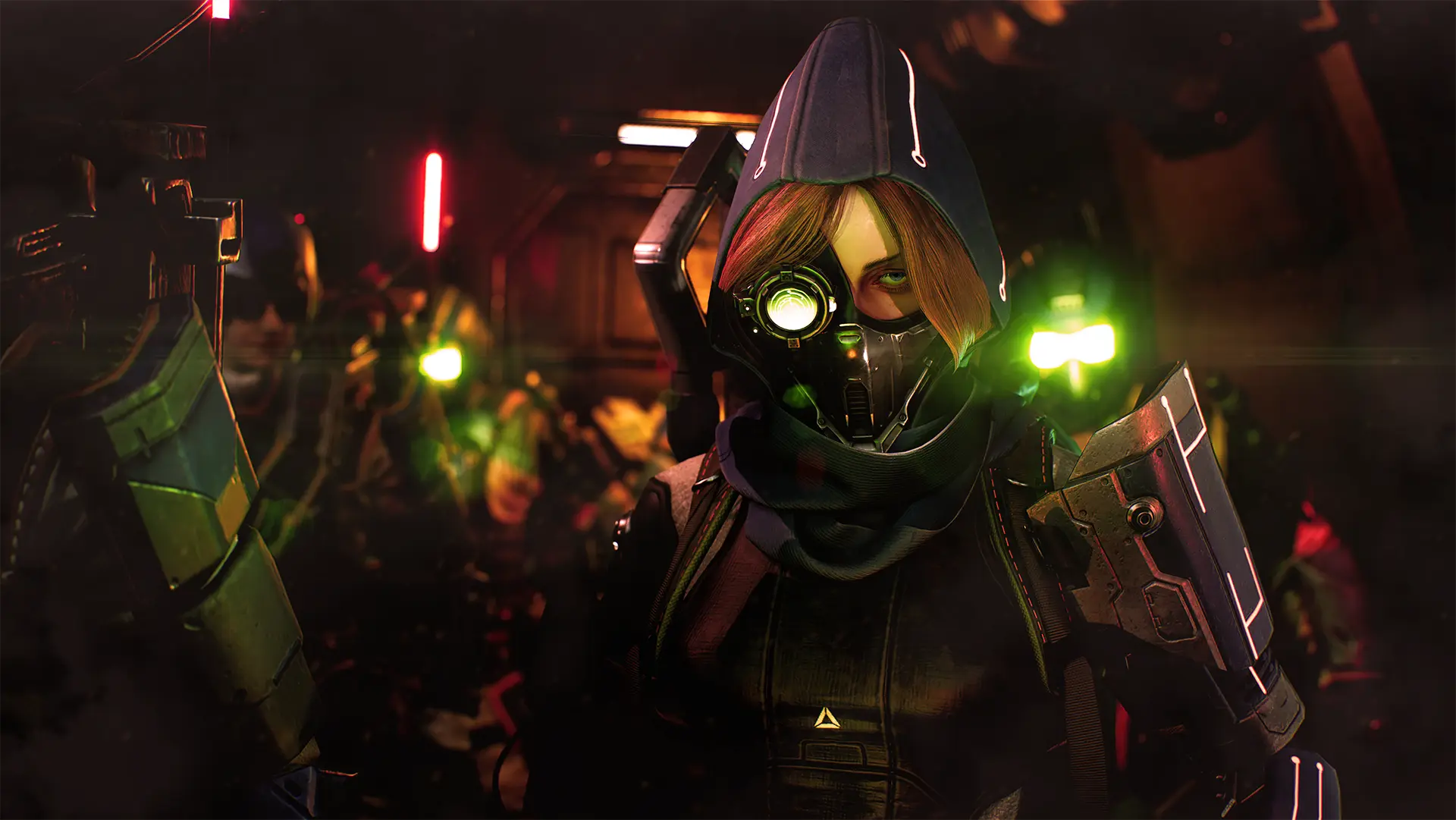
Briefings play out via talking heads and stylised maps, channelling the cadence of classic C&C without the FMV. Characters are sketched in broad strokes, from stern GDF brass to fervent Dynasty commanders, and they mostly work as mission anchors rather than complex personalities. The in-engine scenes have solid staging and voice work and rarely overstay their welcome, even if they never quite achieve the campy charm of 90s C&C.
The wider lore, tying into the Bombshell/Ion Fury universe, is more of a bonus for existing fans than essential reading. For most players, the story succeeds by giving just enough context to justify the next strike, defence, or desperate resource grab.
Value and Longevity
Between two 11-mission campaigns, skirmish, and a fleshed-out multiplayer suite, Tempest Rising offers a robust amount of content. Expect roughly 10–15 hours to see both campaigns on standard difficulty, with the upper end stretching towards 20 hours once you factor in retries, higher difficulties, and optional objectives.
Beyond that, the game’s lifespan depends on how invested you are in comp-stomp and ranked ladders. Post-launch support has added new maps, a 2v2 ranked queue, 3v3 battles, active pause and adjustable game speed in single-player, and expanded spectator tools, all of which significantly improve replayability and quality of life for both casual and competitive players.
Critically, Tempest Rising has landed well: Metacritic hovers around 80 from nearly 40 critics, OpenCritic puts it at 79 from 40-plus, and Steam user reviews sit at a Very Positive rating with several thousand reviews. The Game Awards 2025 nomination for Best Sim/Strategy cements it as one of the year’s standout RTS releases.
At around mid-tier pricing and with frequent discounts on PC, it compares very favourably to many shorter, less feature-rich strategy titles.
Technical Notes
Tempest Rising is a rare modern RTS that feels genuinely well-optimised on PC. A detailed technical analysis reports no noticeable shader compilation stutter, fast loading, and impressively stable performance, with high-end hardware capable of locked 4K/120. Even a mid-range RTX 3060 can achieve around 90–120fps at 1440p with DLSS, though heavy late-game battles can become CPU-bound on older processors.
Visual concessions, such as skipping Nanite/Lumen and using more traditional lighting and LOD systems, clearly serve performance. Ultra-wide support is strong, though HDR is currently buggy and can produce odd colour tones in some scenes.
On Steam Deck and similar handhelds, reports describe the game as resource-hungry but workable with reduced settings and upscaling, if you accept 40–60fps targets and smaller UI elements. A minority of users mention crashes or save issues, but widespread, repeatable problems do not appear to define the experience at this stage.
Final Word
Q. Is Tempest Rising worth playing if I never touched Command & Conquer?
A. Yes. Tempest Rising is structured very much like a classic C&C, but its tutorials, difficulty curve, and modern UI make it approachable if you are new to base-building RTS games. The campaigns start with relatively simple missions before layering on more units and mechanics, and you can always drop the difficulty if the AI pressure becomes overwhelming while you learn the rhythm.
Q. How long does Tempest Rising take to finish, and is there anything to do after the campaign?
A. Finishing both campaigns will take around 10–15 hours on normal difficulty, extending to 15–20 hours if you replay missions, chase optional objectives, or tackle higher settings. After that, skirmish against AI, custom matches, ranked 1v1 and 2v2, and newer 3v3 modes provide substantial ongoing play, especially if you enjoy co-operative “comp-stomp” sessions with friends.
Q. How demanding is Tempest Rising on PC and handhelds like Steam Deck?
A. On desktop PC, Tempest Rising runs very well: high-end GPUs can lock 4K/120, and mid-range cards comfortably exceed 60fps at 1440p with upscaling, though older CPUs may struggle in huge late-game battles. On Steam Deck, it is more demanding, but community testing shows that 40–60fps is achievable with reduced settings, upscaling, and some tolerance for small UI elements.
Q. What multiplayer options are available, and is there co-op?
A. Multiplayer supports 1v1, 2v2, and now 3v3 competitive modes, plus unranked custom games where you can team up against AI. Population caps are configurable, and recent patches have added more maps, a ranked 2v2 ladder, better lobbies, and a fuller spectator mode, making it a solid option for both casual comp-stomping and more serious competitive play.
Q. Will the third faction ever be playable?
A. In the campaign, the alien Veti faction plays a key narrative role but is not yet usable in skirmish or multiplayer. The developers have repeatedly hinted that the third faction will arrive in a future update, and recent patch notes plus coverage of upcoming superweapon and mode additions suggest ongoing, meaningful support. For now, expect two playable factions, with Veti content teased rather than confirmed.
Please note that some links in this article are affiliate links. If you found the coverage helpful and decide to pick up the game, or anything else for your collection, through one of those links, we may earn a commission at no extra cost to you. We use this approach instead of filling Spawning Point with intrusive display ads, and rely on this support to keep the site online and fund future reviews, guides, comparisons and other in-depth gaming coverage. Thank you for supporting the site.