Opening
Grief does not announce itself in Tin Hearts. It arrives through furniture: a rocking chair, a writing desk, scattered letters, the upstairs nursery where no children play. Rogue Sun Games built a puzzle game around a Victorian toymakers unfinished legacy, and the result is more affecting than the concept suggests. Albert J. Butterworth is gone. What remains is the house, the tin soldiers he made, and fifty rooms that need solving before anyone can rest.
Game Snapshot
| Developer | Rogue Sun |
| Publisher | Wired Productions |
| Release Date | 2 May 2023 (PS5) |
| Platforms | PS5, PS4, Xbox, Nintendo Switch, PC, PSVR2 |
| Price | £24.99 / $24.99 |
| Rating | PEGI 3 |
| Genre | Puzzle |
| Length | ~6 hours (main); ~8 hours (completion) |
Presentation and World Design
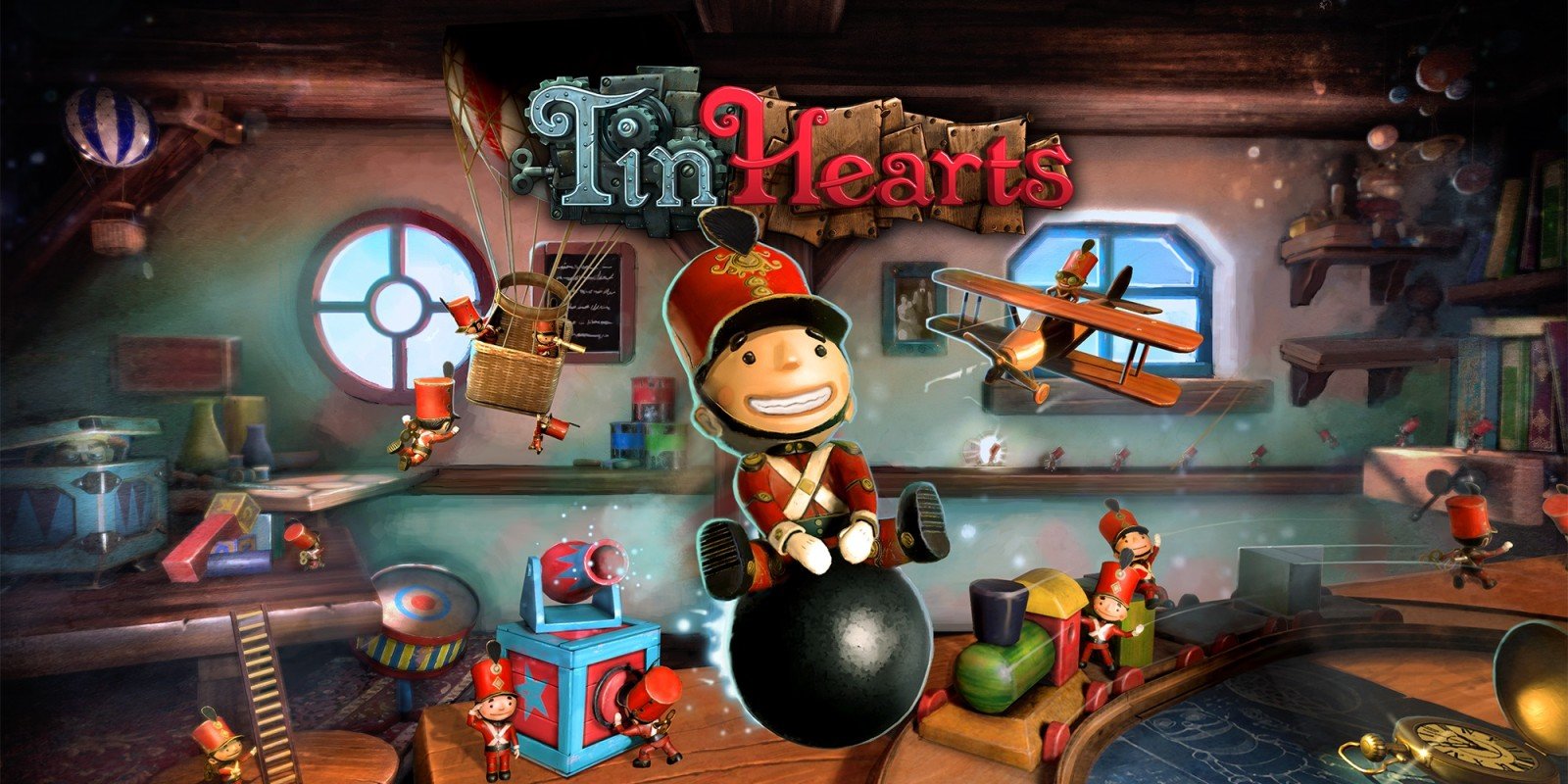
The Butterworth house is the games strongest asset. Each room is dressed with the care of a period stage set: framed photographs, handwritten letters tucked into shelves, mechanical contraptions mid-construction on workshop benches. The visual storytelling does the heavy lifting that the cutscenes support rather than carry. Playing as a spectral presence drifting through Alberts memories, the sense of inhabiting a life rather than a level is consistent throughout.
The art style is warm and detailed at a distance, though it works against itself in practice. Wooden blocks, the primary puzzle tool, can blend into the Victorian wallpaper and floor textures at certain angles, making placement harder than it should be. A colour accessibility mode is absent, which is a meaningful omission for a game whose core mechanic depends on visual clarity. The PSVR2 version, released later, addresses some of these spatial issues through depth perception, but on a flat screen the problem persists across several later puzzles.
Gameplay and Combat
The structure is straightforward: tin soldiers march in a fixed direction and fall off ledges unless redirected. Players place wooden blocks, ramps, trampolines, and other devices to route the soldiers to the exit. The pause ability, which projects a dotted path showing the soldiers next several steps, is well-judged. It provides enough information to plan without removing the satisfaction of execution. Toggling it off is available for players who want a harder experience.
Fifty puzzles across the houses rooms scale in complexity at a reasonable pace. The later puzzles introduce the cannon, which fires a tin soldier across the room to trigger switches or reach elevated platforms, and it is here that the camera becomes a genuine problem. Angles shift unhelpfully mid-sequence, scenery occasionally obscures the arc, and the manual soldier-control mode produces blur that borders on motion sickness for sensitive players. These are not minor rough edges. They affect puzzles that otherwise have clean, satisfying solutions.
Hint pictures are available from the pause menu. They show the completed puzzle state without explaining the route, which is the correct balance: useful for players who are stuck without spoiling the solve for those who simply need a nudge.
Story and Characters
Albert Butterworth loved his family. Tin Hearts communicates this through the house rather than through dialogue. The letters, the nursery, the workshop where his soldiers were born, each room adds a sentence to a story told entirely in objects. The memory cutscenes are restrained, showing rather than explaining, and the relationship between Albert and his family carries genuine warmth without becoming sentimental.
What Remains of Edith Finch is the correct comparison, not for structural similarity but for emotional register. Both games use domestic spaces to carry grief. Tin Hearts is the smaller, quieter piece, and it is better for knowing its scale.
Value and Longevity
Six to eight hours for a full playthrough. Fifty puzzles, trophy support, and a PSVR2 version included with purchase provide reasonable depth for the price. There is no new game plus or puzzle editor, so replayability depends on whether the player wants to revisit specific rooms. For puzzle enthusiasts the content is well-paced and the difficulty spread is honest. Casual players may find the later camera issues frustrating enough to disengage before the ending, which would be a shame given how the story resolves.
Technical Notes
Performance is stable throughout. Load times on PS5 are short and the frame rate is consistent. The camera system is the primary technical concern: it does not track the action reliably during cannon sequences and manual soldier control produces noticeable blur. These feel like design decisions that were not fully tested at the puzzle complexity level the later rooms reach. No crashes or save issues were encountered.
Scoring
| Presentation | 7/10 | Warm Victorian art direction with strong environmental storytelling, undermined by visual clutter that affects puzzle clarity. |
| Gameplay | 7/10 | Fifty well-paced puzzles with a thoughtful hint system, held back by camera issues that become significant in later rooms. |
| Story | 8/10 | Albert Butterworths legacy is communicated through objects and restraint rather than exposition, and it earns its emotional resolution. |
| Value | 7/10 | Six to eight hours at a reasonable price with PSVR2 support included, though replayability is limited beyond trophy hunting. |
| Puzzle Design | 6/10 | The core routing loop is satisfying and the pause mechanic is well-judged, but the cannon sections expose camera limitations that undermine otherwise clean solutions. |
Average score: 7.0/10
Final Word
Tin Hearts earns its emotion through restraint. The image that stays is Alberts workshop at the start of the game: unfinished soldiers on the bench, tools laid down mid-task, a life interrupted. The puzzle design serves that atmosphere well for most of its runtime, and the story lands quietly without overstating itself. The camera issues in the cannon sequences are a genuine problem rather than a minor complaint, and the absence of a colour accessibility mode is a meaningful gap. For puzzle enthusiasts willing to work around those limitations, Tin Hearts is a worthwhile few hours. Players who need clean camera control throughout may find the later rooms more frustrating than satisfying.
FAQ
Is Tin Hearts worth buying?
Yes, for puzzle enthusiasts, particularly those who appreciate narrative-driven games. The fifty-puzzle campaign, warm Victorian setting, and quietly affecting story make it worth the price of admission. Players sensitive to camera issues or motion blur should be aware that later puzzles involve camera angles that can be disorienting.
How long is Tin Hearts?
Approximately six hours for a straightforward playthrough of the fifty-puzzle campaign. Thorough players aiming for all trophies should budget closer to eight hours. The difficulty curve is reasonable and the hint system prevents most players from becoming stuck for extended periods.
Does Tin Hearts support PSVR2?
Yes. PSVR2 support was added after the initial PS5 launch. The headset version benefits from improved depth perception, which addresses some of the spatial clarity issues present on a flat screen. Both versions are included with a single purchase on PlayStation.
Useful Links
Please note that some links in this article are affiliate links. If you found the coverage helpful and decide to pick up the game, or anything else for your collection, through one of those links, we may earn a commission at no extra cost to you. We use this approach instead of filling Spawning Point with intrusive display ads, and rely on this support to keep the site online and fund future reviews, guides, comparisons and other in-depth gaming coverage. Thank you for supporting the site.