Opening
No other farming sim asks you to invent agriculture. Roots of Pacha still does. Three years on, it is still worth your time. Where Stardew Valley hands you a farm with an inherited structure, Roots of Pacha hands you a Stone Age clan, a settlement near the sacred Pacha Tree, and the question of what comes next. The genre's standard progression loop is discarded entirely: there is no personal currency, no purchased land, no sprinkler system waiting at the hardware shop. The Sun and Moon update, released in April 2025, expanded the world into two new civilisations, the Mograni Mountains and the Yakuan Islands, addressing the mid-game plateau that early players encountered. The framing is not cosmetic. It reshapes every system, replacing individual accumulation with collective discovery.
Game Snapshot
| Dev / Publisher | Soda Den | |
| Release Date | 25 April 2023 (PC); 28 November 2023 (Switch, PS4/5); 31 July 2024 (Xbox); Sun and Moon update (v1.3) April 2025 | |
| Platforms | PC (Windows, Mac, Linux), Nintendo Switch, PlayStation 4, PlayStation 5, Xbox One, Xbox Series X/S | |
| Price | £19.99 | $24.99 |
| Rating | PEGI 3 | ESRB Everyone 10+ |
| Genre | Farming and life simulation | |
| Length | ~33 hours (main story); ~56 hours (main + side content), based on HowLongToBeat | |
| Install Size | ~1 GB (PC); ~990 MB (Switch) |

Roots of Pacha Review 2026: Presentation and World Design

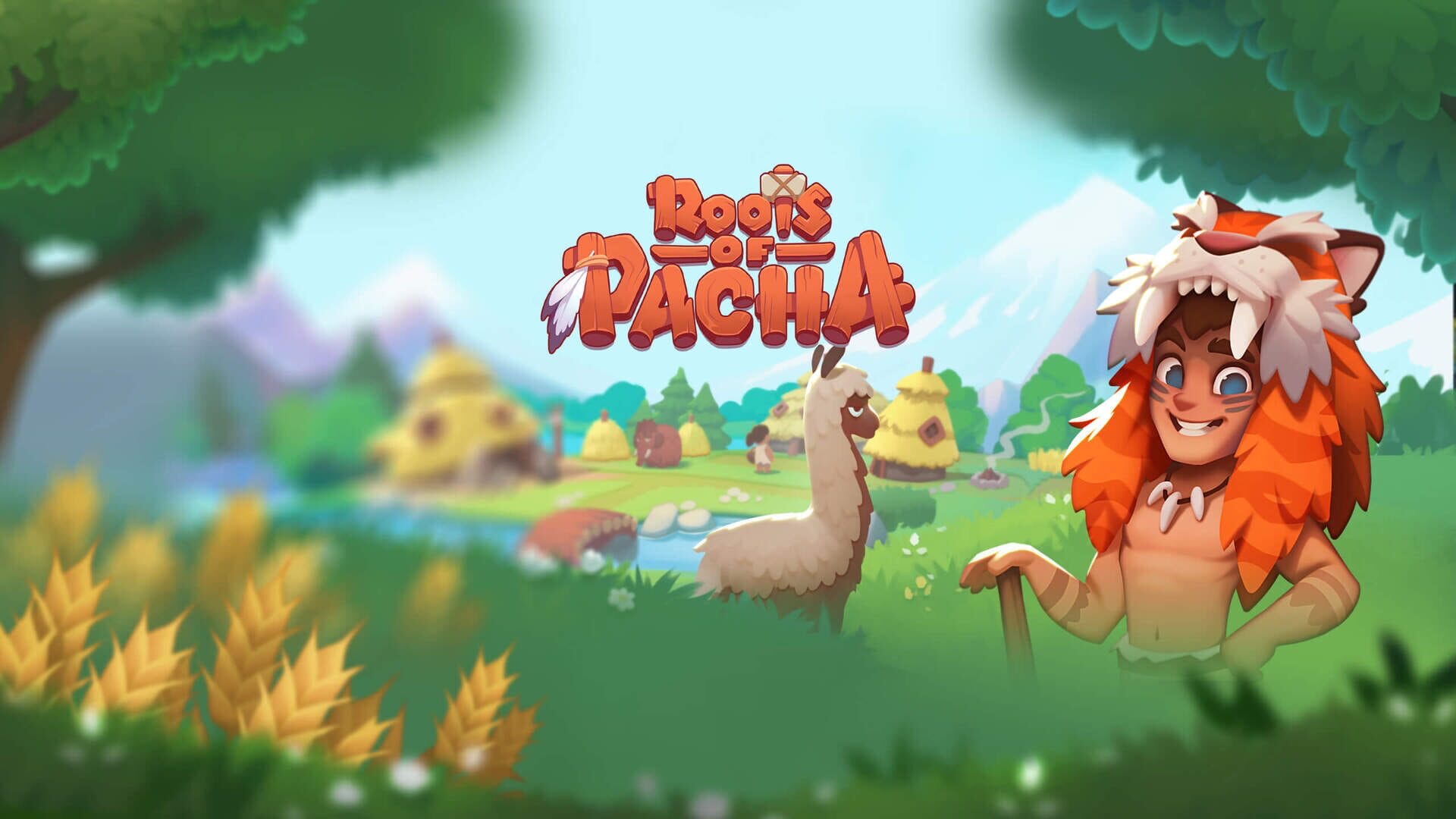
Roots of Pacha's visual presentation is deliberate and modest. Character designs are rounded and expressive, drawn with the kind of friendly clarity that reads well at a portable screen's scale without needing high-resolution detail. The environment shifts from a single riverside settlement to an increasingly populated clan village as you progress, and the gradual addition of structures, fire pits, and cultivated fields gives the space a material history that most farming sims bypass entirely. This is not a world that begins complete. It grows.
The Sun and Moon update, released in April 2025 to mark the game's second anniversary, added two new biomes: the Mograni Mountains and the Yakuan Islands, each split across three sub-regions. Both areas introduce their own colour palettes and architectural logic. The Mograni territory has a colder, elevated quality compared to the warmer coastal atmosphere of the Yakuan Islands, and the visual contrast between home territory and neighbouring cultures grounds the lore in something observable rather than told. For a small-studio title, this is a well-judged expansion of scope. If you are deciding between platforms, the best Switch 2 games in 2026 guide covers how the broader Switch library sits alongside titles like this one.
The UI is sparse and context-sensitive, which suits the game's ethos. There are no cluttered skill trees or stacked menus. Progression surfaces naturally through the clan's communal idea board rather than personal stat screens. The result is a world that communicates its design through the environment rather than through overlaid systems, and that restraint holds up across three years of play. What it lacks in visual spectacle, it earns in coherence.
Gameplay and Roots of Pacha's Stone Age Systems
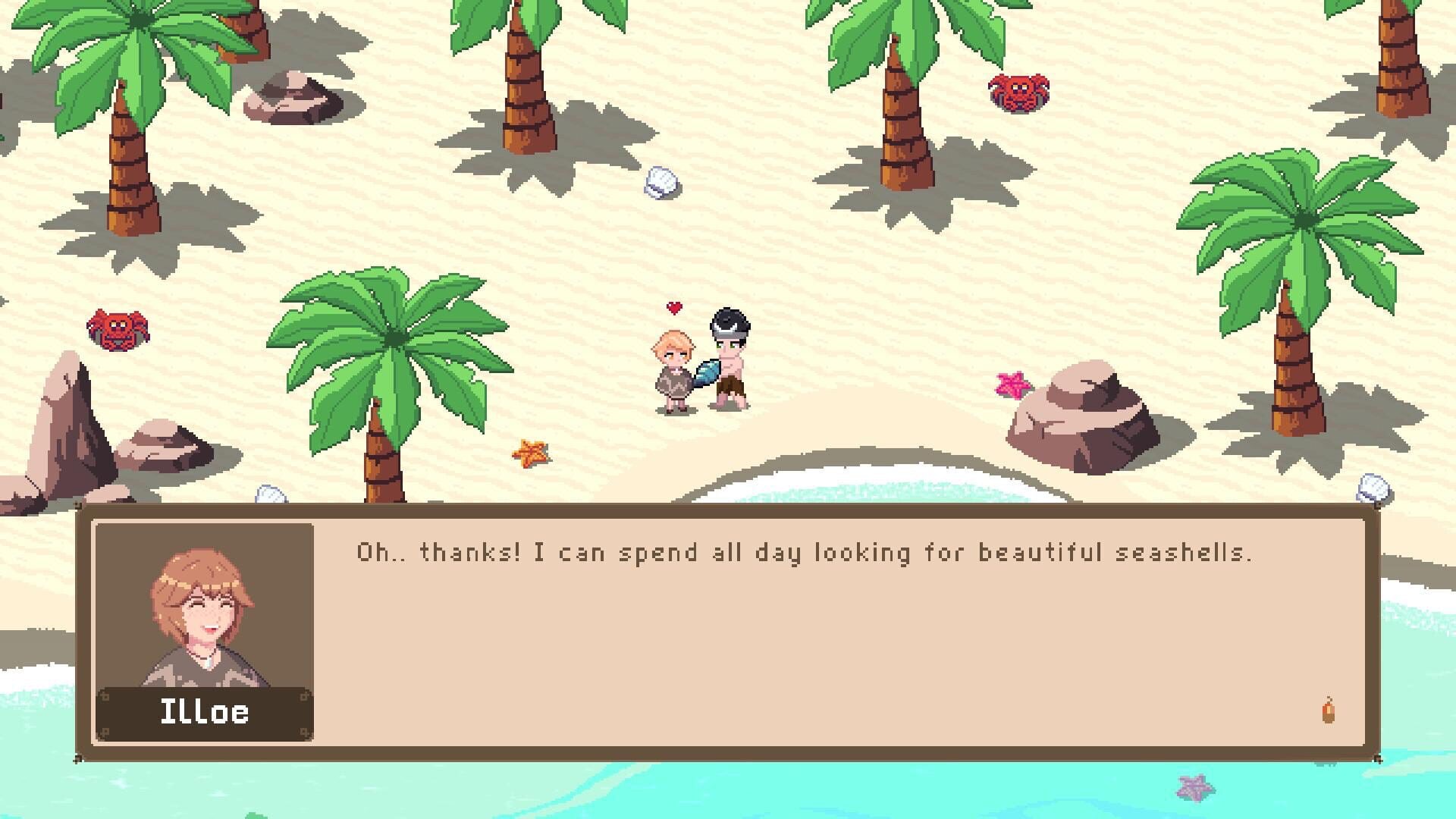
The core mechanic is contribution, not accumulation. Players gather fish, crops, ore, and crafted goods and donate them to the communal pool. Those donations generate contribution points, which serve as both currency and civilisational fuel: enough contributions unlock new ideas, and ideas are what advance technology. The first time you figure out how to farm by experimenting with seeds near water, or domesticate an animal by learning its rhythm through a flute mini-game, Roots of Pacha delivers something Stardew Valley cannot. The genre's standard progression loop is made strange again.
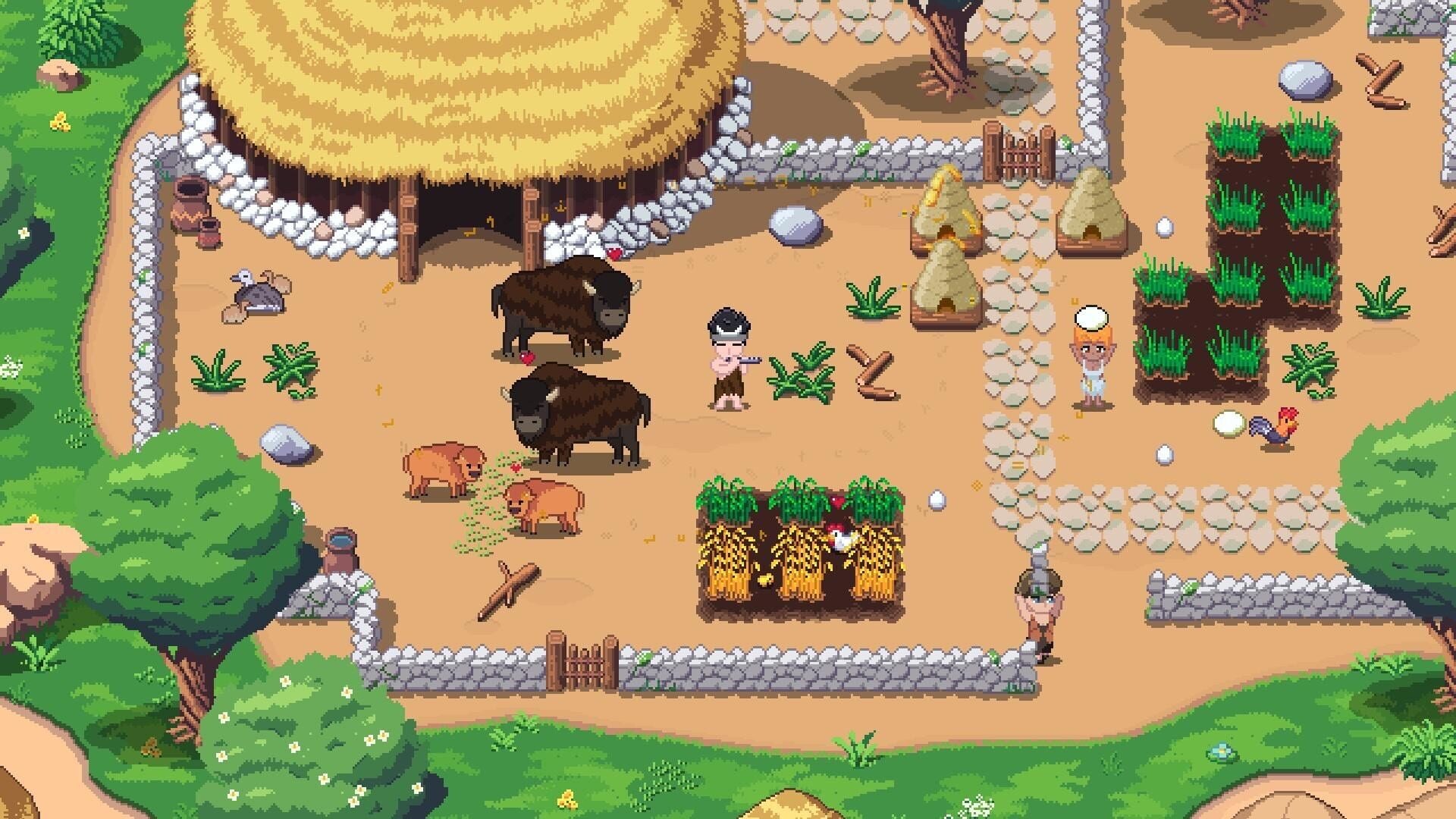
Animal domestication deserves specific attention. Taming creatures requires a rhythm-based approach: a flute lures the animal, and timing the notes correctly to its pattern determines whether it joins the village. The system is simple enough to learn quickly but distinct enough to feel earned when it works. Ownership belongs to the clan. Once tamed, animals contribute to the communal resources rather than the player's private stock, and that distinction reinforces the game's framing at every turn.
The Sun and Moon update added ironworking as a new idea pathway, along with bug catching and two new mini-games: a dice game from the Mograni and a music performance from the Yakuan. New animals including dodos and pandas are found in the expanded regions. These additions target mid-game and late-game players specifically. The second in-game year thinned out in earlier versions; the new biomes give that stretch genuine content for the first time.
The game supports up to four players in online co-op, and the collaborative structure suits the format well. Contribution points accumulate regardless of who donates, so sessions with friends feel productive rather than competitive. The one honest limitation is that solo play occasionally reveals the seams: certain community-driven discoveries move slowly when only one player is feeding the pool. For players who prefer similar co-op loops with a heavier narrative emphasis, Spiritfarer on Switch offers a strong point of comparison in the same price range.
Story and Characters
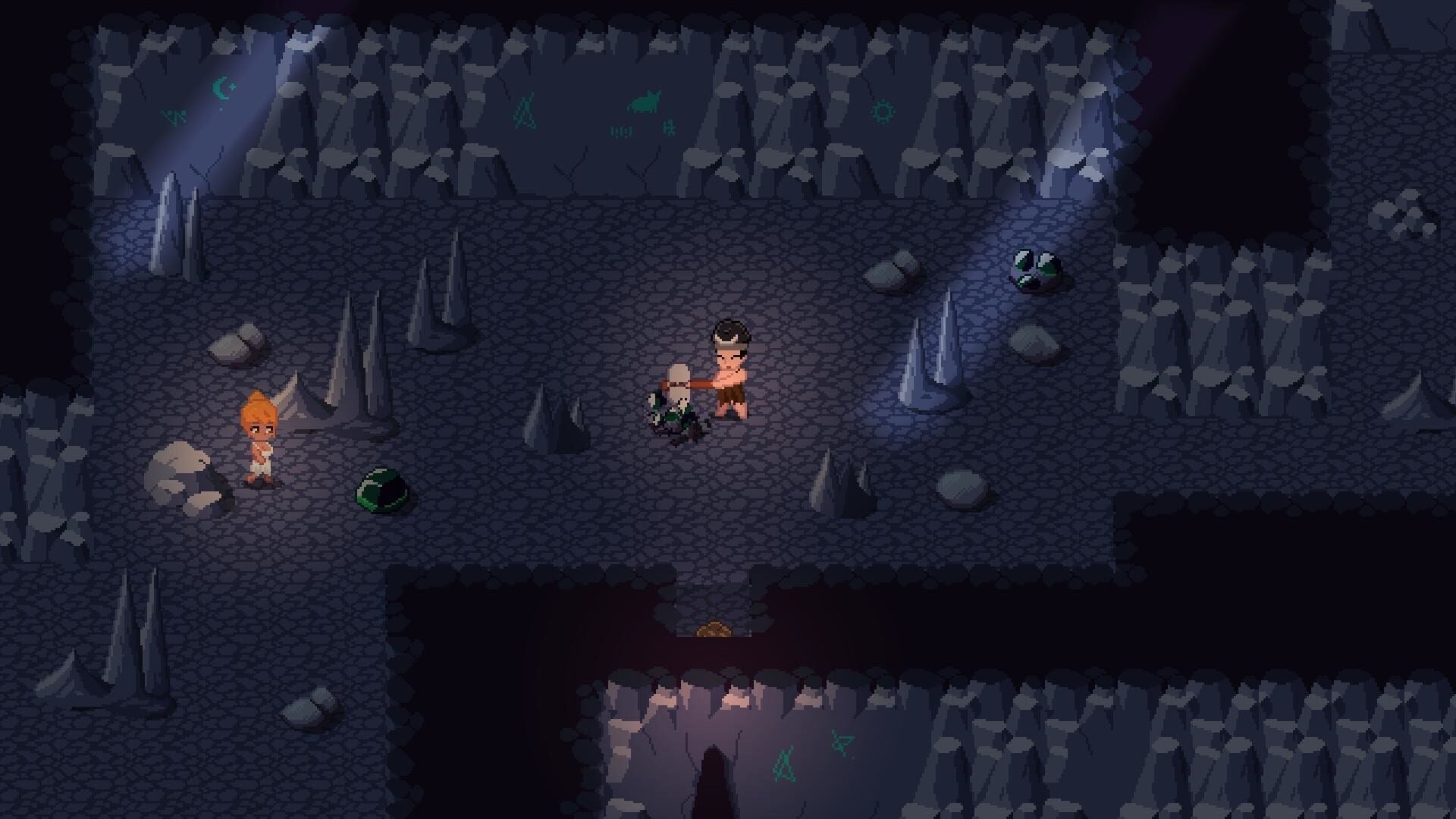
Roots of Pacha does not have a conventional narrative arc. The story is civilisational rather than personal: your unnamed character is a member of the Pachan Clan who settles near the sacred Pacha Tree following the guidance of the clan's spiritual mother-goddess. Vuak the shaman provides early direction, and a cast of named clan members each carry their own personality and storyline, including several romance options. The writing is warm without being saccharine. Relationships develop through gift-giving, seasonal festivals, and repeated conversation over in-game years, and the characters reward patience.
The Sun and Moon update introduces the Mograni and Yakuan peoples as distinct civilisations with their own customs and lore. The new characters, including Azkel, a Mograni elder, and Sayra, a Yakuan resident, expand the cast and give the world something it previously lacked: a sense of cultures beyond the one you inhabit. The political and social framing remains gentle rather than dramatic, but the expansion makes the world feel less isolated.
The romance system mirrors the wider game's pacing. Relationships deepen slowly, and the game does not rush resolution. Players expecting the compressed emotional beats of Stardew Valley may find Roots of Pacha's approach more diffuse, but the accumulation of small moments lands with quiet consistency. The narrative never reaches dramatic peaks because it is not designed to. It is a chronicle, not a story. For a narrative-first alternative in the same genre space, Unpacking compresses comparable emotional weight into a two-hour runtime.
Roots of Pacha Review 2026: Value and Longevity
At £19.99 / $24.99, Roots of Pacha sits below the standard indie price tier for comparable depth. A main story run takes roughly 33 hours according to HowLongToBeat; including side content extends that to around 56 hours. The Sun and Moon update added new biome content, additional characters, ironworking, and late-game activities that push engaged players further into the completionist range. All updates have been free. There are no microtransactions and no DLC to purchase separately.
Soda Den released the game via a Kickstarter campaign and self-published after a high-profile dispute with original publisher Crytivo in 2023. The game's subsequent trajectory, from PC to all major consoles and a substantial free update at two years, reflects consistent post-launch support from a two-person studio. The Metacritic aggregate for PC sits at 82 and the Switch version at 85, both in the 'generally favourable' band. Those scores are honest: this is not an all-audience title, but for players drawn to the genre, the value ratio is strong.
For players weighing Roots of Pacha against Stardew Valley, the comparison is straightforward: Stardew has greater mechanical depth and a more compressed emotional arc; Roots of Pacha has a more distinctive setting and a progression logic that feels genuinely different. Both are among the best cosy games in 2026. They reward different appetites.
Technical Notes
Roots of Pacha runs cleanly across all supported platforms. The Switch version, which launched in November 2023, performs without the performance issues that plagued some contemporaries on Nintendo's original hardware. The small file size (under 1 GB on PC and Switch) reflects the game's 2D presentation, and load times are minimal. The Sun and Moon update deployed across all platforms simultaneously in April 2025, which avoided the staggered release issues that troubled the original PC-first launch.
Known issues at launch included occasional quest-blocking bugs on certain clan interaction triggers, most of which were resolved in post-launch patches. The v1.3 update landed cleanly. No significant performance regressions have been reported across any platform. The co-op functionality works across online sessions with up to four players. No accessibility options are specifically documented, though the PEGI 3 rating reflects the game's non-violent, low-pressure design philosophy. For platform-specific guidance on where cosy games perform best in 2026, our Switch 2 cosy games hub covers twelve picks and how they compare on Nintendo's hardware.
Final Word
Roots of Pacha is the farming sim for players who want to understand why the genre exists. Stripping back to stone tools and communal fire, it rebuilds the progression loop from first principles: every discovered technique feels earned because the game makes you ask the question before it offers the answer. With the Sun and Moon update now live, the world has expanded into the Mograni Mountains and Yakuan Islands, giving the mid-game content that earlier players found thin a genuine resolution. At £19.99 / $24.99 across all platforms, with three years of free updates and four-player co-op, it rewards commitment. It is one of the best cosy games on PS5 in 2026 for Sony hardware owners. Skip it only if deliberate pacing and communal rather than individual progression are friction points; the second in-game year still asks for patience before the new biomes open.
Roots of Pacha is worth buying in 2026 at £19.99 / $24.99, particularly for players who want something different from Stardew Valley's structure. The Sun and Moon update added two new biomes, ironworking, bug catching, and new characters in April 2025, addressing the mid-game pacing that early reviews flagged. Every update since launch has been free of charge, making the current version the most complete and content-rich release of Roots of Pacha to date.
The main story takes approximately 33 hours to complete, according to HowLongToBeat. Including side content and relationship storylines extends that to around 56 hours. The Sun and Moon update added new biomes and late-game activities that push completionist playthroughs further, though a total figure depends heavily on how thoroughly players engage with the new Mograni and Yakuan regions.
Roots of Pacha supports online co-op for up to four players. The communal contribution system suits co-op well, since all players feed the same pool of resources and discoveries, making progress feel collaborative rather than competitive. Solo play is fully supported and the primary way most players experience the game, but the co-op mode is a functional and enjoyable option for groups.
Roots of Pacha launched on Nintendo Switch on 28 November 2023, alongside the PS4 and PS5 versions. The Switch version performs well at under 1 GB install size and supports the full feature set including online co-op. The Sun and Moon update (v1.3) deployed on Switch simultaneously with all other platforms in April 2025.
The Sun and Moon update (v1.3) released in April 2025 to celebrate the game's second anniversary and added two new regions: the Mograni Mountains and the Yakuan Islands, each divided into three sub-regions. New activities include ironworking, bug catching, a dice game from the Mograni culture, and a music performance event from the Yakuans. New animals such as dodos and pandas are found in the expanded areas, alongside new romance options and characters.
Roots of Pacha replaces Stardew Valley's individual-ownership model with a communal contribution system: resources are donated to the clan rather than sold for personal profit, and those contributions unlock shared civilisational discoveries. Animal domestication uses a rhythm-based flute mechanic rather than gift-giving. The technology curve mirrors a civilisation's progression from stone tools to ironworking rather than a single farmer upgrading their equipment, giving progression a different kind of logic.
Please note that some links in this article are affiliate links. If you found the coverage helpful and decide to pick up the game, or anything else for your collection, through one of those links, we may earn a commission at no extra cost to you. We use this approach instead of filling Spawning Point with intrusive display ads, and rely on this support to keep the site online and fund future reviews, guides, comparisons and other in-depth gaming coverage. Thank you for supporting the site.