Opening
No cooking game has asked its players to think the way PlateUp! does. It is still asking that question in 2026. Developed by solo creator Alastair Janse van Rensburg at It’s Happening and published by Yogscast Games, PlateUp! introduced automation, base-building, and roguelite structure to the co-op cooking genre in 2022, producing a game where the most satisfying moment is not plating a dish but watching a belt-fed conveyor system deliver it automatically whilst your team handles the dining room. The premise is familiar on the surface: run a restaurant, serve customers, keep the kitchen moving. The execution belongs to a different genre entirely. With the full console release two years old, Xbox Game Pass inclusion confirmed, and over 1.5 million copies sold on Steam alone, PlateUp! remains the most structurally inventive co-op cooking game available, and the one that rewards returning to most.
Game Snapshot
| Developer | It’s Happening (Alastair Janse van Rensburg) |
| Publisher | Yogscast Games |
| Release Date | 4 August 2022 (PC Early Access/full release); 15 February 2024 (Switch, PS4/5, Xbox One/Series X/S) |
| Platforms | Windows PC, PlayStation 4, PlayStation 5, Xbox One, Xbox Series X/S, Nintendo Switch |
| Price | ~£15.99 / $19.99 |
| Rating | PEGI 3 / ESRB E (Everyone, Alcohol Reference) |
| Genre | Co-op roguelite restaurant management |
| Length | ~2.5 hours per run (15-day structure); total playtime varies widely with run count and co-op engagement |
| Install Size | ~0.55 GB (PS5); ~0.94 GB (Switch) |
PlateUp! Review: Presentation and Restaurant Design
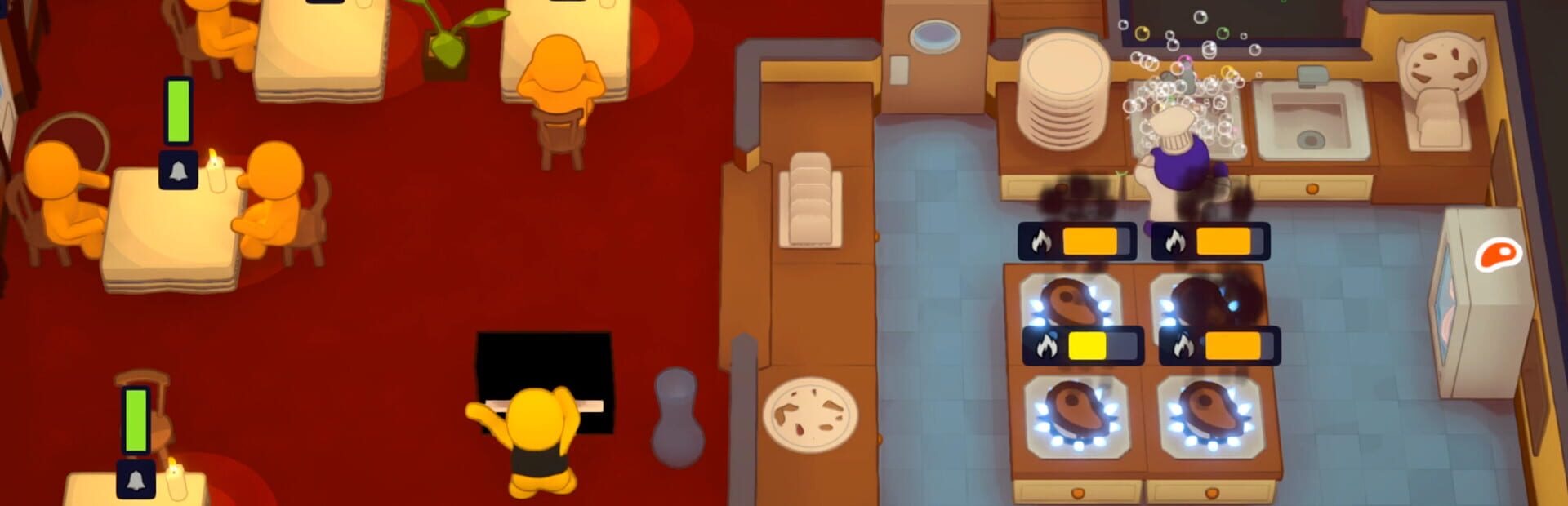
PlateUp! presents itself with functional clarity rather than visual ambition. The top-down perspective gives a clean overview of kitchen and dining room simultaneously, and the tile-based grid layout of each map makes the placement logic legible without demanding a tutorial. Character designs are minimal and readable rather than expressive; the visual grammar prioritises information over personality. Against the more polished presentation of comparable co-op titles in the best cosy games of 2026, PlateUp! looks modest, and that is a fair description at full price.
What the presentation does well is communicating state. Automation chains, conveyor directions, appliance inputs and outputs, and customer patience timers all read clearly from the top-down view. The UI handles a substantial amount of information about progression cards, appliance blueprints, and run status without overwhelming the screen, though the interface drew criticism at launch for being unintuitive and the menu structure still requires familiarity before it becomes comfortable. The physical Nintendo Switch version’s undocked co-op experience compounds this: small screens and clunky controls on a handheld proved the most commonly cited friction point in console reviews.
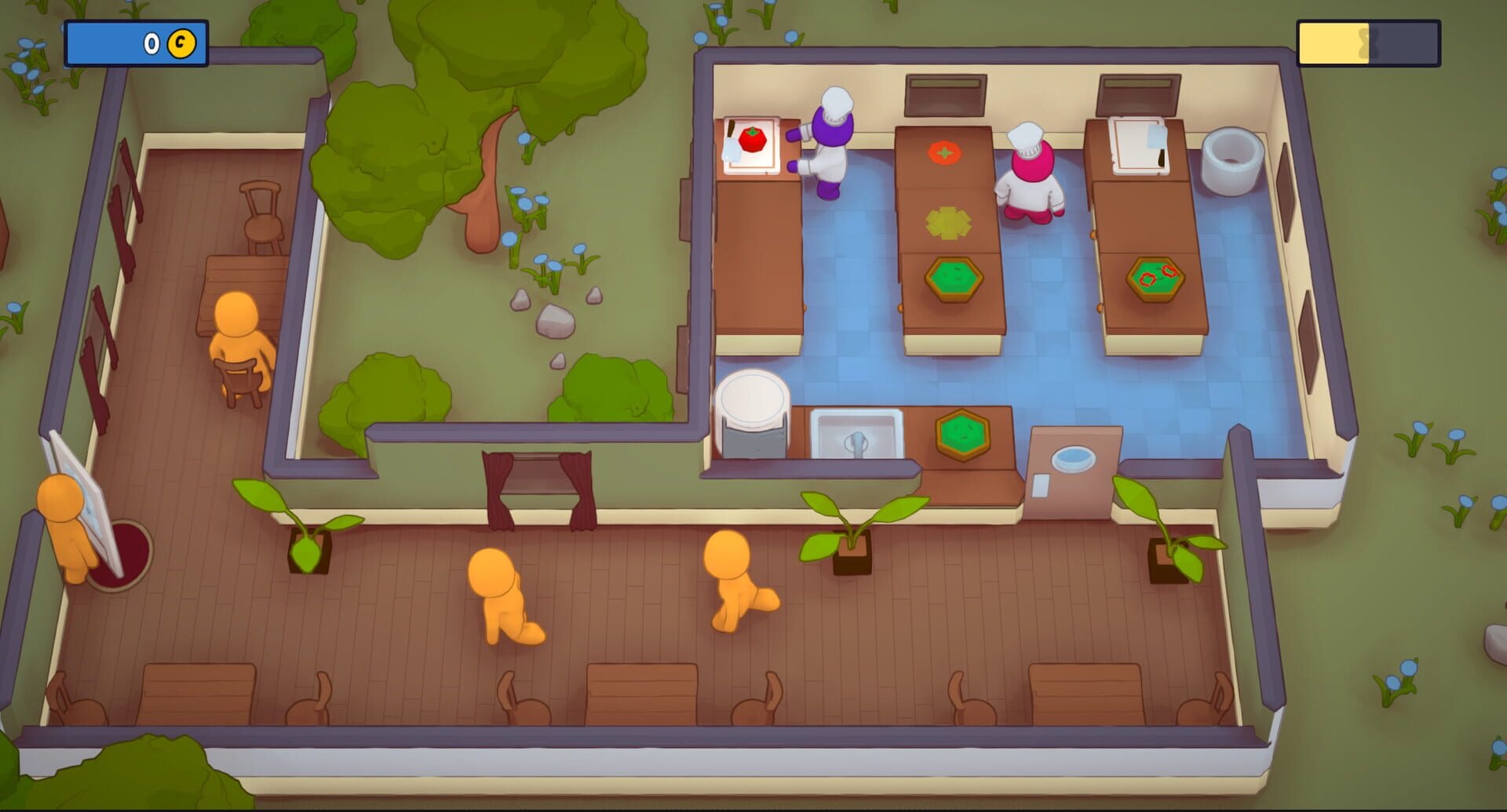
Map variety comes from procedural generation rather than artistic diversity. Each run places you in a new layout with different room configurations, which affects kitchen flow and automation options meaningfully. The aesthetic does not change: every restaurant looks like the same base template in different shapes. The strategic variation carries the game. The visual one does not.
PlateUp! Gameplay and Automation Systems
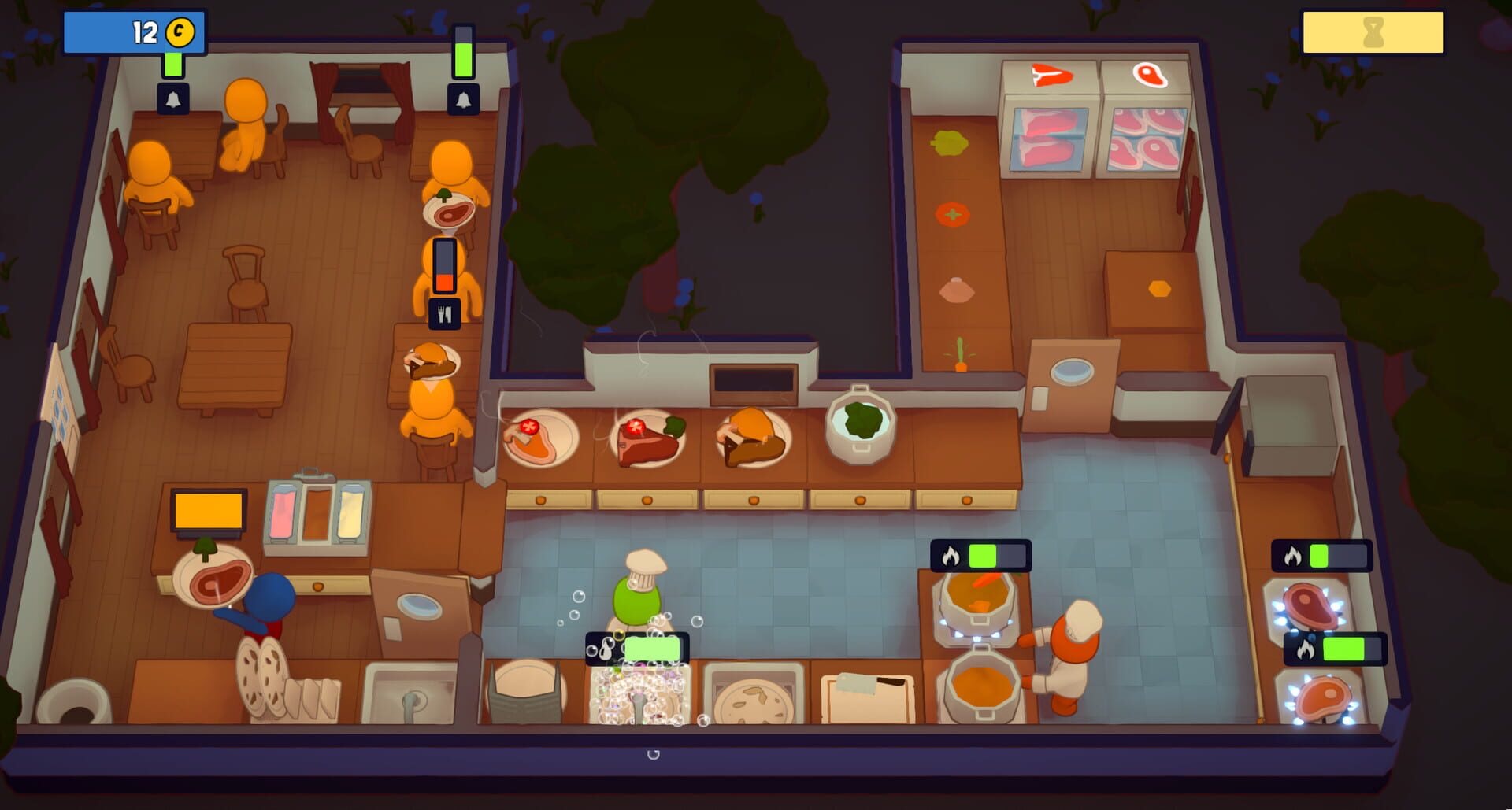
The core loop of a PlateUp! run takes place across 15 days, each of which splits into a preparation phase and a service phase. During preparation, you buy appliances, lay out your kitchen, and build the structures that will handle the next service. During service, customers arrive, orders come in, and the kitchen runs. On Day 4 and every third day after, you choose a progression card from a small randomised selection. Cards add complexity: more customers, new dish requirements, expanded menus. The difficulty scales automatically as the run progresses.
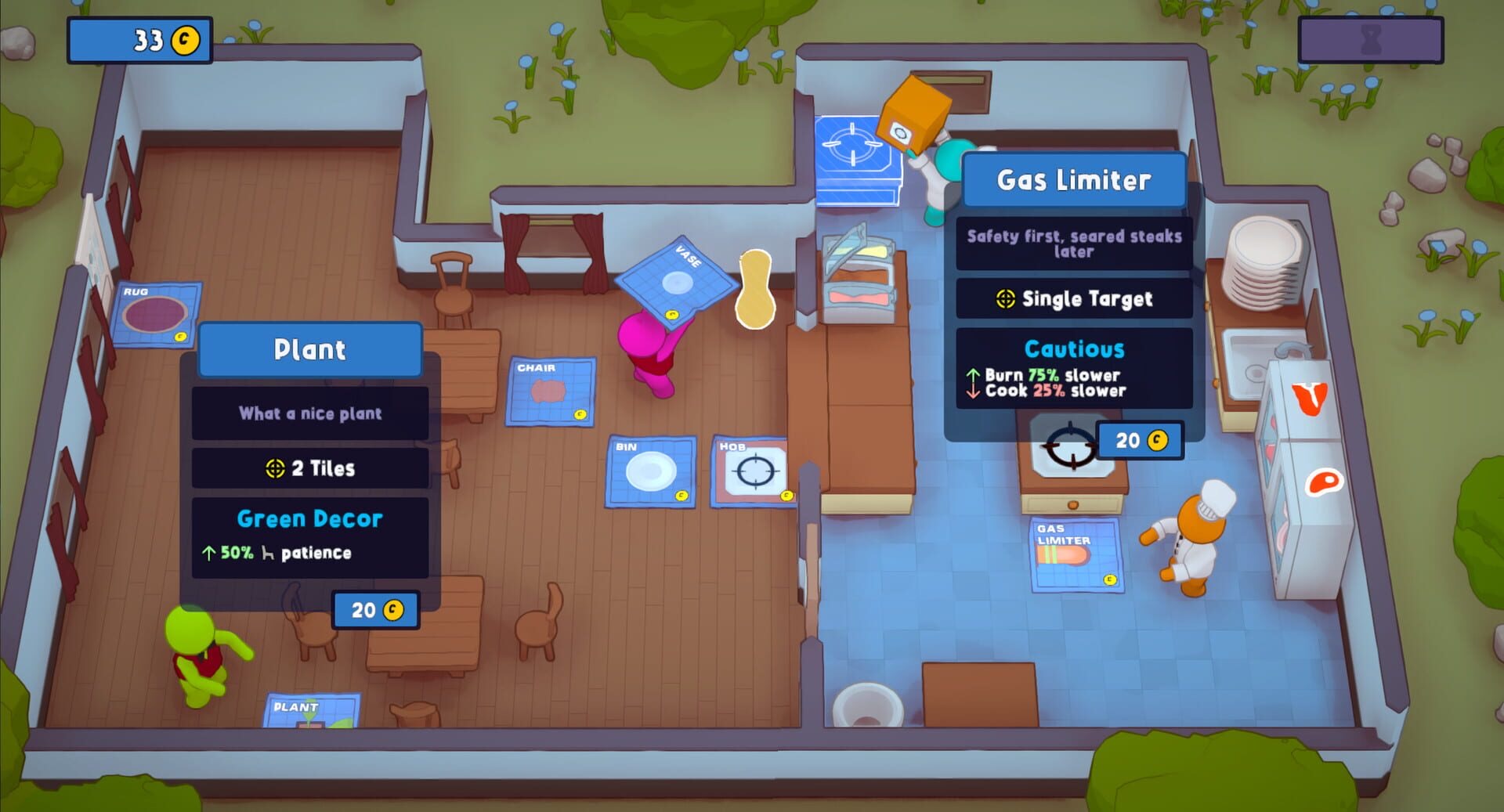
The automation layer is what separates PlateUp! from every comparable game. Conveyors, grabbers, and smart grabbers can be chained together to move ingredients and finished dishes through the kitchen without player input. A well-designed automation setup handles washing, plating, and delivery on its own, freeing players to manage edge cases, restock ingredients, and interact with customers. The planning phase before each service is where the real game lives. A blueprint cabinet system lets you copy appliance placements between runs, and the roguelite card progression means no two runs produce the same kitchen in the same order.
This is not a game about reflexes. The chaos of Overcooked, where success depends on quick movement and immediate response, is replaced here by something closer to engineering. The early runs are genuinely difficult as players learn which automation chains work and how card selection shapes the challenge ahead. The complexity curve is steep. Reviewers noted that solo play in particular can feel punishing in a way that co-op smooths over, and the game’s own community forums acknowledge a substantial solo difficulty gap.
The roguelite structure means failure is permanent within a run. A collapse on Day 12 returns you to the start with nothing carried forward beyond meta-progression unlocks. That consequence is the source of both the tension and the replayability: a run that reaches Day 15 cleanly, with a functioning automated kitchen, produces a specific satisfaction that no other cooking game delivers. Players looking for roguelite depth in a different genre will find a comparable systems-first design in the best PS5 games of 2026.
Story and Characters
PlateUp! has no narrative. There is no protagonist, no arc, and no dialogue. The game’s context is its genre positioning: a cooking simulation that asks players to think further ahead than the genre typically demands, built by a solo developer whose background was in cybersecurity rather than game design.
The absence of story is not a weakness in a game whose identity is entirely structural. What PlateUp! provides in place of narrative is systemic depth: the relationship between card selection, kitchen layout, and automation design functions as a kind of emergent storytelling, where each run produces its own pressure points and resolution. A badly chosen card on Day 7 might compromise a carefully built automation chain and force improvisation through the final days. That texture is the experience.
For players who need narrative investment to sustain attention across multiple runs, PlateUp! will exhaust its appeal faster than games that build emotional context. For a comparable roguelite structure with more atmospheric narrative framing, Crimson Desert offers a different but instructive contrast. For players drawn to systems and optimisation, the absence of story is irrelevant. The game knows what it is.
Value and Longevity
At £15.99 / $19.99, PlateUp! is one of the most affordable co-op experiences on any current platform. Xbox Game Pass includes the game for subscribers, which was confirmed at the console launch in February 2024 and continues as of 2026. One purchase covers up to four players simultaneously in local or online co-op, and the roguelite structure means no two runs produce the same sequence of challenges.
The run structure shapes the value proposition in a specific way. A single run lasts approximately 2.5 hours if successful. Most early runs will not be successful. Steam data shows an average total playtime of over 90 hours, which reflects the replay cycle that the roguelite format naturally generates. Players who find the automation puzzle engaging will return many times; players who expect a fixed campaign with a defined end point should note that there is no story progression or credits sequence to work towards.
PlateUp! holds a 73 on OpenCritic with 82% of critics recommending it, and its Steam reception of 96% positive from over 11,000 reviews reflects a community deeply engaged with its systems. The critical consensus centres on a genuine divide: exceptional in co-op with the right group, difficult to sustain alone. For direct comparison, It Takes Two solves the co-op design problem differently, with a fixed campaign and mandatory two-player structure. PlateUp! is the choice for groups who want to return to the same game across multiple sessions rather than experience a single authored journey.
Technical Notes
PlateUp! is a small download. The PS5 version weighs 0.55 GB; the Switch version 0.94 GB. It runs without notable performance issues on current hardware, and the PC version continues to benefit from an active modding community that has extended the base game with additional dishes, maps, and automation tools. The console versions arrived in a functional state in February 2024 and have received patches since launch.
The primary technical friction is in the controls rather than the performance. Console reviewers consistently cited imprecise controls and an interface not fully optimised for gamepad input, which the handheld Switch mode compounds. The game was built for keyboard and mouse; the console port translates the actions without redesigning the interaction model. On a PS5 or Xbox Series console in docked mode with players seated at a distance, the experience is more comfortable than handheld play. Accessibility options are limited; the game does not offer difficulty sliders, though the card selection system gives players indirect control over how quickly complexity escalates. For players weighing console options for co-op play in 2026, the best Switch 2 games guide covers where PlateUp! fits within the broader portable catalogue.
Final Word
PlateUp! is the cooking game for players who want to build the kitchen before they run it. A run that reaches Day 15 with a fully automated dish pipeline, customers served without a single manual intervention, is the specific moment the game is designed to produce, and it earns that moment. The run-based format guarantees it never arrives the same way twice. Skip it if your co-op group wants a fixed campaign with a finish line: there is no story, no credits roll, and no defined end point. For groups drawn to the best cosy games on PS5 that reward repeat sessions and creative problem-solving, PlateUp! offers the deepest systems in its genre at the lowest price point. That is a rare combination, and in 2026 it remains unchallenged in the co-op cooking space.
PlateUp! is worth buying in 2026 at £15.99 / $19.99, particularly for players with a regular co-op group. The roguelite structure generates substantial replay value, and Xbox Game Pass subscribers can access it at no additional cost. Solo players should note the difficulty gap: the game was designed with co-op in mind, and single-player runs are notably harder to sustain into the later days of a run.
A single PlateUp! run spans 15 days and takes approximately 2.5 hours to complete if successful. Most players' first several runs will end before Day 15 as they learn the automation and card systems. Total playtime scales with replay engagement: Steam data shows an average playtime of over 90 hours among players who complete the achievement set, though casual co-op groups may find 15 to 20 hours covers the core experience.
PlateUp! joined Xbox Game Pass when the console version launched on 15 February 2024 and remains available through the service in 2026. PC Game Pass inclusion has not been confirmed for the current period. Xbox Game Pass Ultimate subscribers have access to the game on Xbox consoles at no additional purchase cost.
PlateUp! replaces Overcooked's gimmick-level structure (earthquake stages, moving trucks, ice floors) with a roguelite restaurant management system built around automation and base-building. Where Overcooked asks players to react quickly, PlateUp! asks them to plan ahead: the preparation phase between service days is where kitchen layouts are designed and automation chains are built. Runs are procedurally generated, failure starts a new run, and no two games unfold the same way.
PlateUp! supports single-player, but the game is notably harder alone than in co-op. The planning and service phases both demand more from a solo player, and the difficulty scaling through card progression does not adjust for group size. The developer and community forums both acknowledge the single-player difficulty gap. The game remains completable solo for patient players, but the experience is designed for a group of two to four.
PlateUp! supports up to four players in both local and online co-op across all platforms. Local co-op uses split-screen on console. The Nintendo Switch handheld mode with multiple players is functional but cramped, and reviewers noted that the small screen and gamepad controls compound the interface complexity in undocked local co-op. Docked mode on Switch or play on PS5 and Xbox provides a more comfortable shared experience.
For the best co-op cosy games on PS5 and across all platforms, see our PS5 cosy games hub and the full cosy games guide for 2026.
Please note that some links in this article are affiliate links. If you found the coverage helpful and decide to pick up the game, or anything else for your collection, through one of those links, we may earn a commission at no extra cost to you. We use this approach instead of filling Spawning Point with intrusive display ads, and rely on this support to keep the site online and fund future reviews, guides, comparisons and other in-depth gaming coverage. Thank you for supporting the site.