
Helldivers 2 looks like chaos, sounds like chaos, and will absolutely become chaos if you sprint off alone. Under the explosions, though, it’s a readable co-op shooter built around three things: finishing objectives, managing risk, and using stratagems well. This beginner’s guide is designed to get you winning missions faster, without relying on patch-sensitive build advice.
If you are browsing beyond Helldivers, our best PS5 games of 2025 round-up is a solid next stop.
Key facts
- Squad size: up to 4 players
- Online play: required
- Crossplay: supported with PS5, Xbox and PC players
- Friendly fire: always on
Table of Contents
- First 60 minutes checklist
- What you do in Helldivers 2 (the core loop)
- Missions, objectives and the map
- Difficulty, rewards and why completion matters
- Stratagems explained (and how to build a sensible loadout)
- Progression and currencies (what to spend, what to save)
- Enemies and field awareness (bugs, bots, and bad habits)
- Co-op etiquette (friendly fire is always on)
- Common mistakes (and how to fix them fast)
- FAQ
Quick answers (read this first)
- Your win condition is objectives plus extraction, not kills.
- Do primary objectives first, then optional tasks if the squad is stable.
- Bring a balanced kit: one sustain tool, one crowd-clear, one anti-armour answer, one flexible utility pick.
- Call stratagems early, not as a last resort, so you set up before the wave peaks.
- Stay together, because friendly fire and chain deaths punish messy spacing.
First 60 minutes checklist
If you are brand new, do these in order. They build good habits that keep working as difficulty rises.
- Play 2 to 3 missions on a low difficulty and practise completing primary objectives quickly.
- Open your map often, ping the next objective, and move as a group rather than drifting.
- Call resupply early, before you are empty, and learn how long cooldowns feel in real time.
- Treat reinforcements as limited: avoid greedy fights that burn lives for no progress.
- Pick up samples and other extract-only resources, then prioritise a clean extraction over extra kills.
- Bring one crowd-clear tool and one anti-armour answer across the squad, even on easier missions.
- At extraction, spread out, keep lanes open, and communicate any incoming strikes before you throw them.
What you do in Helldivers 2 (the core loop)
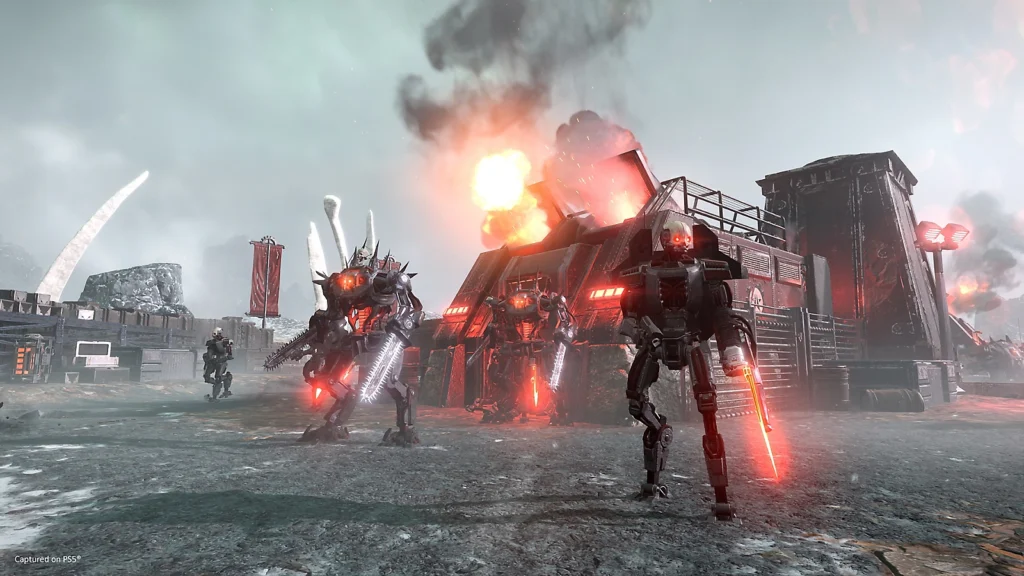
Every mission is the same promise: drop in, complete the primary objectives, extract. Everything else, including the firefights you will inevitably get dragged into, is in service of that.
A typical run goes like this:
- Choose a mission on a planet in the current war front.
- Drop in, orientate quickly, and move towards the first objective.
- Call in stratagems (weapons, supplies, air support, turrets, mission tools) to control the tempo, meaning you set the fight on your terms.
- Collect resources you find on the way (especially anything you only keep if you extract).
- Extract once the main work is done, or earlier if the operation is collapsing.
Helldivers 2 rewards squads that keep momentum. If you dig in for every scrap, you burn time, burn reinforcements, and arrive at objectives already on the back foot. Play it like an operation, not a deathmatch.
With that mindset in place, the map and objective order do most of the heavy lifting.
Missions, objectives and the map
If you want to improve quickly, make the map your best friend. You do not need perfect planning, but you do need priority and direction.
Primary vs secondary objectives
Primary objectives are the mission’s actual win condition, complete them and you earn the right to extract. Secondary objectives and optional tasks can be great value, but only if they do not derail the main plan.
A simple rule that works on almost every difficulty: clear the primary route first, then decide what you can safely add on the way to extraction.
How to use the map without overthinking it
Use the map to mark the next objective and commit to it, spot danger clusters so you do not wander into trouble, and identify points of interest worth a controlled detour.
Most squads do best with one objective at a time pacing. Zig-zagging across the map looks efficient, but it usually creates extra fights and messy resupplies.
Interactions and codes
Some objectives ask for sequences or interactions under pressure. The trick is not speed, it’s stability. If enemies are piling in, you are allowed to pause the interaction, reset the space, and try again. Helldivers 2 punishes tunnel vision more than it punishes hesitation.

Difficulty, rewards and why completion matters
Difficulty changes more than enemy toughness. It changes how fast situations spiral, how expensive mistakes become, and how forgiving the mission is when something goes wrong.
A beginner-friendly mindset:
- Lower difficulties are for learning objectives and timing.
- Mid difficulties are where you learn threat management and role coverage.
- Higher difficulties demand loadout balance, calm disengagement, and clear comms.
The most important lesson is boring but true: consistent mission completion beats heroic last stands. Failed runs cost time, resources, and morale. Finish the job, then get fancy.
Stratagems explained (and how to build a sensible loadout)
Stratagems are the game’s real language. Your gunplay matters, but stratagems decide whether you are controlling the operation or reacting to it.
Think in categories rather than best picks:
- Sustain: ammo and survival tools that keep you functional
- Crowd control: clearing swarms and buying breathing room
- Anti-armour and problem solving: a reliable answer to armour or objective pressure
- Defence and area denial: turrets, mines, fortifications, space control
- High-impact support: strikes that reset the situation when used early and safely
The loadout rule that stops most beginner wipes
If you are unsure what to bring, aim for this coverage either personally or across the squad:
- One way to stay stocked (sustain)
- One crowd-clear tool (space creator)
- One anti-armour answer (problem solver)
- One flexible utility pick (defence, objective help, or a safe panic option)
The biggest mistake is bringing four versions of the same idea. Balanced kits feel less exciting until the moment you realise you are still standing at extraction with resources intact.
Timing beats raw power
New players often call stratagems too late, when the squad is already collapsing. You will get better results by calling support before the wave peaks, setting up where you want to fight, and treating cooldowns as a rhythm rather than a panic button.
A resupply called at the right time wins more missions than a flashy strike called at the wrong time.
Progression and currencies (what to spend, what to save)
Helldivers 2 throws multiple currencies and unlock screens at you, but you can keep it simple and still progress efficiently.
The main currencies, in plain English
You will see several reward types across missions and menus. These names are worth knowing because they shape your priorities:
- Requisition: used to unlock stratagems and other practical tools that expand what you can call in.
- Medals: used to unlock items along progression tracks, typically focused on equipment and upgrades.
- Samples: found during missions and only secured if you extract, used for broader ship or account upgrades depending on your current options.
- Super Credits: a premium-style currency that can appear in the store ecosystem, sometimes earned in small amounts during play depending on the current setup.
What matters most early
- Unlock core stratagems first. Prioritise tools that help you complete objectives reliably and recover from mistakes.
- Treat extract-only resources seriously. If you have something you can lose by failing extraction, play tighter, not bolder.
- Avoid impulse spending. Early toy unlocks are fun, but consistency tools make everything else easier.
The team property approach
If you are carrying valuable resources and you die, communicate where they dropped. Helldivers 2 is co-op in the most practical sense: your personal mistake becomes everyone’s problem unless you give the team the information to fix it.
Enemies and field awareness (bugs, bots, and bad habits)
You do not need to memorise every enemy name to get better. You need two habits: identify the real threat and manage space.
A useful mental switch
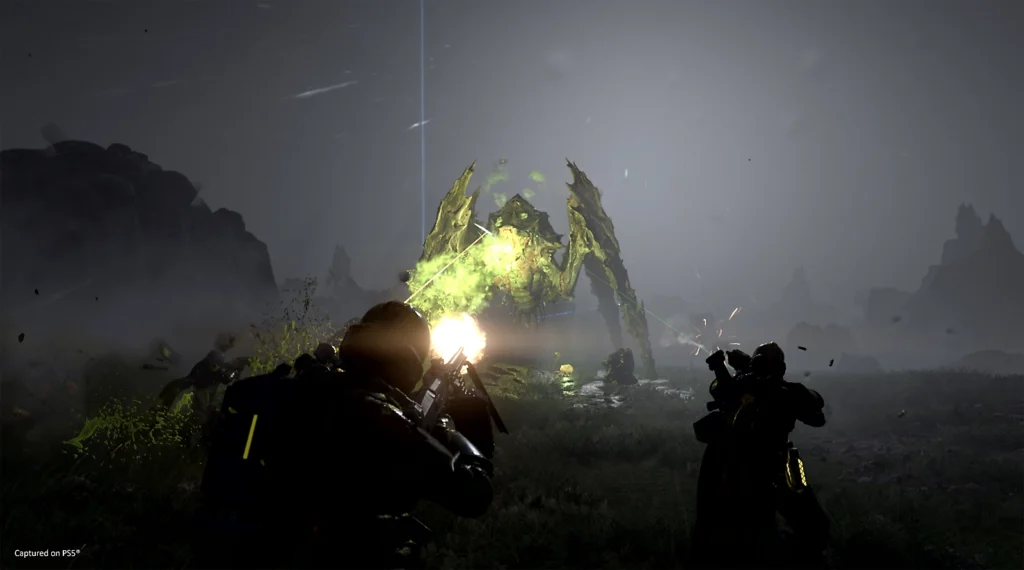
- Swarm-style pressure is usually beaten with space control (lanes, repositioning, clearing angles).
- Ranged-heavy pressure is usually beaten with line-of-sight control (cover, breaking angles, denying sightlines).
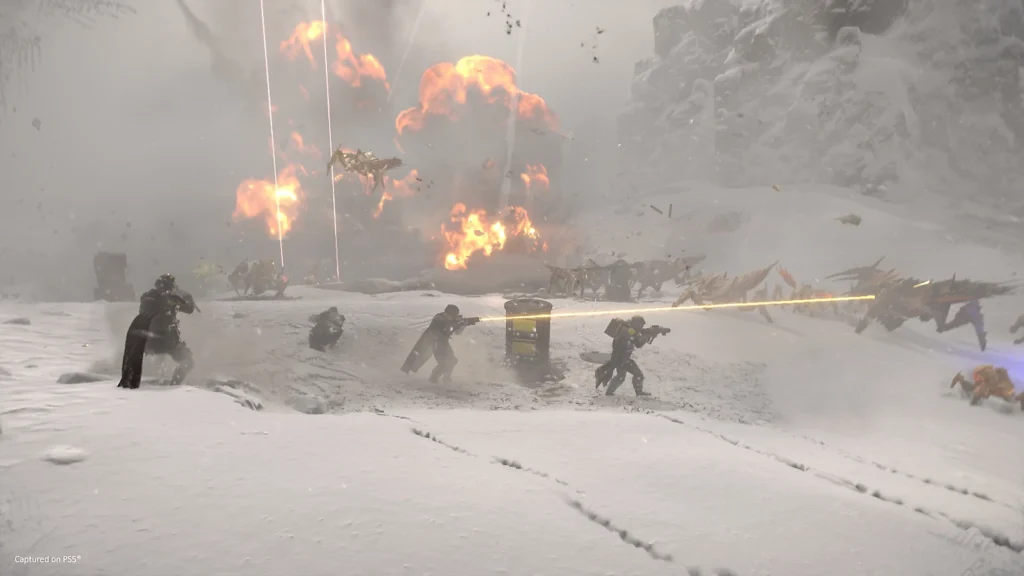
Either way, the main danger is getting stuck in one place while the threat level ramps up around you.
Don’t ignore the boring sources of pressure
If the same fight keeps restarting, it’s often because the source of reinforcements was never dealt with, or the squad never moved on. Helldivers 2 punishes drawn-out stalemates. If you feel the tempo slipping, reset the situation: reposition, resupply, and re-approach.
Co-op etiquette (friendly fire is always on)
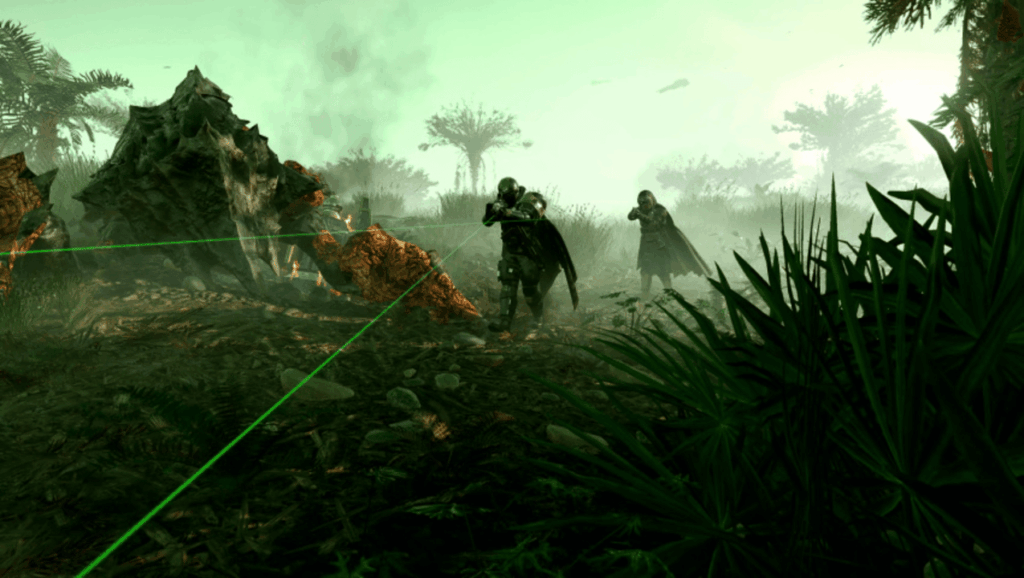
Helldivers 2 is funniest when friendly fire happens, and best when it happens less. Reinforcements are your squad’s shared respawn resource, spending them carelessly turns small mistakes into mission-ending spirals.
Three habits that instantly improve squad results:
- Call your throws and strikes. If you are about to drop something explosive, say so.
- Reinforce intelligently. Reviving someone directly into a swarm is not kindness, it’s a second death.
- Stay roughly together. Splitting can work, but only when planned. Random solo wandering creates rescue missions, not progress.
If you are not the person doing an objective interaction, your job is simple: create breathing room. If you are the person interacting, ask for what you need (cover, resupply, turret, smoke, reposition).
Common mistakes (and how to fix them fast)
Mistake: Treating every patrol like a mandatory fight
Fix: If you can avoid it without losing the objective, avoid it. Save ammo and reinforcements for the work that matters.
Mistake: Calling stratagems as a reaction, not a plan
Fix: Call early, set up your space, and let cooldowns work for you.
Mistake: Getting lost busy and drifting away from the objective
Fix: Ping the next objective, commit, and move as a group.
Mistake: Extraction panic
Fix: Arrive with resources and cooldowns if you can, set up defence early, and avoid clumping. Most extraction wipes are chain deaths caused by poor spacing.
FAQ
Q. Does Helldivers 2 require online play, and how many players can join?
A. Helldivers 2 requires online play, and the standard squad size is up to four players. If you are learning the ropes, a full squad makes objectives and recovery from mistakes far more manageable than going it alone.
Q. Does Helldivers 2 support crossplay?
A. Yes. Cross-play lets PS5 players team up with Xbox/PC players, which is useful if your group is split across platforms.
Q. How long is a typical Helldivers 2 mission?
A. It varies by objective type and how much optional content you take on, but most missions are built around a focused operation. If you are new, prioritise primaries first, then add optional tasks once you are extracting consistently.
Q. Why do we keep failing at extraction?
A. Most extraction failures come from arriving with no ammo, no cooldowns, and no plan. Start drifting towards extraction before you are completely drained, set up defence early, keep lanes open, and avoid clumping under pressure.
Q. What is the fastest way to improve as a beginner?
A. Pick one habit per session: use the map more often, call stratagems earlier, or practise disengaging from fights you do not need. When the tempo slips, reset the situation, resupply, and re-approach with a tool already active. That’s the fundamentals. Prioritise objectives, keep your cooldown rhythm healthy, and extract with what you’ve earned.
If you want another practical quick-start read, try our Hitman beginner guide, which takes the same low-friction approach into a stealth sandbox.
Please note that some links in this article are affiliate links. If you found the coverage helpful and decide to pick up the game, or anything else for your collection, through one of those links, we may earn a commission at no extra cost to you. We use this approach instead of filling Spawning Point with intrusive display ads, and rely on this support to keep the site online and fund future reviews, guides, comparisons and other in-depth gaming coverage. Thank you for supporting the site.