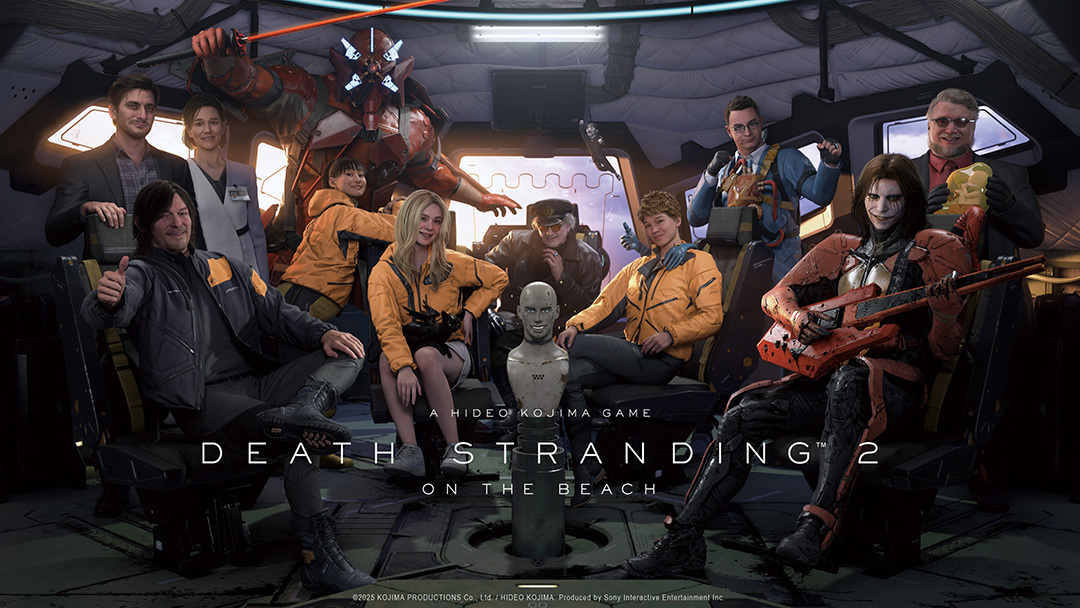
Death Stranding 2: On the Beach is a sequel that assumes you already know whether Kojima’s strand experiment is for you. The first game’s slow, contemplative delivery loop returns almost intact, but now it is wrapped around a more muscular structure, a sharper focus on character, and a bigger sense of place. Mexico and Australia replace the United Cities of America, yet the mood of lonely persistence remains.
On PS5 Pro, this is simply the best way to experience that journey. The Decima engine’s sweeping vistas, detailed character models and aggressive weather all hold together smoothly, and the option to prioritise a fluid 60 frames per second over pure spectacle has a tangible impact on how traversal and combat feel in the hands. You still need to buy into the idea of a blockbuster built around walking, but this is a more confident and approachable version of that idea.
Game Snapshot
Developer: Kojima Productions
Publisher: Sony Interactive Entertainment (PlayStation Studios)
Release Date: 26 June 2025
Platforms: PlayStation 5 (enhanced on PS5 Pro)
Price: £69.99/$69.99 (Standard Edition launch RRP)
Rating: PEGI 18 | ESRB M (17+)
Genre: Open-world action/“strand” game
Length: 40-50 hours (main story), 50-70 hours (story + side content)
Install Size: ~91.6 GB at launch
Presentation and World Design
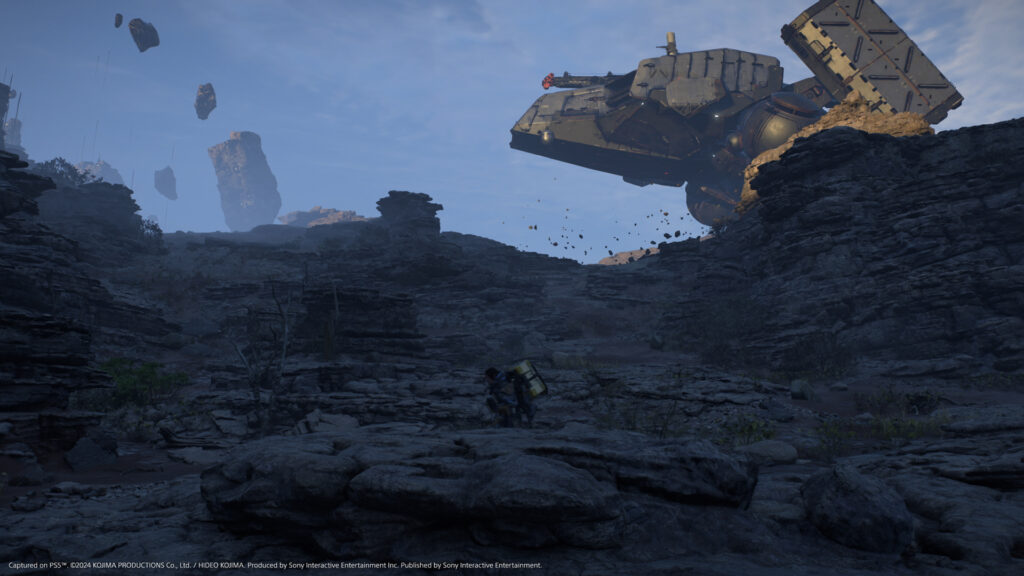
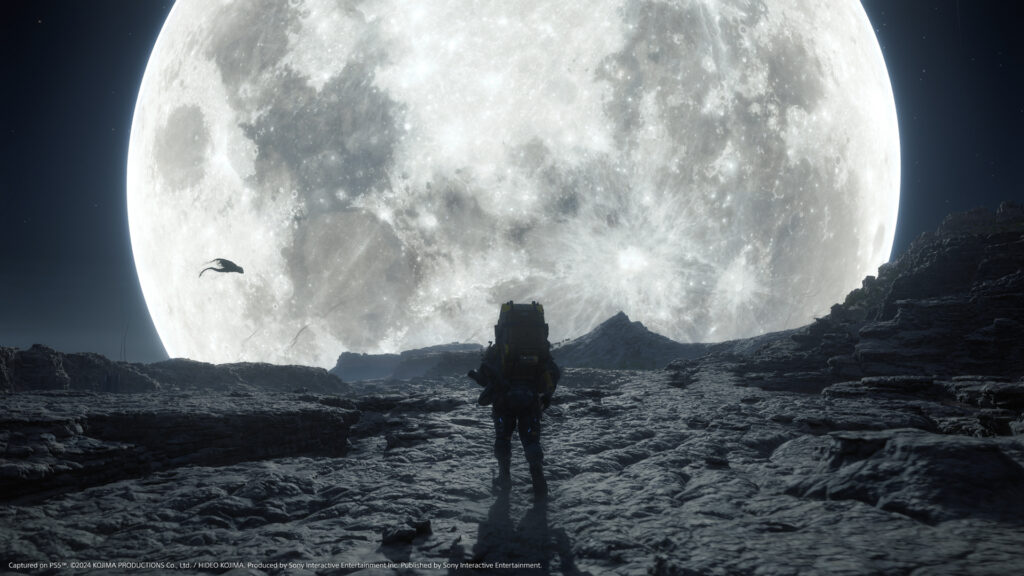
Death Stranding 2’s new route across Mexico and Australia immediately feels distinct from the first game’s ruined America. Early hours in dusty badlands slowly give way to mangrove forests, sun-bleached highways, storm-lashed coasts and mountain ranges that look genuinely hostile. The terrain is not just set dressing, it is the primary obstacle, and the art direction sells that with clarity rather than sheer visual noise.
The weather system underlines that hostility. Timefall still accelerates decay and conjures tar, but now sandstorms, flash floods and wildfire skies roll in, muting visibility and forcing you to rethink your route mid-journey. These shifts are readable at a glance, which helps you plan, yet still dramatic enough to make a routine delivery feel precarious.
Character presentation is similarly strong. The returning cast, led by Norman Reedus and Léa Seydoux, are captured with a level of nuance in animation and lighting that edges into live-action territory, without losing the stylised weirdness that defines Kojima’s worlds. Costumes, props and interface elements all support the fiction of a ramshackle networked society rather than pulling focus away from it.
Crucially, the world is dense with implied history. Abandoned civic projects, wrecked bridges and derelict outposts quietly sketch out how people tried and failed to hold on, leaving you to stitch the pieces back together one structure at a time.
Gameplay and Combat
At its heart, Death Stranding 2 is still a game about moving fragile cargo through unfriendly terrain. Weight distribution, balance, pathfinding and preparation remain central. A successful delivery is rarely about raw dexterity; it is about reading the map, understanding gradients and surfaces, and choosing when to gamble on a risky shortcut. The asynchronous online layer returns too, letting roads, ziplines, shelters and signs built by other players gradually populate your world once you reconnect each region.
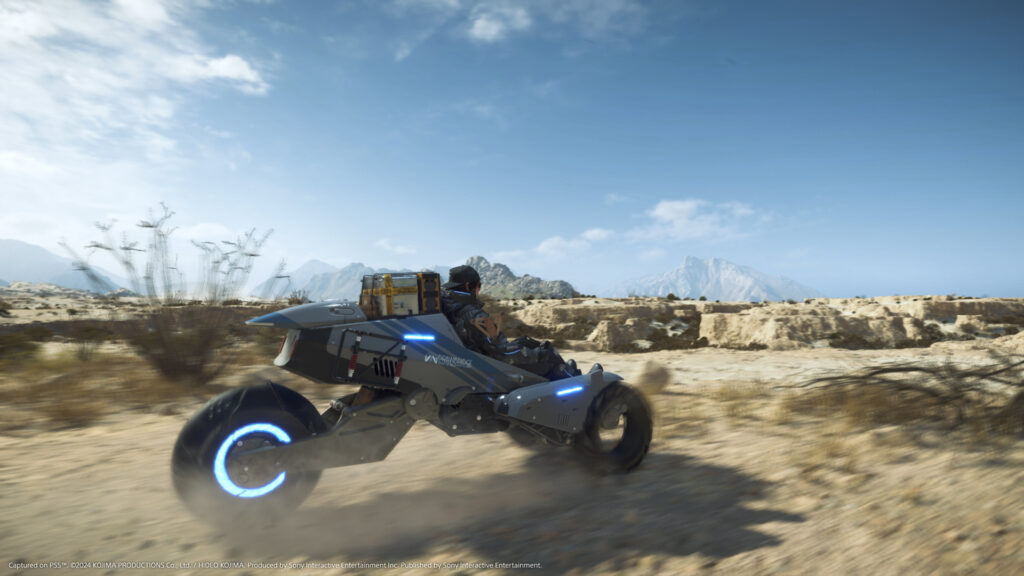
The big new structural pillar is the DHV Magellan, a mobile base-ship that acts as hub, storage and long-range transport. It changes the rhythm of the game as you unlock more routes, shifting you from desperate point-to-point hikes into a looser network of expeditions radiating out from a moving home. Combined with new traversal tools and a monorail system for shifting resources, there is more room to experiment with infrastructure and less pressure to repeat the same punishing climbs endlessly.
Combat and stealth have been notably expanded. Human enemies now patrol more varied encampments, supported by drones and heavier weaponry, while supernatural encounters are more aggressive and less easily skirted. You can still play as a near-pacifist courier, relying on non-lethal takedowns and evasive tools, but the game is far more comfortable letting you lean into a full stealth-action approach if you choose.
Moment to moment, the most meaningful difference on PS5 Pro is consistency. Opting for the higher-frame-rate mode gives traversal and close-quarters fights a welcome smoothness that makes recovering from slips, parries and last-second gadget throws feel more responsive, without fundamentally changing the design.
Story and Characters
Death Stranding 2 picks up after the events of the first game, with Sam drawn into a new organisation and a wider mission that stretches beyond the old UCA’s borders. The thematic focus shifts slightly, from reconnecting a broken nation to questioning what connection means when the world has already skirted extinction. Mexico and Australia become stages for a story about grief, responsibility and the cost of second chances.
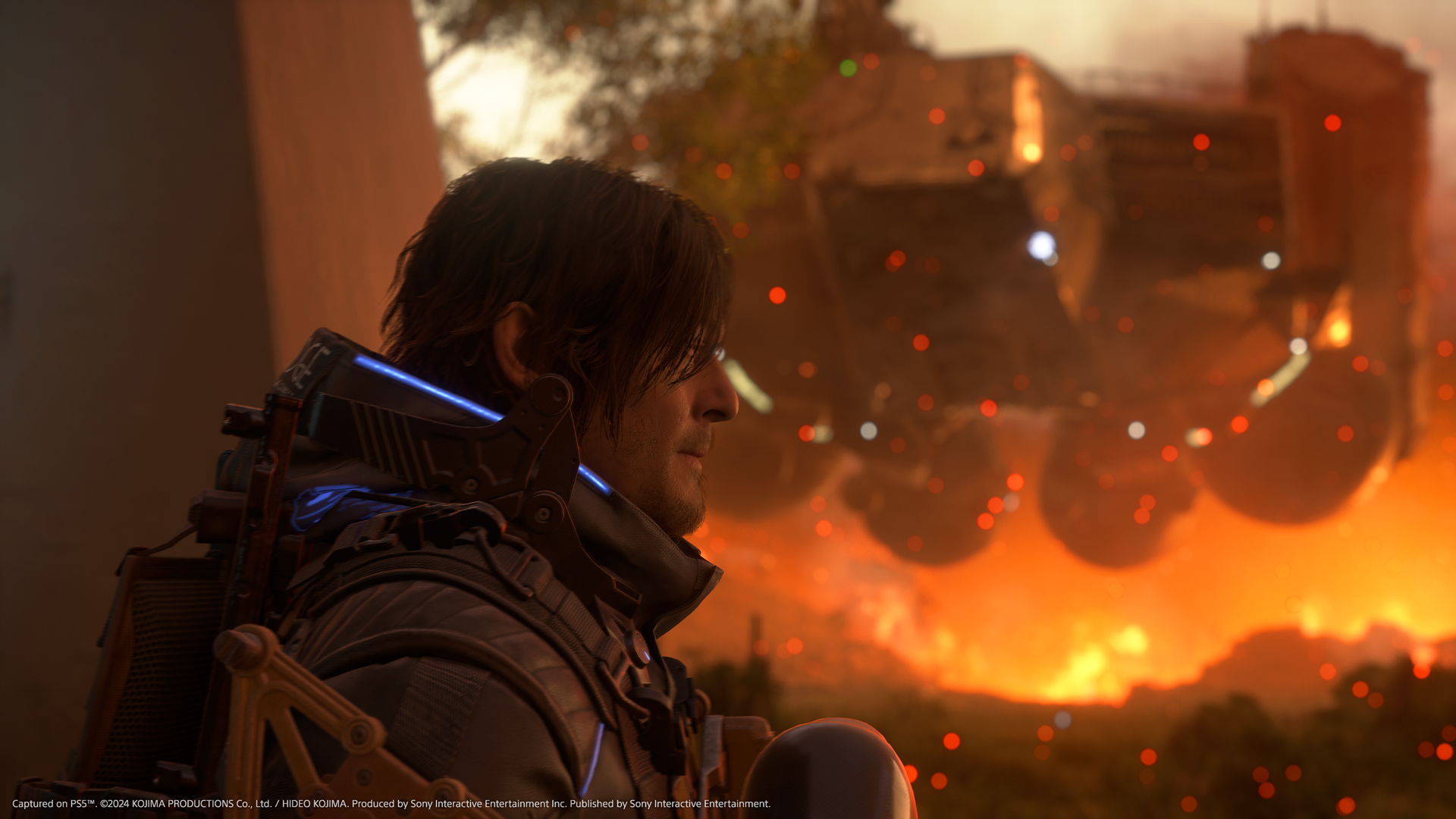

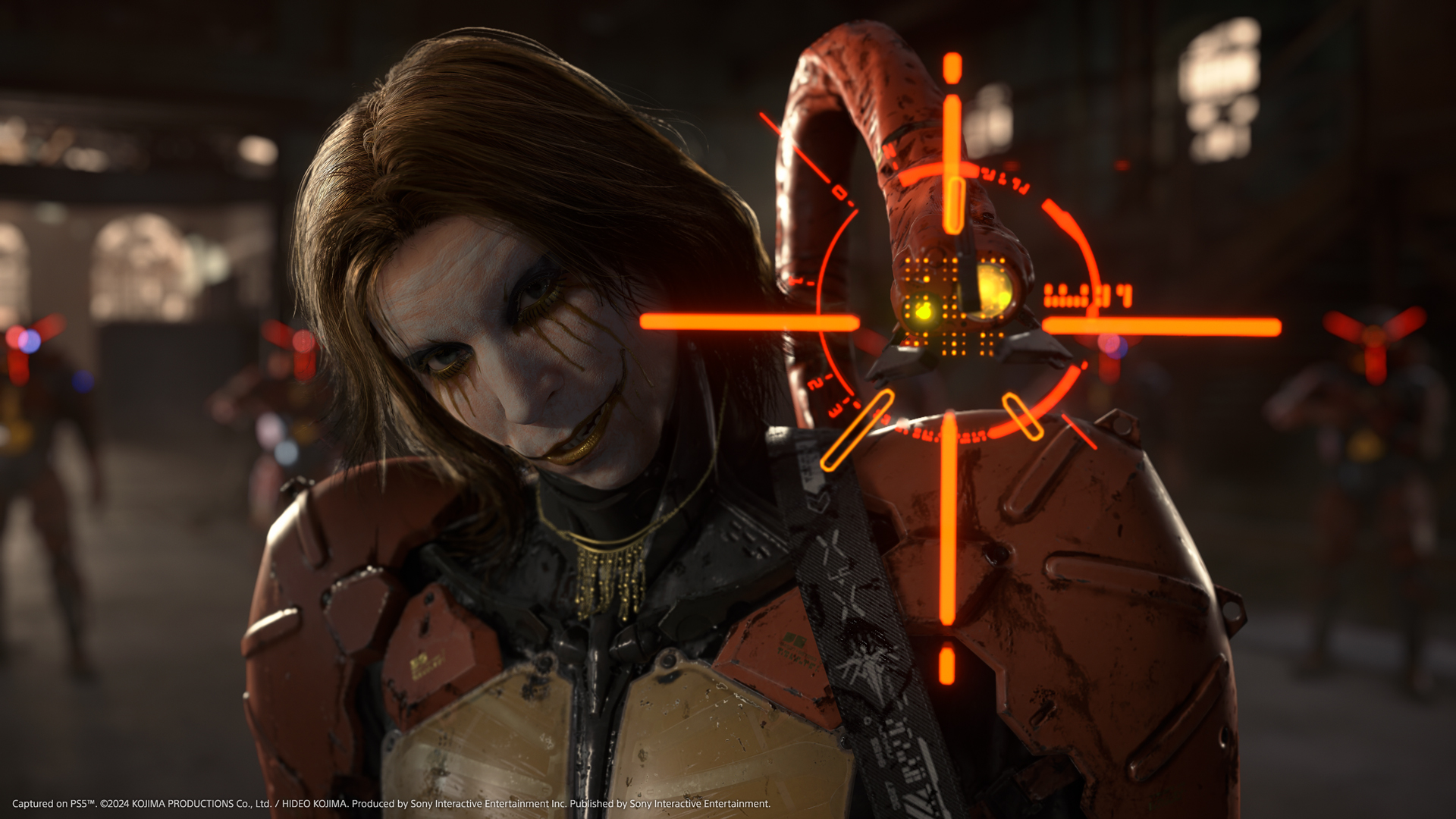

The cast is stronger and more cohesive this time. Returning figures like Sam and Fragile share the spotlight with newcomers such as Tomorrow and the crew of the Magellan, giving the narrative more of an ensemble feel. Performances are earnest and often disarmingly sincere, which helps sell some of the stranger plot swings and long philosophical digressions.
Kojima’s trademark indulgences are still present: lengthy cutscenes, deep lore dumps, and monologues that skate dangerously close to over-explaining key ideas. The difference is that the sequel does more work to keep you oriented, with clearer codex entries, better pacing between big sequences, and a stronger emotional through-line tying Sam’s personal journey to the broader stakes. It remains dense and occasionally exhausting, but it also lands more of its big emotional swings.
Value and Longevity
Death Stranding 2 is a long game, but not in the modern “map icon bloat” sense. A typical playthrough that follows the main story while engaging with a healthy slice of side deliveries and exploration sits roughly in the 40–50 hour range, with 50–70 hours a realistic figure if you are methodically upgrading structures and outposts. Completionists can push it much further, but the game does not demand that to feel complete.
There are no microtransactions, and the progression curve is tuned to reward thoughtful play rather than grind. Improving facilities, building out the Magellan, and gradually filling in the web of player-made infrastructure has a satisfying sense of momentum. Difficulty options and a separate “Story” setting give you room to adjust the friction if you primarily want to see the narrative.
Replay value is a bit more niche. You can revisit earlier chapters, tackle missed deliveries, and experiment with different build orders or difficulty levels, but the structure is still heavily story-driven, and many of its most powerful moments rely on surprise. This is a game you are more likely to live in for weeks, then revisit in chunks, rather than something you will immediately restart.
Given the hours on offer and the singular flavour of the experience, the launch price feels justified for anyone even mildly open to its unusual pace.
Technical Notes
On the technical side, Death Stranding 2 is one of the most polished PS5 releases to date. Both base PS5 and PS5 Pro offer distinct quality and performance modes with HDR, and performance targets are met with impressive consistency. Independent analysis places the performance mode at around 1440p on PS5, with a somewhat higher internal resolution and cleaner image on PS5 Pro, but settings are otherwise broadly comparable between the two machines.
The practical upshot is simple: on PS5 Pro, performance mode delivers a very clean image and a steady 60 fps, making it the obvious choice for most players. Quality mode’s extra sharpness is nice in static scenes, but the improvement over Pro performance mode is modest, while the drop in responsiveness is noticeable during traversal and combat. Articles focused on PS5 Pro even describe the quality option as largely redundant on that hardware, which tallies with hands-on impressions.
Loading times are extremely fast, both when booting the game and when fast travelling or returning to the Magellan. Streaming across large outdoor areas is seamless, and serious bugs are rare. Some reports highlight overheating warnings on early base PS5 sessions at launch, particularly when idling in map screens, but patches and the Pro’s more robust thermals appear to have kept any lingering issues contained.
Accessibility is respectable rather than exhaustive: you can tweak difficulty, aim assists and some visual options, but colour-blind support and text customisation are not as deep as the best-in-class first-party efforts.
Final Word
As a PS5 Pro experience, Death Stranding 2 is both understated and spectacular. It is not a fireworks-filled tech demo, but the combination of razor-sharp presentation, stable 60 fps performance and intricate world design quietly shows what Sony’s upgraded hardware can do when an engine is pushed with intent. More importantly, it does so in service of a game that still feels genuinely different to almost everything else at this scale.
If you bounced hard off the first Death Stranding’s pace or tone, this sequel’s added combat options and clearer structure may not fully convert you. However, for players who enjoyed that original blend of meditative traversal and eccentric sci-fi storytelling, Death Stranding 2 on PS5 Pro feels like the definitive way to return to Kojima’s strange, broken world and see where the strands lead next.
FAQ
Q. Is Death Stranding 2 noticeably better on PS5 Pro than standard PS5?
A. The core experience is the same across both consoles, but PS5 Pro offers a cleaner image and more stable performance in its high-frame-rate mode. Independent tests show only subtle visual upgrades, yet the combination of sharper detail and a very steady 60 fps makes the Pro version the most comfortable way to play if you are sensitive to image breakup or frame dips.
Q. Which graphics mode should I use on PS5 Pro?
A. For most players, performance mode is the best choice on PS5 Pro. You still get a detailed, cinematic image, but with the added smoothness that suits both traversal and the more active combat encounters. Quality mode can be attractive for slow, scenic play, yet the trade-off in responsiveness is hard to justify given how strong performance mode already looks.
Q. How long does Death Stranding 2 take to finish?
A. Expect roughly 40–50 hours to reach the credits if you prioritise main story missions with some side content along the way. A more thorough run, where you build out infrastructure, upgrade facilities and explore most regions, typically falls in the 50–70 hour bracket, while full completion can exceed 80 hours.
Q. Do I need to play the first Death Stranding before this sequel?
A. Strictly speaking, no. Death Stranding 2 includes a story recap and codex entries that explain key terms and relationships, so newcomers can follow the main beats. That said, knowledge of the original significantly enriches character arcs and emotional payoffs, and many callbacks will land better if you have spent time with Sam’s first journey.
Q. Is there co-op or traditional multiplayer, and do I need PS Plus?
A. There is no direct co-op, but the asynchronous “strand” system returns. Structures, roads and other players’ routes can appear in your world once you connect regions, and your own contributions help others in turn. This shared layer does not require a PlayStation Plus subscription, so you can enjoy it on any PS5 or PS5 Pro without extra fees.
Please note that some links in this article are affiliate links. If you found the coverage helpful and decide to pick up the game, or anything else for your collection, through one of those links, we may earn a commission at no extra cost to you. We use this approach instead of filling Spawning Point with intrusive display ads, and rely on this support to keep the site online and fund future reviews, guides, comparisons and other in-depth gaming coverage. Thank you for supporting the site.