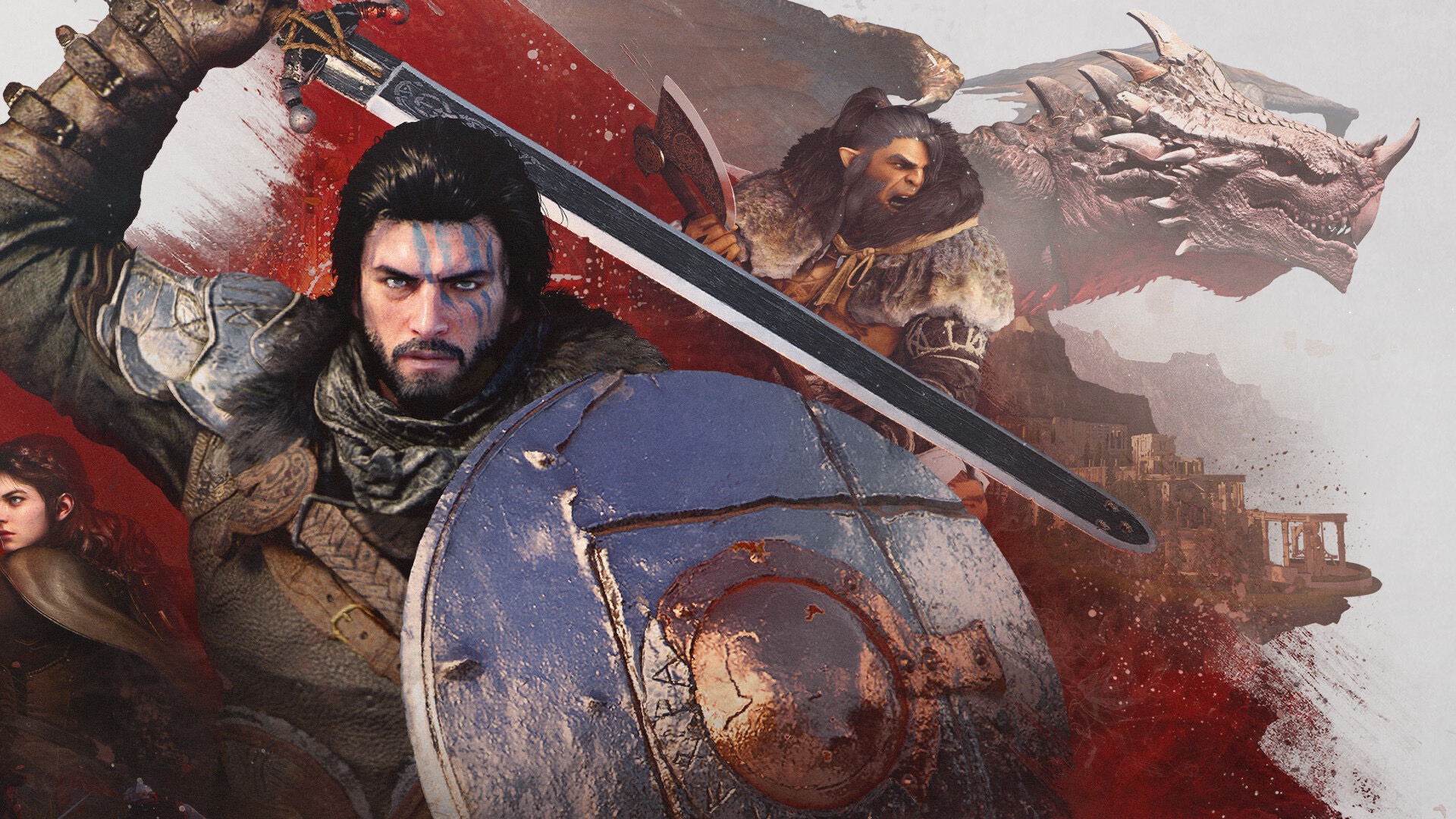
TL;DR: Score: 7.8/10. Crimson Desert is Pearl Abyss's ambitious open-world action RPG set on the fictional continent of Pywel. Combat is deep, combo-driven, and deeply rewarding on PS5, layering melee, elemental abilities, and grappling mechanics into encounters that reward mastery. The open world is vast and genuinely dense, with no fast travel and a design philosophy that prioritises discovery over convenience. The narrative is its clearest weakness: difficult to follow, inconsistently paced, and unable to match the quality of the sandbox surrounding it. PS5 Pro is the definitive console version, delivering ray-traced 4K at 60 fps via PSSR 2 where base PS5 struggles across all modes. Inventory design, healing mechanics, and menu navigation remain underdeveloped. Four million copies sold in two weeks confirm a game that resonates powerfully with its audience despite critical division.
Opening
The old assumption was that MMO studios build worlds to fill with other players, not to tell a story worth following alone. This crimson desert review is the case against that assumption, and it cuts both ways. Crimson Desert is the best open world on PS5 this generation. The story is a mess. The 8.8 user Metacritic score versus a 77 critic aggregate tells the story exactly: this is a game that inspires eighty-hour devotion and genuine frustration within the same session. On PS5 Pro, the game is transformed: ray-traced 4K at 60 fps makes this comfortably the best console version, though CPU bottlenecks remain a work in progress.Game Snapshot
| Developer / Publisher | Pearl Abyss |
| Release Date | 19 March 2026 |
| Platforms | PlayStation 5, Xbox Series X/S, Windows PC, macOS |
| Price | $69.99 / ~£54.99 |
| Rating | PEGI 18 / ESRB M (Mature 17+) |
| Genre | Action-adventure, open-world RPG |
| Length | Main story: ~60-100 hours; Main + side content: ~100-180 hours |
| Install Size | ~123 GB (PS5) |
Presentation and World Design
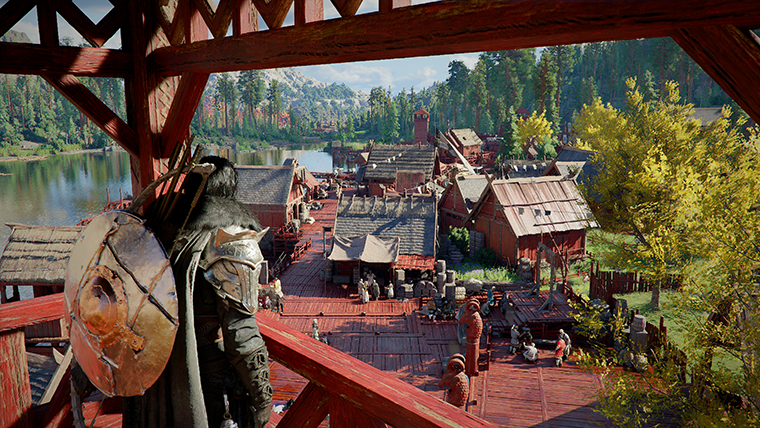 The continent of Pywel is Pearl Abyss's most impressive technical achievement. Built on an upgraded version of the BlackSpace Engine (detailed on the official Crimson Desert site), it stretches across mountains, deserts, plains, urban centres, floating ruins, and a clockwork city that ranks amongst the most imaginative locations in any open-world game this generation. The draw distances are staggering. The density is what justifies the scale. Where many open worlds scatter copy-pasted camps across featureless terrain, Crimson Desert fills its geography with discoverable mechanics, hidden bosses, and environmental storytelling that rewards slow, undirected exploration. It shares that quality with few peers; Clair Obscur: Expedition 33 trades historical grounding for stylisation, but both understand that a world should feel crafted rather than generated.
There is no fast travel. The decision is simultaneously one of Crimson Desert's best and most divisive design choices. On horseback, crossing Pywel reveals detail that a teleport system would erase: trade routes with moving caravans, dynamic weather that alters NPC behaviour, and side content that only triggers through physical proximity. For players accustomed to waypoint hopping, the friction will feel punitive. Pearl Abyss drew architectural inspiration from Sicily, and that Mediterranean warmth comes through in the stonework, market squares, and coastal settlements scattered across the southern regions.
The world is not without rough edges. Pop-in remains visible on PS5 Pro, interior spaces can feel underfurnished, and PSSR artefacting occasionally intrudes during transitions between biomes. The beauty is in the totality rather than pixel-level perfection. Pywel demands patience.
The continent of Pywel is Pearl Abyss's most impressive technical achievement. Built on an upgraded version of the BlackSpace Engine (detailed on the official Crimson Desert site), it stretches across mountains, deserts, plains, urban centres, floating ruins, and a clockwork city that ranks amongst the most imaginative locations in any open-world game this generation. The draw distances are staggering. The density is what justifies the scale. Where many open worlds scatter copy-pasted camps across featureless terrain, Crimson Desert fills its geography with discoverable mechanics, hidden bosses, and environmental storytelling that rewards slow, undirected exploration. It shares that quality with few peers; Clair Obscur: Expedition 33 trades historical grounding for stylisation, but both understand that a world should feel crafted rather than generated.
There is no fast travel. The decision is simultaneously one of Crimson Desert's best and most divisive design choices. On horseback, crossing Pywel reveals detail that a teleport system would erase: trade routes with moving caravans, dynamic weather that alters NPC behaviour, and side content that only triggers through physical proximity. For players accustomed to waypoint hopping, the friction will feel punitive. Pearl Abyss drew architectural inspiration from Sicily, and that Mediterranean warmth comes through in the stonework, market squares, and coastal settlements scattered across the southern regions.
The world is not without rough edges. Pop-in remains visible on PS5 Pro, interior spaces can feel underfurnished, and PSSR artefacting occasionally intrudes during transitions between biomes. The beauty is in the totality rather than pixel-level perfection. Pywel demands patience.
Crimson Desert: Gameplay and Combat
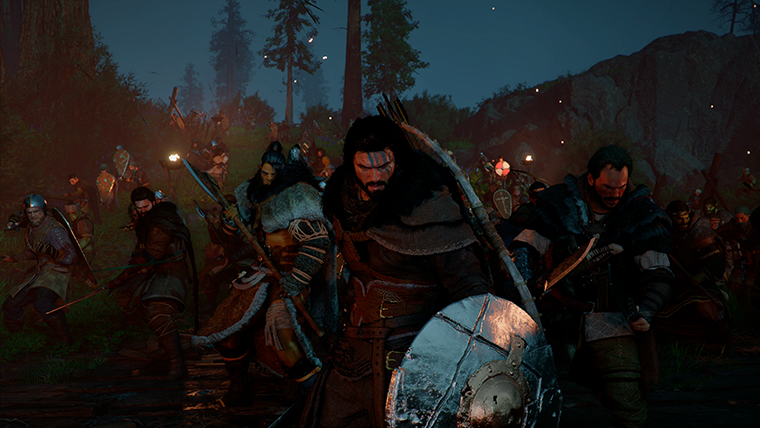 Crimson Desert's combat system is where Pearl Abyss's MMO heritage pays dividends. The combo-based melee system layers directional attacks, elemental abilities, and grappling mechanics through the Axiom bracelet into a flow that demands and rewards investment. Group fights are superb: managing multiple enemies requires spatial awareness, stamina discipline, and an understanding of which abilities chain into crowd-control sequences. The depth here rivals dedicated character-action games, and the breadth of build options, spanning melee, ranged, and magic archetypes, ensures the system stays fresh across the enormous runtime.
Boss encounters provide the sharpest highs and lowest lows. Dragons, fortress-scale automatons, and humanoid duelists each demand distinct strategies, and the spectacle can be genuinely breathtaking. The difficulty, however, spikes without warning. Several bosses feel tuned for endurance rather than skill, punishing attempts with health pools deep enough to turn a ten-minute fight into forty. The margin between exhilarating and exhausting is thinner than it should be.
Beyond combat, the sandbox activities are surprisingly deep. Fishing, cooking, crafting, hunting, trading, and crime systems each have their own progression loops and interlocking economies. For players who embraced the systems-driven approach of Kingdom Come: Deliverance II, the breadth here will feel familiar, if less historically grounded.
The inventory system is a genuine problem. Individual items consume single slots, menus are convoluted, and the food-based healing system creates constant resource management friction that works against the combat's momentum. Quality of life barely exists. Pearl Abyss knows. It ships anyway. This is the cost of ambition without refinement.
Crimson Desert's combat system is where Pearl Abyss's MMO heritage pays dividends. The combo-based melee system layers directional attacks, elemental abilities, and grappling mechanics through the Axiom bracelet into a flow that demands and rewards investment. Group fights are superb: managing multiple enemies requires spatial awareness, stamina discipline, and an understanding of which abilities chain into crowd-control sequences. The depth here rivals dedicated character-action games, and the breadth of build options, spanning melee, ranged, and magic archetypes, ensures the system stays fresh across the enormous runtime.
Boss encounters provide the sharpest highs and lowest lows. Dragons, fortress-scale automatons, and humanoid duelists each demand distinct strategies, and the spectacle can be genuinely breathtaking. The difficulty, however, spikes without warning. Several bosses feel tuned for endurance rather than skill, punishing attempts with health pools deep enough to turn a ten-minute fight into forty. The margin between exhilarating and exhausting is thinner than it should be.
Beyond combat, the sandbox activities are surprisingly deep. Fishing, cooking, crafting, hunting, trading, and crime systems each have their own progression loops and interlocking economies. For players who embraced the systems-driven approach of Kingdom Come: Deliverance II, the breadth here will feel familiar, if less historically grounded.
The inventory system is a genuine problem. Individual items consume single slots, menus are convoluted, and the food-based healing system creates constant resource management friction that works against the combat's momentum. Quality of life barely exists. Pearl Abyss knows. It ships anyway. This is the cost of ambition without refinement.
Story and Characters
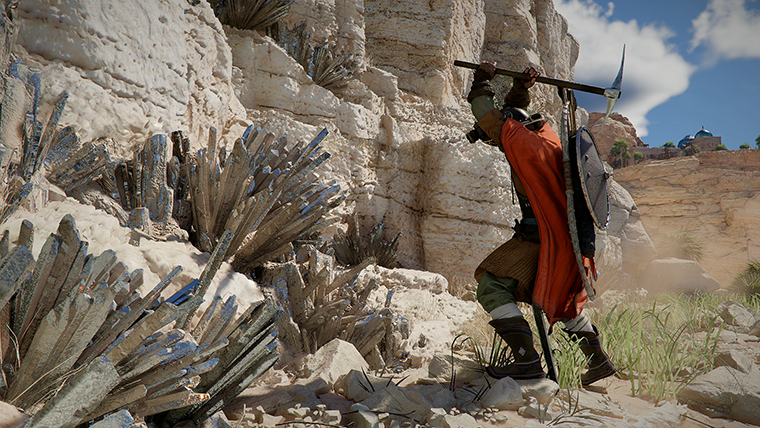 Kliff's journey to reunite the Greymanes mercenary band after a devastating attack by the Black Bears should be compelling material. The premise is strong: personal loyalty tested by escalating political conflict on a continent where power is as fluid as allegiance. The execution falls short. The narrative is difficult to follow and, at its worst, incoherent: plot threads introduce mysteries without resolving them, and character motivations shift without adequate justification.
The companions, Oongka, Yann, and Naira among them, fare better in combat than in conversation. Their banter during exploration provides welcome texture, but their personal arcs lack the specificity that makes party members memorable. They are sketched, not written. The political conflict between the Greymanes and the continent's warring factions is genuinely well-staged in its middle act, providing the narrative tension that the character arcs cannot. Where The Outer Worlds 2 builds entire quest chains around companion perspectives and moral frameworks, Crimson Desert sketches its supporting cast in broad strokes and moves on.
The game improves dramatically after the opening hours. The first ten to thirty hours are impenetrable: a wall of systems, lore, and mechanics delivered with minimal onboarding. Patience is rewarded, but the on-ramp asks too much. Players who push through find a world that opens up beautifully; those who do not will never see it.
Kliff's journey to reunite the Greymanes mercenary band after a devastating attack by the Black Bears should be compelling material. The premise is strong: personal loyalty tested by escalating political conflict on a continent where power is as fluid as allegiance. The execution falls short. The narrative is difficult to follow and, at its worst, incoherent: plot threads introduce mysteries without resolving them, and character motivations shift without adequate justification.
The companions, Oongka, Yann, and Naira among them, fare better in combat than in conversation. Their banter during exploration provides welcome texture, but their personal arcs lack the specificity that makes party members memorable. They are sketched, not written. The political conflict between the Greymanes and the continent's warring factions is genuinely well-staged in its middle act, providing the narrative tension that the character arcs cannot. Where The Outer Worlds 2 builds entire quest chains around companion perspectives and moral frameworks, Crimson Desert sketches its supporting cast in broad strokes and moves on.
The game improves dramatically after the opening hours. The first ten to thirty hours are impenetrable: a wall of systems, lore, and mechanics delivered with minimal onboarding. Patience is rewarded, but the on-ramp asks too much. Players who push through find a world that opens up beautifully; those who do not will never see it.
Crimson Desert: Value and Longevity
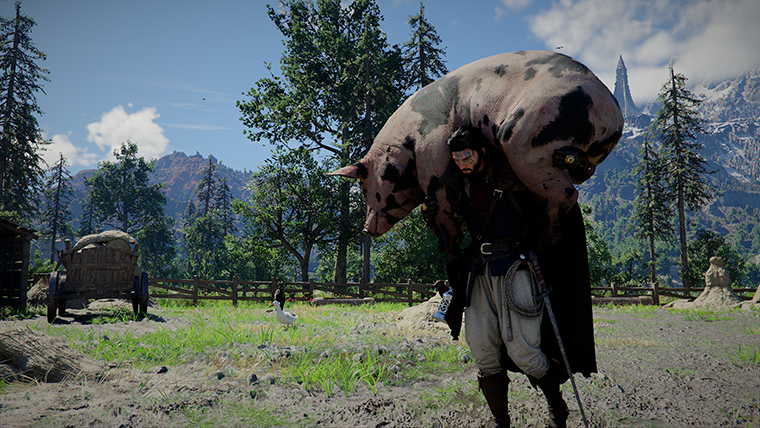 The numbers are staggering. A main story playthrough runs sixty to a hundred hours depending on engagement with side content. Full completion, across 430 quests and 76 bosses, approaches four hundred hours. At $69.99, the raw hours-per-dollar ratio is exceptional by any standard. The question is whether those hours earn their length or pad it.
The honest answer is both. Crimson Desert's sandbox rewards exploration with genuine discovery: hidden bosses, environmental puzzles, and side stories that rival the main quest in quality. Four hundred hours is a long time to spend with a weak story. The main narrative, however, overstays its welcome. Several reviewers who spent a hundred hours felt the game should have been fifty to sixty. The commercial response has been emphatic: four million copies in two weeks, roughly $200 million in revenue, and a user Metacritic score of 8.8 that sits well above the critic aggregate of 77. The audience that loves this game loves it deeply. For anyone weighing up which console to buy in 2026, Crimson Desert is a strong argument for investing in PS5 Pro over the base model.
The numbers are staggering. A main story playthrough runs sixty to a hundred hours depending on engagement with side content. Full completion, across 430 quests and 76 bosses, approaches four hundred hours. At $69.99, the raw hours-per-dollar ratio is exceptional by any standard. The question is whether those hours earn their length or pad it.
The honest answer is both. Crimson Desert's sandbox rewards exploration with genuine discovery: hidden bosses, environmental puzzles, and side stories that rival the main quest in quality. Four hundred hours is a long time to spend with a weak story. The main narrative, however, overstays its welcome. Several reviewers who spent a hundred hours felt the game should have been fifty to sixty. The commercial response has been emphatic: four million copies in two weeks, roughly $200 million in revenue, and a user Metacritic score of 8.8 that sits well above the critic aggregate of 77. The audience that loves this game loves it deeply. For anyone weighing up which console to buy in 2026, Crimson Desert is a strong argument for investing in PS5 Pro over the base model.
Crimson Desert PS5 Pro: Technical Notes
PS5 Pro is the definitive way to play Crimson Desert on console. Performance Mode delivers upscaled 4K (from 1080p via PSSR 2) at 60 fps with high ray tracing enabled. Balanced Mode offers 1440p at 40 fps for players who prefer a middle ground. Quality Mode targets 4K at 30 fps with high ray tracing for maximum fidelity. The improvement over base PS5 is not incremental; it is transformative. Base PS5 struggles across all three modes: Performance dips into the mid-forties during dense scenes with blotchy shadows from FSR3 and visible screen tearing, and Digital Foundry described it as "not recommended." PS5 Pro smooths much of that roughness, though CPU bottlenecks persist in busy towns and heated combat, where frame rates can halve regardless of GPU headroom. The CPU is the ceiling. Post-launch patches have widened the gap further. The initial PS5 patch addressed performance "massively" using FSR upscaling, and a subsequent PS5 Pro-specific patch sharpened image quality and reduced PSSR artefacting. Pop-in and interior artefacting have not been fully resolved, but the trajectory is steady improvement. For anyone considering which version to buy: PS5 Pro with Performance Mode is the recommendation without hesitation.Final Word
Crimson Desert is Pearl Abyss proving it can build a world worth living in, and then struggling to tell a story worth following through it. The combat is amongst the best on PS5: layered, demanding, and spectacularly animated. The open world is a genuine achievement, the kind where a wrong turn on horseback leads to a hidden boss, a fortress-scale automaton guarding the gates of the Clockwork City, or a clifftop vista overlooking the Sicilian-inspired southern settlements that justifies the ride alone. The story is not. It is the kind of game where you will spend twenty minutes in a breathtaking sword fight against a dragon, then sit through a cutscene that makes you question whether anyone proofread the script. For sandbox explorers and combat specialists, it is essential. It also sits comfortably among the best PS5 games of this generation for those who prioritise world design over narrative. Players who bought The Witcher 3 for its storytelling will be frustrated within ten hours. Anyone who bounced off Elden Ring's opacity will hit the same wall here by hour five. On PS5 Pro, the performance finally matches the scale. The world deserves it.FAQ
Is Crimson Desert multiplayer or single-player?
Single-player only. Despite Pearl Abyss's MMO pedigree with Black Desert Online, Crimson Desert is a standalone single-player experience with no multiplayer component at launch. No online features, co-op, or competitive modes have been announced. The game's design retains structural traces of its MMO origins in its sandbox systems and progression loops, but the experience is entirely offline.Is Crimson Desert like Black Desert Online?
Crimson Desert is a standalone single-player RPG that shares combat DNA with Black Desert Online but occupies a different genre entirely. It uses an upgraded version of Pearl Abyss's engine and inherits the studio's strengths in combat design and sandbox systems, but it is set in a separate fictional universe (the continent of Pywel), features a named protagonist with a scripted story, and has no online component. The MMO lineage shows in the breadth of activities and the systems-heavy design philosophy, not in the structure.How long is Crimson Desert?
The main story runs approximately sixty to a hundred hours depending on side content engagement. A thorough playthrough including significant side quests reaches a hundred to a hundred and eighty hours. Full completion across all 430 quests and 76 bosses approaches four hundred hours. Focused main-quest runs by some reviewers clocked closer to forty-five to fifty hours.Is Crimson Desert worth buying?
Crimson Desert is worth buying for players who prioritise combat and exploration over narrative. The sandbox depth and hundreds of hours of genuine discovery justify the $69.99 asking price. The narrative is widely criticised as incoherent, and quality-of-life issues (inventory, healing, menus) add avoidable friction. The user Metacritic score of 8.8 versus a critic aggregate of 77 reflects a game that polarises: those who connect with the loop love it deeply.How does Crimson Desert run on PS5 Pro?
PS5 Pro is the best way to play Crimson Desert on console. Performance Mode delivers PSSR-upscaled 4K at 60 fps with high ray tracing; Balanced Mode runs at 1440p/40fps; Quality Mode targets 4K at 30 fps for maximum fidelity. Base PS5 struggles across all modes, with Digital Foundry describing Performance Mode as "not recommended" due to mid-forties frame rates and FSR3 artefacts. CPU bottlenecks on PS5 Pro still cause drops in dense areas, but post-launch patches have steadily improved stability. The gap between base and Pro is the widest of any current PS5 title.Does Crimson Desert have a good story?
The story is Crimson Desert's most consistent weakness across reviews. The premise, a mercenary leader reuniting scattered companions during continental conflict, is solid. The execution is criticised as difficult to follow, narratively incoherent in places, and padded beyond its natural length. Several reviewers who spent over a hundred hours felt the game should have been fifty to sixty. The sandbox and combat, not the narrative, are the reasons to play.Is Crimson Desert open world?
Yes. The game is set on the open continent of Pywel, featuring multiple distinct biomes including mountains, deserts, plains, urban centres, floating ruins, and a clockwork city. There are no loading screens between areas. Notably, there is no fast travel system: all navigation is on foot or horseback, which rewards exploration but adds significant traversal time between objectives.Does Crimson Desert run on Mac?
Yes. Crimson Desert launched day-one on macOS alongside console and PC versions, a rare simultaneous Mac release for a AAA title. The macOS version uses MetalFX upscaling and supports hardware ray tracing on M3 and M4 Apple Silicon chips. M2 Pro or newer is the recommended minimum specification.
Support Spawning Point
Please note that some links in this article are affiliate links. If you found the coverage helpful and decide to pick up the game, or anything else for your collection, through one of those links, we may earn a commission at no extra cost to you. We use this approach instead of filling Spawning Point with intrusive display ads, and rely on this support to keep the site online and fund future reviews, guides, comparisons and other in-depth gaming coverage. Thank you for supporting the site.
Please note that some links in this article are affiliate links. If you found the coverage helpful and decide to pick up the game, or anything else for your collection, through one of those links, we may earn a commission at no extra cost to you. We use this approach instead of filling Spawning Point with intrusive display ads, and rely on this support to keep the site online and fund future reviews, guides, comparisons and other in-depth gaming coverage. Thank you for supporting the site.