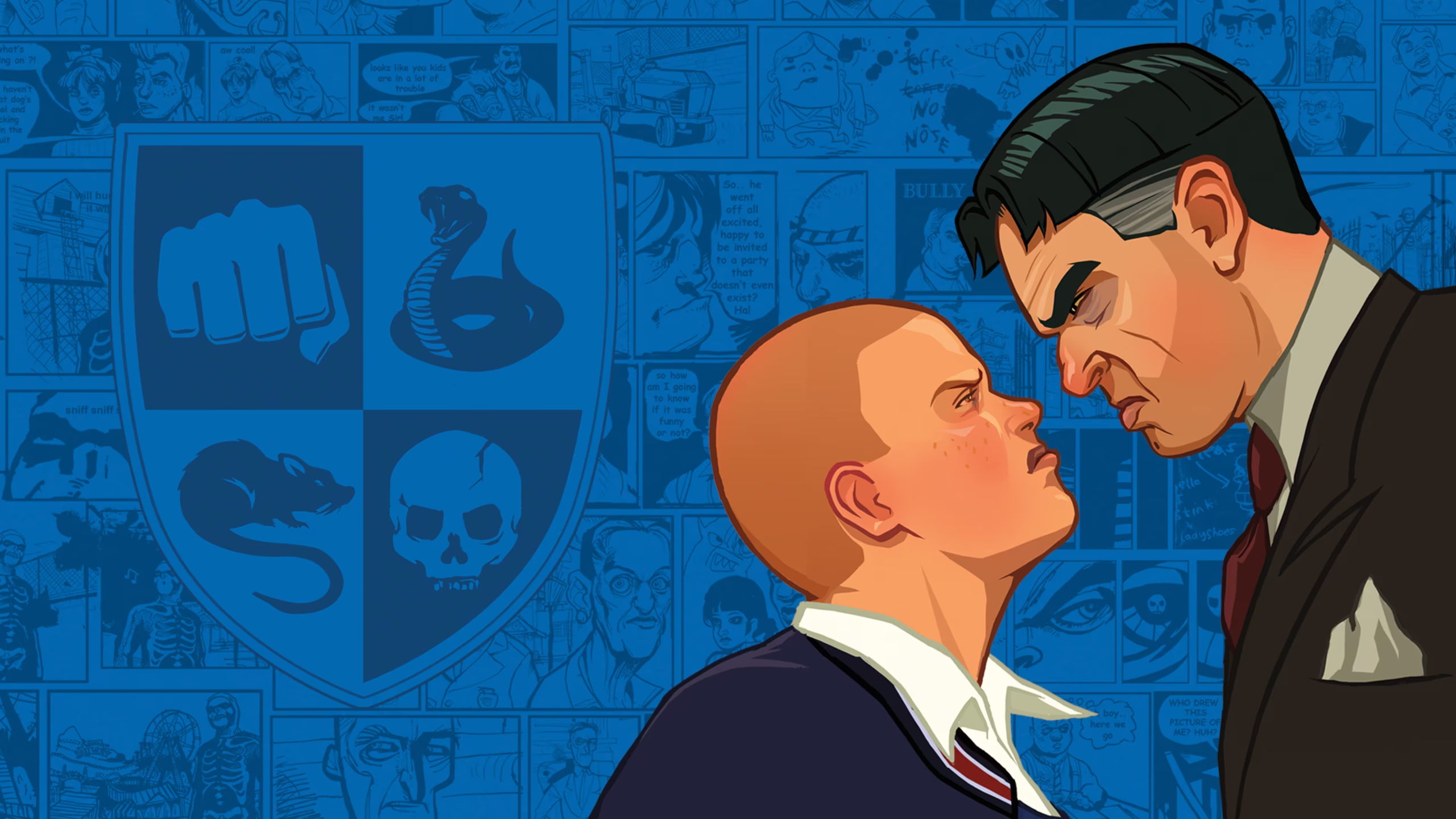
When Bully arrived on PlayStation 2, it was overshadowed by controversy long before most players had seen a single frame of gameplay. Headlines focused on the title and Rockstar’s reputation after Grand Theft Auto, with critics accusing the studio of glamorising bullying. In practice, the game turned out to be something different: a mischievous, occasionally clumsy but often surprisingly warm-hearted take on adolescence and institutional failure. With the benefit of distance, Bully now looks less like a scandal and more like one of Rockstar’s most intriguing side projects.
It is neither as sprawling as GTA nor as dour as some later open worlds. Instead, it captures the awkwardness, unfairness, and absurdity of school life through a sandbox that is tighter in scope but rich in personality.
A smaller, sharper sandbox
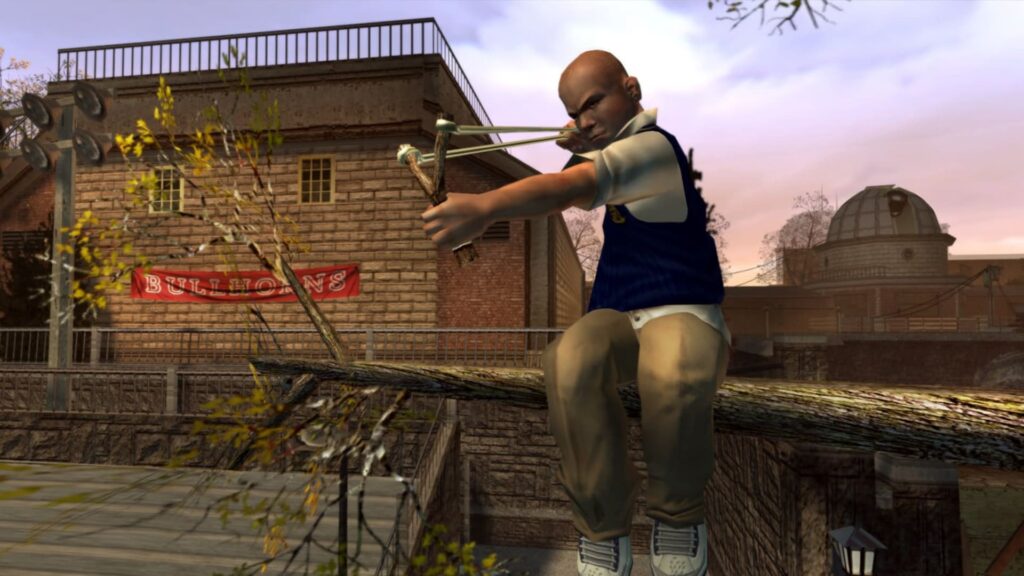
Bullworth Academy and its surrounding town form a compact open world. You are not stealing cars across a whole state; you are racing bikes between school gates, corner shops, and carnival rides. This more intimate scale benefits the structure. You quickly learn the geography of the corridors, dormitories, and nearby streets, which makes moving between classes, missions, and side activities feel purposeful rather than like padding.
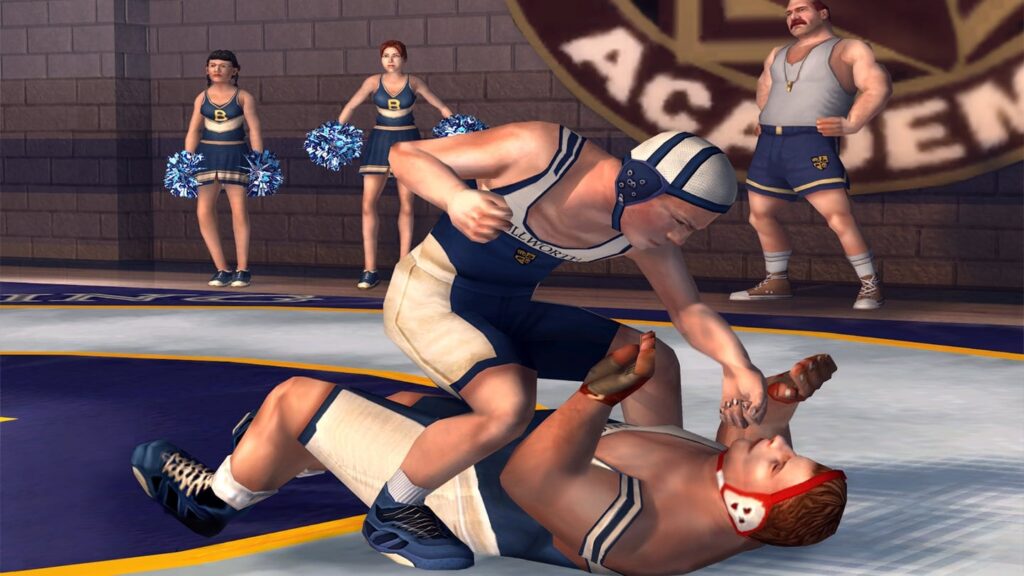
The day–night cycle and timetable underpin everything. Mornings and afternoons are mostly reserved for lessons or story missions, while evenings open up space for exploring, errands, or simply getting into mischief. Classes themselves are short mini-games that offer tangible rewards, such as improved bike handling from Gym or new items and abilities from Chemistry and English. This is a clever piece of design, turning what could have been a purely cosmetic “school” setting into something with mechanical teeth. Attending lessons becomes a strategic choice, not just a chore.
Side activities build on this foundation. You might find yourself delivering papers, mowing lawns, playing arcade machines, or completing platforming challenges on a skateboard. None of these diversions are as deep as full-blown systems in larger games, but they add texture and reinforce the sense that Bullworth is a lived-in place where kids find their own entertainment within rigid institutional structures.
Tone and character
Jimmy Hopkins is a fascinating protagonist. On paper, he is a troublemaker: expelled from multiple schools, quick to fight, and happy to push back against authority. Yet Bully paints him as more reactive than malicious. Many missions revolve around helping weaker students, exposing hypocritical adults, or challenging the school’s entrenched hierarchy rather than mindlessly tormenting others. The satire leans broad, sometimes very broad, but there is a streak of empathy running through it that often gets overlooked.
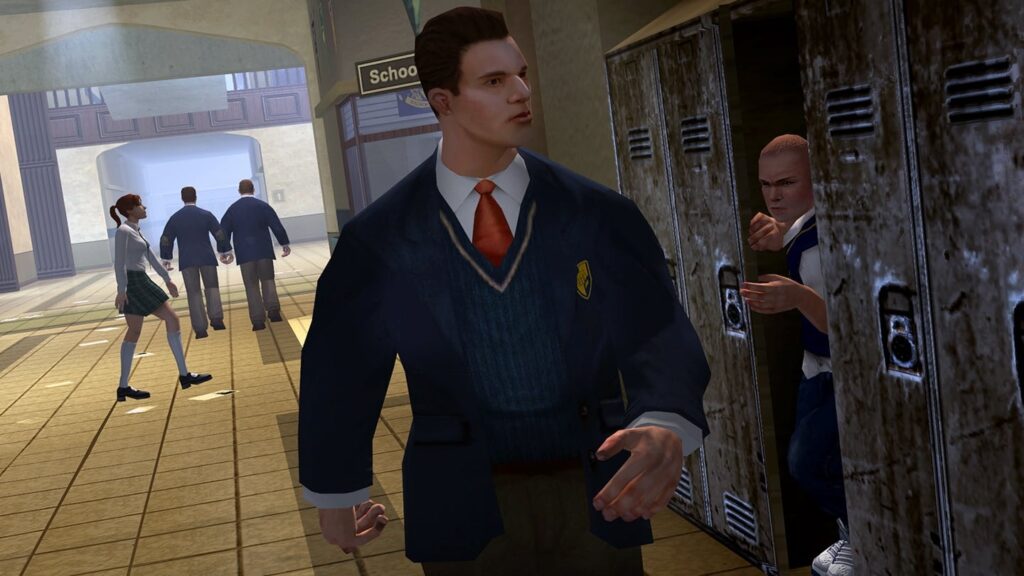
The various cliques, from preppies and nerds to jocks and greasers, are exaggerated yet recognisable caricatures of school social groups. Each faction has its own hangouts, dress sense, and quest lines. Spending time with them fleshes out their motivations and insecurities, even as the writing pokes fun at their extremes. Teachers and staff are similarly larger-than-life, ranging from the well-meaning but ineffective to the openly corrupt, and their behaviour underscores how the institution often fails the students it is supposed to protect.
Dialogue can be crude and some jokes have aged poorly, reflecting both Rockstar’s sensibilities at the time and broader media attitudes of the mid-2000s. Even so, there are moments of genuine tenderness: small acts of kindness between students, glimpses of Jimmy’s desire for stability, and quiet scenes that sit in contrast to the louder pranks and scraps. These touches give the game a human core beneath the chaos.
Seasonal structure
One of Bully’s most effective design choices is its use of the academic year as a narrative spine. The story unfolds across distinct chapters tied to different seasons, which subtly reshape both the world and the tone. Early missions focus on establishing the cliques and Jimmy’s place in the school ecosystem. As time passes, the stakes escalate, relationships shift, and the environment itself reflects the passing months.
The Halloween and Christmas sections are particular highlights. Halloween night bathes the campus in orange and black, with costumes, pranks, and themed activities temporarily transforming Bullworth into something more fantastical. Later, the arrival of snow and winter uniforms changes the mood. Familiar spaces feel newly hostile or inviting depending on the weather, and simple details like breath in the air or decorations on buildings help sell the illusion of time moving forward.
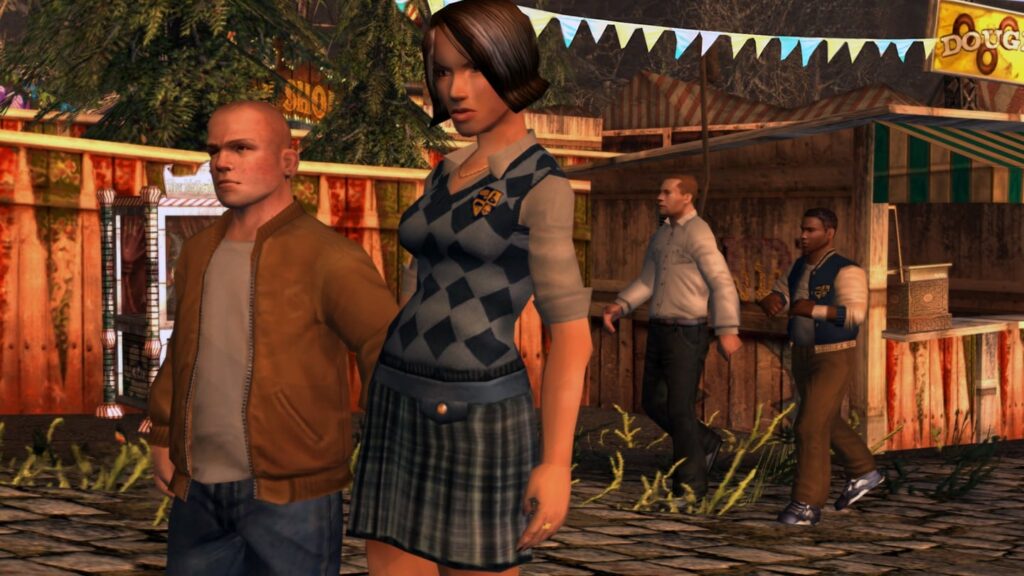
These seasonal shifts make the world feel more dynamic than a static backdrop. They also reinforce the school fantasy: term times, holidays, and end-of-year tensions are universal touchpoints, and Bully uses them to ground its exaggerated characters in something relatable. The structure gives the game a gentle momentum, guiding you from chapter to chapter without the bloat that can afflict larger open worlds.
Legacy and what might have been
Bully has enjoyed a steady cult following in the years since its original release, helped by the Scholarship Edition and later Anniversary Edition bringing it to more platforms and adding extra content like new classes and missions. For many players, revisiting Bullworth with slightly cleaner visuals and quality-of-life tweaks has reinforced the sense that this is one of Rockstar’s more distinctive works, not just a side project between GTA entries.
Talk of a sequel has surfaced repeatedly, sometimes accompanied by rumours of prototypes and early development work that never made it to release. The idea of returning to a school-based sandbox with modern systems and storytelling sensibilities is undeniably appealing. However, it is also easy to see why such a project might be tricky. Bully walks a fine line between satire and sensitivity, and expectations today around representation, humour, and depictions of bullying are very different from those of 2006. Any follow-up would have to reckon carefully with that legacy.
In hindsight, Bully stands as a snapshot of Rockstar at an experimental moment. It is more grounded and intimate than its headline crime series, more playful in premise yet occasionally more compassionate in its character work. Some elements have aged awkwardly, and mechanically it shows its era, with stiff combat and basic AI by modern standards. But its commitment to a specific setting and period of life, and its willingness to find drama in schoolyard politics rather than world-ending stakes, make it feel refreshingly offbeat even now.
Why Bully is still worth revisiting
Today, Bully is worth returning to for more than just curiosity. Its compact world design makes it easier to revisit than some sprawling open worlds, and its focus on routine, classes, and social structures gives it a flavour that few other games have matched. You can blast through the main story in a focused playthrough or linger in Bullworth, chasing 100 percent completion, mini-game scores, and collectibles tucked into forgotten corners.
It also offers an interesting lens on how Rockstar’s approach to mission scripting, characterisation, and environmental storytelling has evolved. You can see seeds of later design decisions in how missions are framed and how side activities feed into your relationship with the world. For players who grew up in the mid-2000s, there is an added layer of nostalgia in revisiting a stylised version of that era’s school life, from fashions to cultural references.
Bully is not flawless, yet its quirks are part of its charm. In an industry often dominated by safe bets and familiar settings, its very existence as a school-set open world about surviving adolescence feels quietly bold. Two decades on, it remains one of Rockstar’s most memorable experiments, and one that still deserves a place in conversations about the studio’s best work.
Please note that some links in this article are affiliate links. If you found the coverage helpful and decide to pick up the game, or anything else for your collection, through one of those links, we may earn a commission at no extra cost to you. We use this approach instead of filling Spawning Point with intrusive display ads, and rely on this support to keep the site online and fund future reviews, guides, comparisons and other in-depth gaming coverage. Thank you for supporting the site.