Opening
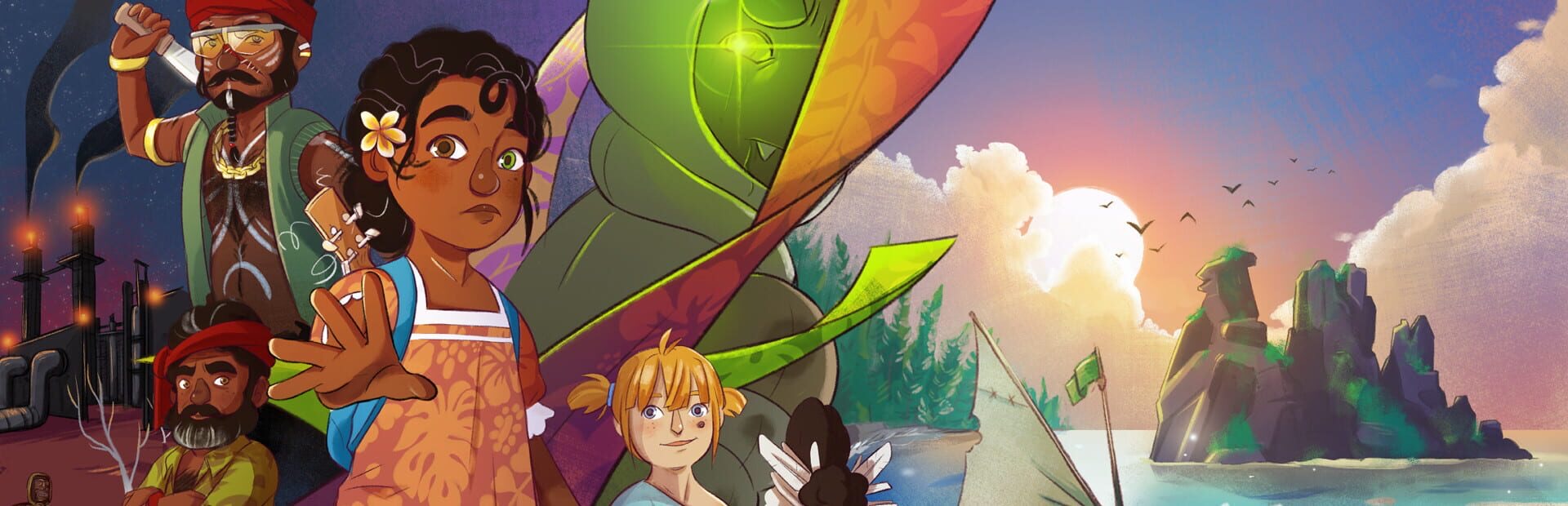
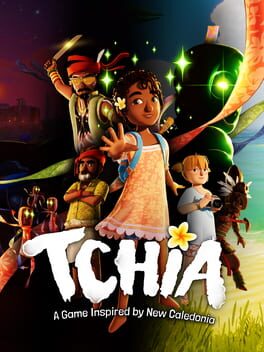
No other open-world game in the last decade is set in New Caledonia. That singularity still holds in 2026. Awaceb's debut, published by Kepler Interactive and released on 21 March 2023, centres on a girl crossing a fictional archipelago drawn from Kanak culture and landscape, with a soul-jumping mechanic that lets her inhabit animals and objects to navigate, solve puzzles, and survive. Three years on, available on every major platform including Xbox Game Pass, the question is whether this particular combination of setting and mechanic holds up as more than a cultural curiosity. It holds. Tchia's open world is short by genre standards and its combat never deepens, but the soul-jumping system and the New Caledonian atmosphere deliver something that no comparable game attempts, and in 2026 that remains reason enough to spend twelve hours inside it.
Game Snapshot
| Developer | Awaceb | |
| Publisher | Kepler Interactive | |
| Release Date | 21 March 2023 (PS4/PS5/PC); 27 June 2024 (Switch); 11 July 2024 (Xbox Series X/S) | |
| Platforms | PS4, PS5, PC (Steam/Epic), Nintendo Switch, Xbox Series X/S | |
| Price | £24.99 / $29.99 (widely discounted in 2026) | |
| Rating | PEGI 12 / ESRB T (Teen) | |
| Genre | Action-adventure / open-world exploration | |
| Length | ~12–15 hours (main story); ~20+ hours (main + side content) | |
| Install Size | ~15 GB (PC) | ~8 GB (PS5) |
| Game Pass | Yes, available on Xbox Game Pass (day-one on Xbox, July 2024) |
The archipelago Awaceb built is the game's most durable achievement. Inspired by New Caledonia's geography and by Kanak visual culture, the islands span beaches, dense jungle interiors, coastal cliffs, and village settlements, all rendered with a warm, tropical clarity that makes the environment read as a place rather than a level. The team travelled to Lifou for research and recruited indigenous voice actors; characters speak French and Drehu, the language of the Loyalty Islands, and that linguistic specificity gives the world an authenticity that synthetic localisation cannot replicate. The world is small but coherent.
Navigation is deliberately low-direction. Tchia's map does not show the player's current position, pushing exploration by landmark and observation rather than waypoint tracking. The best open-world games on PS5 tend to guide their players through dense UI overlays; Tchia removes that scaffold entirely and trusts the environment to communicate. The approach suits the archipelago's scale and keeps the world feeling discovered rather than unlocked. The trade-off is that players who lose their bearings in jungle interiors can spend genuine time reorienting, and the sparse NPC population across larger island areas reinforces the sense of emptiness rather than spaciousness.
Visually, the game performs with consistency across PS5 and PC at the higher settings. The Switch version runs adequately in handheld mode, with some reduction in foliage density. No performance modes are required given the game's modest visual demands.
Tchia 2026: Gameplay and Soul-Jumping
##IMAGE:Tchia — soul-jumping mechanic and animal possession gameplay on PS5:tchia-02-1920.jpg##
Soul-jumping earns Tchia its identity. The mechanic lets Tchia leave her own body and occupy any animal or object in the environment: a fish for underwater navigation, a bird for altitude, a torch for fire-based puzzles, a rock for weight. The system supports over 30 animal types and hundreds of individual objects. It is inventive and functional in equal measure. Finding the right vessel for a specific crossing or puzzle produces small moments of satisfaction that repeat without diminishing, and the variety of objects available means the solutions are rarely singular.
The Soul-Melodies mechanic extends this further. Playing specific chords on Tchia's ukulele triggers environmental effects: summoning creatures, altering weather, guiding navigation. The ukulele sequences are rhythm-based and represent some of the game's most distinctive moments, combining the cultural grounding of the instrument with a tangible mechanical function. They slow the pace deliberately, and that rhythm is part of the game's identity rather than a disruption of it.
Where the system falls short is integration with the story. The soul-jumping mechanic has narrative potential that the writing does not pursue: key story moments happen around Tchia rather than through her unique ability, and the combat encounters that require the mechanic do not evolve over the game's length. The combat remains the same kind of engagement from the first island to the last, which means the back half of the game asks the player to repeat solutions they mastered in the first third. The mechanic is strong enough to sustain twelve hours. It would not sustain twenty.
The broader activity set compensates with variety: photography challenges, clothing customisation, boat exploration, and collectible trinkets scattered across the archipelago provide diversions that fit the world's tone without demanding progression investment. For a contrasting approach to open-world traversal, Red Dead Redemption 2 on PS5 shows how constraint and consequence can generate a different kind of freedom; Tchia's frictionless approach is the opposite philosophy, and it earns its own kind of satisfaction.
Story and Characters
##IMAGE:Tchia — New Caledonian characters, Kanak culture, and rescue narrative:tchia-03-1920.jpg##
The premise is direct: Tchia's father has been kidnapped by a tyrant ruler named Pwi Dua, and she must cross the archipelago to rescue him. The structure is episodic, with each island introducing a new community and a new set of people who help or complicate her journey. This is not a story of branching choices or narrative weight; it is a story about encountering places and the people who live in them.
What Awaceb achieves within that framework is cultural specificity rather than plot complexity. The characters Tchia meets speak their own languages, carry their own concerns, and exist within a society that the game renders with consistent internal logic rather than fantasy-game shorthand. The indigenous voice cast and the Kanak cultural research ground the character interactions in something genuine. The BAFTA for Game Beyond Entertainment and the Games for Impact award at The Game Awards 2023 reflect a critical consensus on this aspect: the cultural representation is the story's primary contribution, and it is a real one. Few games of comparable scope, including Venba with its Tamil-Canadian specificity, achieve cultural depth at this scale of world-building.
The narrative's weakness is pacing. Early story sequences involve extended campfire-and-singing sections before the player gains full exploration freedom, and some reviewers found these introductory beats slowed the game's opening without establishing enough character investment to justify the pause. The relationship between Tchia and her father lands emotionally in the game's final act, but several supporting characters introduced with apparent narrative weight receive less development than their introductions promise. Atmosphere outlasts the plot here. For a game of this length and cultural ambition, that is an acceptable trade.
Value and Longevity
##IMAGE:Tchia — value, Game Pass access, and 12-15 hour New Caledonian open world:tchia-04-1920.jpg##
Tchia's runtime is the clearest thing to address: the main story takes 12 to 15 hours, and a completionist playthrough runs to approximately 20 hours. In a genre where length is often used as a proxy for value, that brevity has shaped how the game is perceived. It should not. The twelve hours Tchia offers are cohesive, well-paced, and culturally specific in ways that games three times its length rarely achieve.
At its 2026 discounted price, the value case is straightforward. For Xbox subscribers, Game Pass availability makes it a zero-barrier recommendation. The best cosy games of 2026 include longer and more mechanically complex options, but Tchia offers something they do not: a singular sense of place that rewards completion rather than extension. There is no confirmed DLC or post-launch content expansion. The game shipped complete.
The spread reflects genuine disagreement about whether the soul-jumping mechanic and the game's cultural particularity outweigh the thin combat and modest runtime. That disagreement is legitimate. The answer depends on what the player is seeking from the genre.
Technical Notes
Technical performance across platforms is generally clean, with some documented exceptions. The PC launch version drew reports of poor frame rates on mid-range hardware, invisible enemies, and missing background assets from a minority of reviewers. PS5 and Xbox are the clean platforms. Neither requires performance mode compromise given the game's modest visual demands.
Switch performance is described by reviewers as "perfectly playable" in handheld mode, with occasional graphical glitches and reduced texture density compared to higher-end platforms. The graphics are notably crisper on Xbox Series X/S. No DualSense-specific features are documented in available sources. The ukulele Soul-Melodies mechanic functions identically across all platforms. Accessibility options are not comprehensively documented in available sources. For anyone weighing up which platform to play Tchia on, the PS5 and Xbox versions offer the most consistent technical experience; the Switch version is a functional alternative for portable play, making it a reasonable addition to a best cosy games on Switch 2 list if the game's scope fits the handheld format.
Final Word
Tchia is a twelve-hour open-world game about a girl who can become anything in the environment around her, set in an archipelago that no other game has thought to visit. Its best moments are the quiet ones: possessing a seabird, climbing the thermals above a coastal cliff, and looking down at an island that the game's research trip to Lifou made look exactly like itself. That sense of arrived-at place is what Awaceb built from direct community research and indigenous voice talent, and genre ambition alone cannot produce it. The clearest skip case: players who need combat to develop and deepen over the course of a game will run into the ceiling by the second island. For everyone else, particularly those on Xbox Game Pass where the entry cost is zero, Tchia in 2026 is one of the most distinctive short-form open-world games available and worth the afternoon it asks for.
Please note that some links in this article are affiliate links. If you found the coverage helpful and decide to pick up the game, or anything else for your collection, through one of those links, we may earn a commission at no extra cost to you. We use this approach instead of filling Spawning Point with intrusive display ads, and rely on this support to keep the site online and fund future reviews, guides, comparisons and other in-depth gaming coverage. Thank you for supporting the site.