
Opening
Farming simulators have colonised the cosy genre so thoroughly that a game without crops, timers, or villagers to befriend barely registers as a game at all. Garden Life: A Cozy Simulator is that game. Released by stillalive Studios and Nacon on 22 February 2024, it centres on restoring an abandoned community garden guided by the spirit of its previous caretaker: no harvest deadlines, no relationship meters, no failure states. Two years on, at a street price that has dropped well below its original £34.99 / $24.99, the question is whether that structural difference holds up as a complete experience. It does, with a specific caveat: the random flower-colour system and a cluttered inventory mean the game rewards patience rather than effort, and players who expect the community framing to deliver social depth will find a quieter, more solitary thing than the title suggests.
Game Snapshot
| Developer | stillalive Studios |
| Publisher | Nacon |
| Release Date | 22 February 2024 |
| Platforms | PS4, PS5, Xbox One, Xbox Series X/S, Nintendo Switch, PC (Steam) |
| Price | £34.99 / $24.99 (launch price; widely discounted in 2026) |
| Rating | PEGI 3 / ESRB E |
| Genre | Gardening simulation |
| Length | ~15–25 hours (story quests); ~25–30 hours (full content), based on Steam community data and achievement records |
| Install Size | ~1.8 GB (PC); [TK: PS5/Switch sizes unconfirmed in available sources] |
Presentation and World Design in Garden Life: A Cozy Simulator
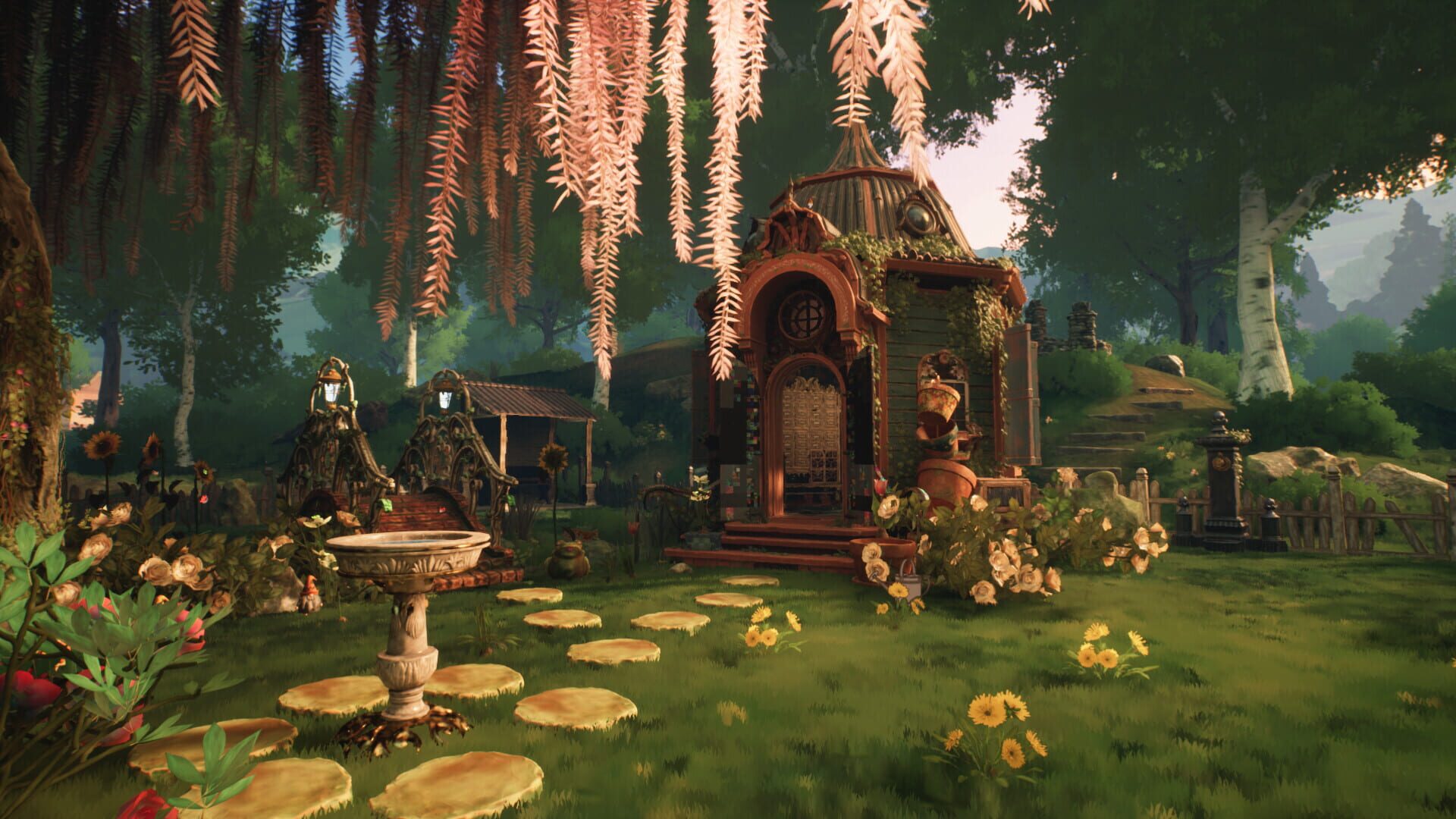
Garden Life’s visual identity is its strongest quality. stillalive Studios built the game on Unreal Engine 5 and used a painterly, pastel-forward aesthetic that sits closer to illustration than simulation. Plants render with soft procedural variation, meaning no two gardens grow into exactly the same configuration of blooms, and the overall impression is of a hand-tended space rather than a system-generated one. Reviewers have drawn comparisons to Venba for its calm, observational quality, and that framing holds: this is a game where looking at what you have made is itself a reward.
The garden occupies a single plot that expands as you complete story quests, with a nearby town accessible for purchasing seeds and decorating supplies. Town movement is handled through loading screens and dialogue boxes rather than open exploration, which limits how connected the restoration feels to its community. The townspeople who request flowers and bouquets communicate through menus rather than appearing in the garden themselves; it is a design choice that keeps the experience serene but also keeps it somewhat solitary. For a game whose central narrative is about communal restoration, that absence of visible community is a consistent tension.
The decoration system includes over 240 items, and the grid-free placement allows for genuine creative expression. The game’s visual strengths shine most clearly in a well-composed corner of a finished garden, where layered plants and ornaments create something that feels genuinely personal rather than procedurally assembled. That appeal is real.
Garden Life Cozy Simulator: Gameplay and Systems
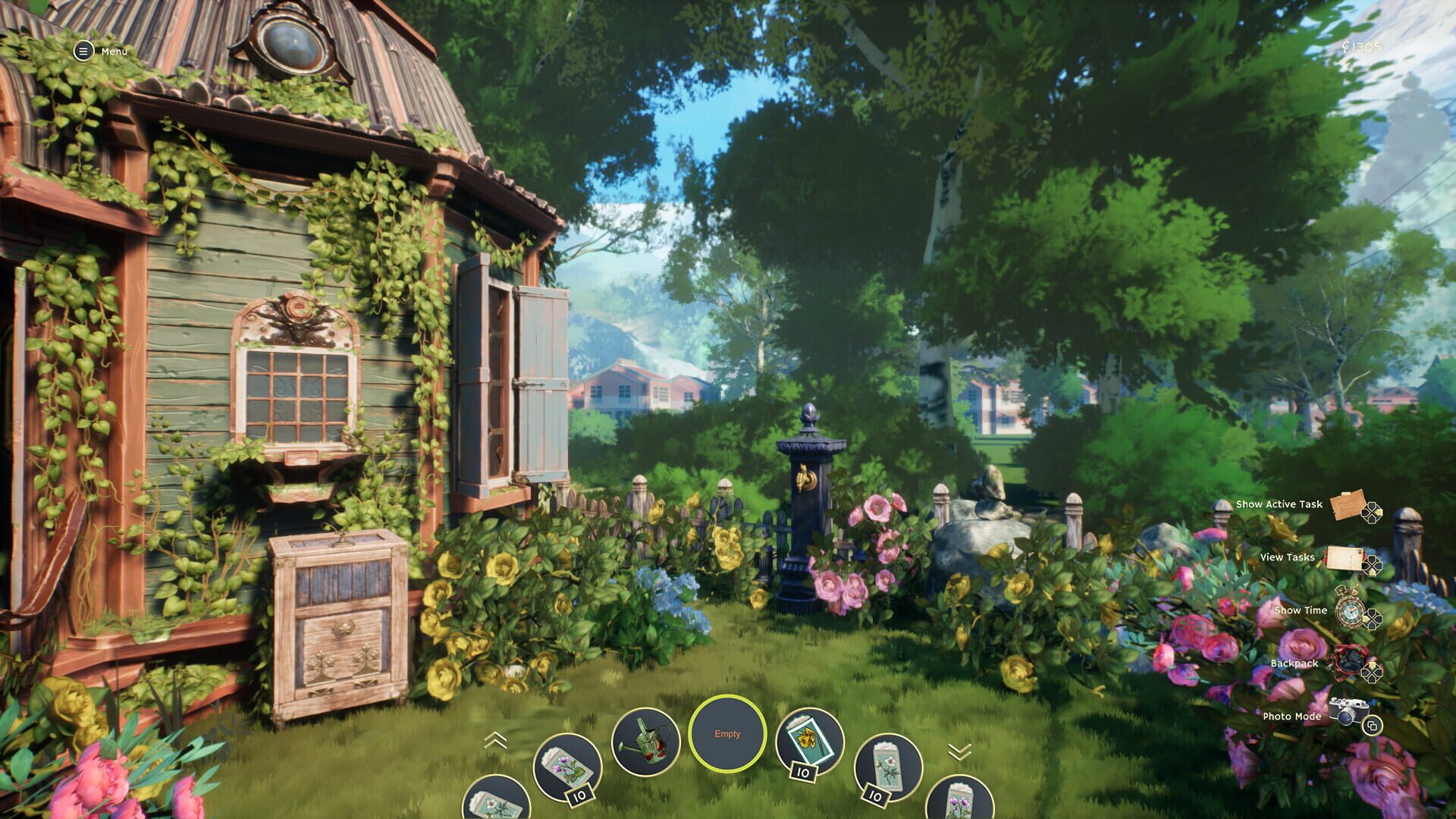
Garden Life has no combat. The loop is: plant seeds, water and tend them, harvest blooms, fulfil requests, earn currency, buy more seeds and decorations. Each stage is deliberate and low-friction. Plants grow in minutes rather than seasons, eliminating the waiting that frustrates in heavier farm sims, and the lack of time pressure means no planted bed ever dies from neglect. This framing is the game’s identity. Pressure is the cost of entry in most simulation games; here, its absence is the design.
The wrinkle is colour variants. Colour is the game’s friction point. Flowers come in multiple colour combinations, and many story quests require a specific hue. Obtaining that hue depends on random seed drops from harvested plants, creating stretches where players tend a bed of the same flower repeatedly hoping the required variant appears. At its most obstructive, this system can stall progression for what the community describes as several in-game weeks of cultivation cycles. The fertiliser and compost system accelerates growth rates but does not affect the variant RNG, so the underlying friction remains.
Tool use is intuitive: watering cans, shears, and sprinklers all handle naturally in first-person, and unlocking automated systems like greenhouse sprinklers reduces repetition in later stages. The inventory system draws consistent criticism across reviews, with limited capacity and no sorting function creating clutter as plant and petal counts expand. Items cannot be transferred between storage types without additional steps. These are usability gaps rather than fundamental design failures, but they accumulate.
Creative Mode addresses the progression friction entirely by removing quest gates and currency limits, allowing unrestricted garden building from the outset. For players who find the RNG colour system obstructive, Creative Mode is the cleaner way to experience the game’s strongest element: placing things exactly where you want them. For comparison, the resource-building loop in Anno 117: Pax Romana shows how constraint can generate engagement; Garden Life’s decision to remove constraint entirely is a deliberate and defensible alternative.
Story and Characters
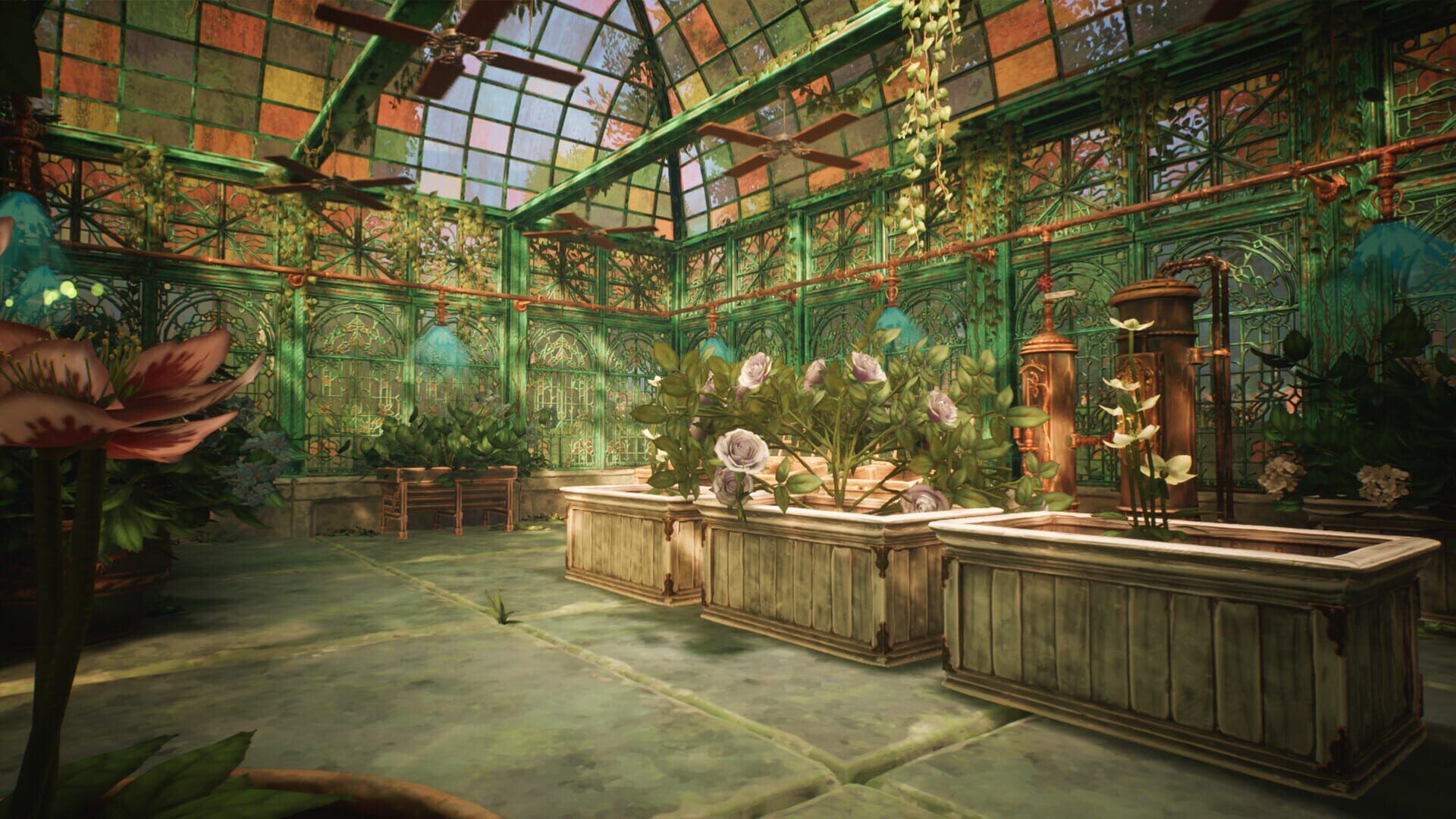
The narrative is light but present. The player inherits a neglected community garden, and early quests are guided by a ghost: the spirit of the garden’s previous caretaker, Leslie, who also runs the nearby seed shop in her living years. The framing keeps the story minimal and unobtrusive, which suits the game’s tempo. Leslie’s guidance functions more as a tutorial system than a character arc, and the town visitors who supply flower requests are interchangeable in personality.
What the story communicates effectively is a sense of custodianship. The garden existed before the player arrived, it will outlast any single planting season, and the visible transformation from overgrown lot to curated space gives the restoration work a cumulative weight that the thin narrative cannot provide on its own. The game trusts the visual progress to carry emotional meaning, and for players oriented towards that kind of satisfaction, it mostly succeeds.
No choices carry consequence here. There are no branching story paths, no relationship meters, and no narrative weight attached to what you grow or place. The story completes when the garden meets specific thresholds, at which point a brief acknowledgement scene plays and the world opens further. It is adequate scaffolding for a game that is primarily about the act of tending. Games like Tchia show what a more narrative-driven take on the same culturally specific, nature-centred premise can achieve; Garden Life makes no such ambitions and is more honest for that.
Value and Longevity
At its launch price of £34.99 / $24.99, Garden Life sat at the lower end of the cosy sim market. In 2026, widespread discounting has pushed it below £10 in most regional stores, and that price point changes the calculus considerably. At under £10, the 15–25 hours of story content represent a straightforward value proposition for anyone specifically seeking a low-pressure gardening experience.
The Creative Mode extends replay value indefinitely for players motivated by sandbox design, with the 240+ decoration items and procedural plant growth system providing enough variety for multiple distinct garden builds. Post-launch updates from stillalive Studios added further plant varieties and addressed some of the reported save file corruption issues that affected early players; the full feature list and current platform availability are listed on Nacon's official Garden Life page. The best cosy games on PS5 in 2026 include more structured options. Garden Life occupies a specific niche: pure horticulture with no monsters, no relationships, and no harvest deadlines. For that niche, the longevity is determined entirely by the player’s interest in the activity itself rather than by the content on offer.
Technical Notes
The initial release drew reports of save file corruption and game crashes, particularly on PC. Patch history from stillalive Studios has addressed the most critical of these, and the current version plays without the instability that marked early impressions. The patches have done their job. The Unreal Engine 5 implementation is modest by genre standards: loading screens separate the garden from the town, and transitions between game areas interrupt the otherwise seamless atmosphere. No performance modes are required given the gentle visual demands.
On PS5 and Xbox Series X/S, the game runs cleanly at consistent frame rates without notable technical intervention. Switch performance is functional though the procedural plant rendering shows reduced clarity in handheld mode. The inventory sound effects during item transfers drew specific mention across multiple reviews as an irritant; these have not been changed by patch. Accessibility options are not documented in available sources. For anyone considering the Nintendo Switch 2 as a cosy gaming platform, the Switch version of Garden Life is available but represents the weakest technical presentation of the available versions.
Final Word
Garden Life: A Cozy Simulator is the right game for a specific player: someone who wants to tend a garden without any of the urgency or consequence that most games import into that activity. The colour-variant RNG and inventory friction are real obstacles, but they exist inside an experience that is otherwise as low-pressure as the genre promises. At its 2026 pricing, the barrier to trying it is low enough that the question ‘is garden life worth it?’ answers itself for cosy sim fans. The clearest skip case: if you expect the ‘community’ framing to deliver social depth, the ghost-guided solitude will disappoint within the first hour. For comparable tranquillity with a stronger narrative, Venba is worth considering. If you want to spend twenty hours making a corner of a virtual world look exactly the way you envision it, Garden Life is a competent and visually generous vehicle for that ambition.
FAQ
Garden Life is worth buying in 2026 at its current discounted price, which in most regional stores sits well below £10. The 15–25 hours of story content and unlimited Creative Mode play represent reasonable value for players specifically seeking a low-pressure gardening experience. At its original launch price of £34.99 / $24.99 the case was less clear; at current pricing it is straightforward for its target audience.
Story quest completion takes approximately 15–25 hours depending on how quickly the RNG colour-variant system cooperates with required flower requests. Steam community data and achievement records suggest around 25–30 hours for players pursuing all content. Creative Mode adds open-ended sandbox play with no objective endpoint.
Story Mode guides progression through quest chains provided by a ghost of the garden's previous caretaker, requiring specific flowers and decorations to unlock new tools and garden space. Creative Mode removes all progression gates, giving players unlimited resources and decoration options from the start. Players frustrated by the random colour-drop system can switch to Creative Mode without losing their garden.
Garden Life: A Cozy Simulator is available on Nintendo Switch, released alongside the PS4, PS5, Xbox, and PC versions. The Switch version runs adequately in both handheld and docked modes, though the procedural plant rendering shows reduced visual clarity compared to the PS5 and PC versions.
Garden Life: A Cozy Simulator is a single-player-only experience with no multiplayer, co-op, or online features. The game is designed as a solitary gardening activity; there are no shared garden spaces or real-time community elements despite the community garden premise.
Please note that some links in this article are affiliate links. If you found the coverage helpful and decide to pick up the game, or anything else for your collection, through one of those links, we may earn a commission at no extra cost to you. We use this approach instead of filling Spawning Point with intrusive display ads, and rely on this support to keep the site online and fund future reviews, guides, comparisons and other in-depth gaming coverage. Thank you for supporting the site.