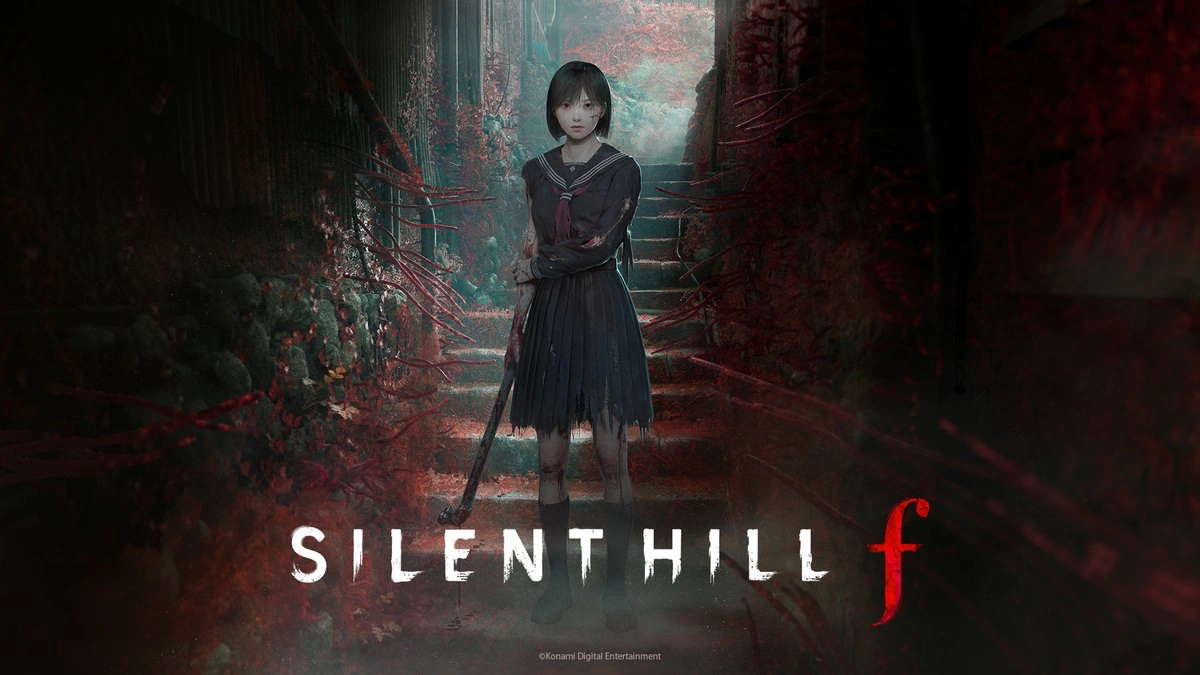
Silent Hill f is the series’ boldest left turn in years. Set far from foggy Americana, it relocates the horror to 1960s rural Japan, where high-schooler Hinako Shimizu watches her mountain town of Ebisugaoka swallowed by mist, red spider lilies and barely buried social cruelty.
On PS5, this is a lavish Unreal Engine 5 production, a mix of painterly lighting and grotesque body horror that feels deliberately at odds with the clumsy violence it asks you to enact. Combat is a constant point of friction, sometimes by design, sometimes by questionable systems design. Yet the writing, performances and structure are so strong that Silent Hill f often feels essential in spite of itself. This review focuses on the PS5 version, with particular attention to how it behaves on a PS5 Pro.
Game Snapshot
Developer: NeoBards Entertainment
Publisher: Konami Digital Entertainment
Release Date: 25 September 2025
Platforms: PS5, Xbox Series X|S, PC
Price: £69.99/$69.99 (Standard Edition RRP at launch)
Rating: PEGI 18 | ESRB M (Mature 17+)
Genre: Survival horror
Length: ~10-12 hours (main story) and ~30-40 hours (story + side content/endings)
Install Size: ~36.6 GB on PS5
Presentation and World Design
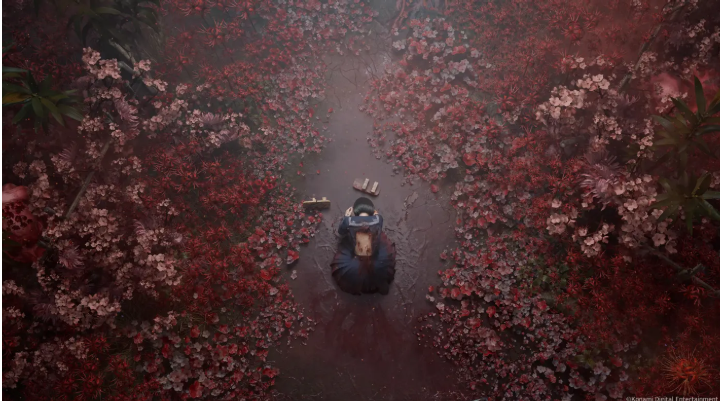
Ebisugaoka is the real star. NeoBards leans into the “beauty in terror” pitch, using UE5’s lighting to render narrow alleys, timber houses and soaked paddy fields that feel plucked from a period drama, then vandalised by something impossible. Fog rolls through the streets as carpets of red spider lilies erupt across roads and walls, their colour slicing through an otherwise muted palette.
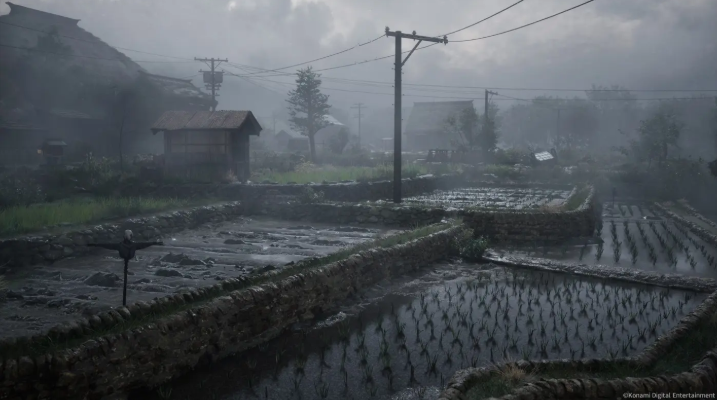
The town slowly reconfigures as Hinako’s psyche frays. Familiar locations recur with altered routes and new grotesqueries, pulling classic Silent Hill visual language into a very different cultural space. Interiors, from cramped homes to school corridors, are dense with small props and handwritten notes that quietly fill in histories of family, pollution and local superstition.
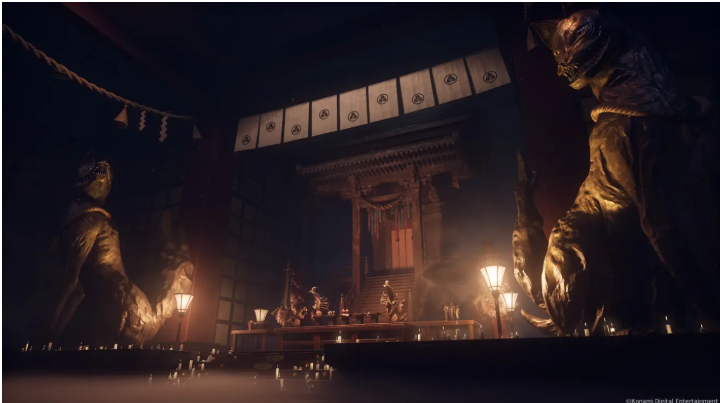
Not every scene hits the same note. Some daytime spaces are almost too clean and ordinary, briefly puncturing the dread. Yet key set-pieces, particularly the shrine-like otherworld with its twisted wood and flesh motifs, are among the most striking environments the series has seen. Cinematics are carefully framed and supported by a score that blends Akira Yamaoka’s familiar unease with period-appropriate psychedelia and folk influences.
Gameplay and Combat
Silent Hill f splits itself between exploratory survival horror and heavily structured combat arenas. Moment to moment, you move through foggy streets, rummage through side alleys for items and omamori charms, and tackle layered puzzles in schools, homes and shrines. The puzzle design is classic Silent Hill: a mix of logical riddles and deliberately obtuse brainteasers that reward paying attention to scraps of lore, even if some solutions stray into trial-and-error.
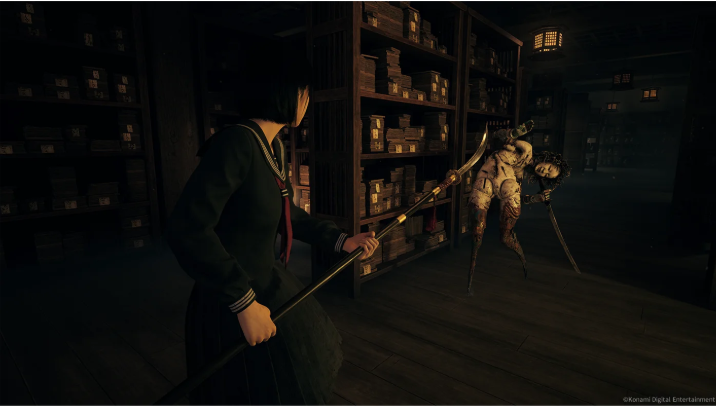
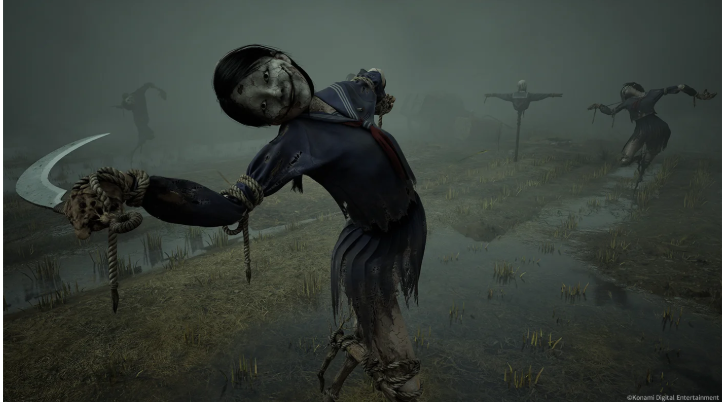
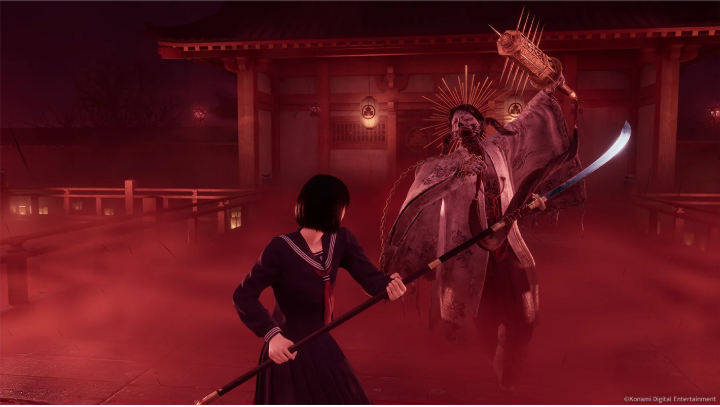
Combat is far more divisive. There are no firearms. Hinako relies on melee weapons, from pipes and sickles to improvised tools, governed by stamina and durability. Attacks are slow, with light and heavy swings, a committed dodge and tight parry windows. A sanity system and equipable charms further tweak damage, stun potential and defence. On paper this creates a deliberate, attritional rhythm. In practice, it often teeters between tense and outright aggravating.
Some players will enjoy the weighty hit-stop and the satisfaction of reading an enemy, landing a charged blow and watching them crumple. Others will bounce off erratic enemy animations, narrow invincibility windows and the game’s fondness for gauntlets that spawn waves of foes until you finally clear a threshold. Regular enemies are reused extensively, which dulls the fear, though boss encounters are usually better paced and more imaginative. Difficulty tuning is also spiky: “Story” combat is reasonable, but the default “Hard” can feel oppressive, especially late on.
Story and Characters
Hinako’s story is Silent Hill f’s greatest strength. Written by Ryukishi07, the narrative entwines supernatural horror with very grounded cruelty: an abusive alcoholic father, expectations around arranged marriage, schoolyard bullying and the pressure placed on young women in a conservative community.
Rather than lean on lore dumps about cults and gods, the game filters almost everything through Hinako and her relationships. Friends weaponise secrets against each other, rumours spread through classrooms and the town’s environmental disasters echo in its hauntings. The writing is unusually layered for a big-budget horror game, both in cut-scenes and in optional notes, and it rarely feels the need to underline its metaphors.
Structurally, Silent Hill f is built for repeat runs. There are five endings, with New Game Plus altering puzzles, adding new scenes and gently re-contextualising earlier events. That means the first conclusion can feel abrupt, more like the end of a chapter than the full stop to Hinako’s arc. If you only plan to see credits once, you will still get a coherent story, but the character work and thematic payoff really sing when you commit to at least a second journey through the fog.
Value and Longevity
A single playthrough of Silent Hill f typically runs 9–12 hours, depending on puzzle difficulty and how thoroughly you explore. With five endings, extra cut-scenes and modified routes in New Game Plus, completionists can easily push total playtime into the 30–40 hour bracket.
At a £69.99 / $69.99 RRP, this sits in the same price band as other big horror releases. The value proposition hinges on how much appetite you have for returning runs. If you are drawn to narrative experimentation, picking apart branching mysteries and seeing radically different conclusions, Silent Hill f feels generous. If you only intend to play once and already know the melee-heavy combat will grate, the package becomes harder to justify. There is currently no paid DLC, only deluxe bonuses like cosmetic outfits and soundtrack samples, so you are not being nickel-and-dimed on top of the upfront cost.
Technical Notes
On a standard PS5, Silent Hill f offers performance and quality modes. Performance targets 60 frames per second, but uses a very low internal resolution that can dip into the 360p–720p range before upscaling to around 1800p. Quality mode sharpens the image at a 30 fps cap, with occasional traversal stutter in busy areas.
On PS5 Pro, things become more complicated. The console forces an “Enhanced” mode that leans on Sony’s PSSR upscaling, rendering around 720p and reconstructing to 4K. Frame rates are generally excellent and textures can look slightly more defined, yet foliage and fine detail shimmer noticeably and image break-up in motion is hard to ignore. Multiple analyses note that the base PS5 can actually look cleaner overall, simply because it avoids the PSSR artefacts.
Cut-scenes remain 30 fps across both machines, and there are reports of visual glitches if you disable motion blur, so leaving that setting on is currently the safer choice. Accessibility options are modest: colour-blind filters, subtitle tweaks and fixed controller layouts, but no custom remapping.
Final Word
Silent Hill f is not a safe revival. It is messy, angry and laser-focused on one young woman’s experience of systemic cruelty, then literalises that cruelty as invasive fungus and twisted shrines. When you are exploring Ebisugaoka, poring over notes and edging through impossible corridors, it feels like a modern horror classic. When you are stuck in yet another melee gauntlet, it can feel like homework.
On PS5, and especially on PS5 Pro, there are real technical quirks to weigh against the visual ambition. If you can accept rough-edged combat and image-quality complaints in exchange for top-tier writing and atmosphere, Silent Hill f is easy to recommend. If you want slick action and pristine Pro enhancements, approach with caution.
FAQ
Q. Is Silent Hill f very difficult on PS5?
By default, yes. The standard combat setting is labelled “Hard” and expects you to master stamina management, dodges and parries, with enemies that hit hard and punish mistakes. There is a Story mode with more forgiving damage and simpler encounters, which makes the experience much more manageable if you are here for the narrative first. Puzzle difficulty can be set independently, so you can still keep brainteasers challenging while softening combat.
Q. How long does Silent Hill f take to beat, and how many endings are there?
A. A typical first playthrough lasts around 9–12 hours, depending on your difficulty choices and how thoroughly you explore. Silent Hill f has five endings, including a joke ending in series tradition, and New Game Plus adds new cut-scenes and altered puzzles. Seeing everything, including all endings and achievements, can comfortably stretch into the 30–40 hour range for dedicated players.
Q. How does Silent Hill f run on PS5 and PS5 Pro?
A. On a standard PS5, performance mode targets 60 fps but uses a surprisingly low internal resolution, while quality mode offers a sharper image at 30 fps with minor stutter. On PS5 Pro, the forced Enhanced mode uses PSSR upscaling, delivering generally smooth 60 fps but with noticeable shimmering and artefacts, particularly in foliage and fine detail. Several analyses suggest that, visually, the base PS5 can look more stable overall, though the Pro’s higher frame rate still feels good in motion.
Q. Do you need to have played previous Silent Hill games?
A. No. Silent Hill f is a self-contained story with its own cast, setting and mythology, and it is designed as a fresh entry point. Fans of the older games will recognise recurring ideas such as personal trauma shaping the town’s horrors, but there are no plot prerequisites and no direct cliff-hangers to resolve from earlier entries. This makes it an approachable starting place if you have always been curious about Silent Hill but never jumped in.
Q. Does Silent Hill f have co-op or multiplayer?
A. Silent Hill f is entirely single-player. There are no co-op modes, no competitive multiplayer and no live-service hooks; everything is built around Hinako’s journey through Ebisugaoka and the different ways her story can conclude. That focus allows the game to commit fully to atmosphere, puzzles and branching endings, but if you prefer horror you can play with friends online, you will need to look elsewhere.
Please note that some links in this article are affiliate links. If you found the coverage helpful and decide to pick up the game, or anything else for your collection, through one of those links, we may earn a commission at no extra cost to you. We use this approach instead of filling Spawning Point with intrusive display ads, and rely on this support to keep the site online and fund future reviews, guides, comparisons and other in-depth gaming coverage. Thank you for supporting the site.