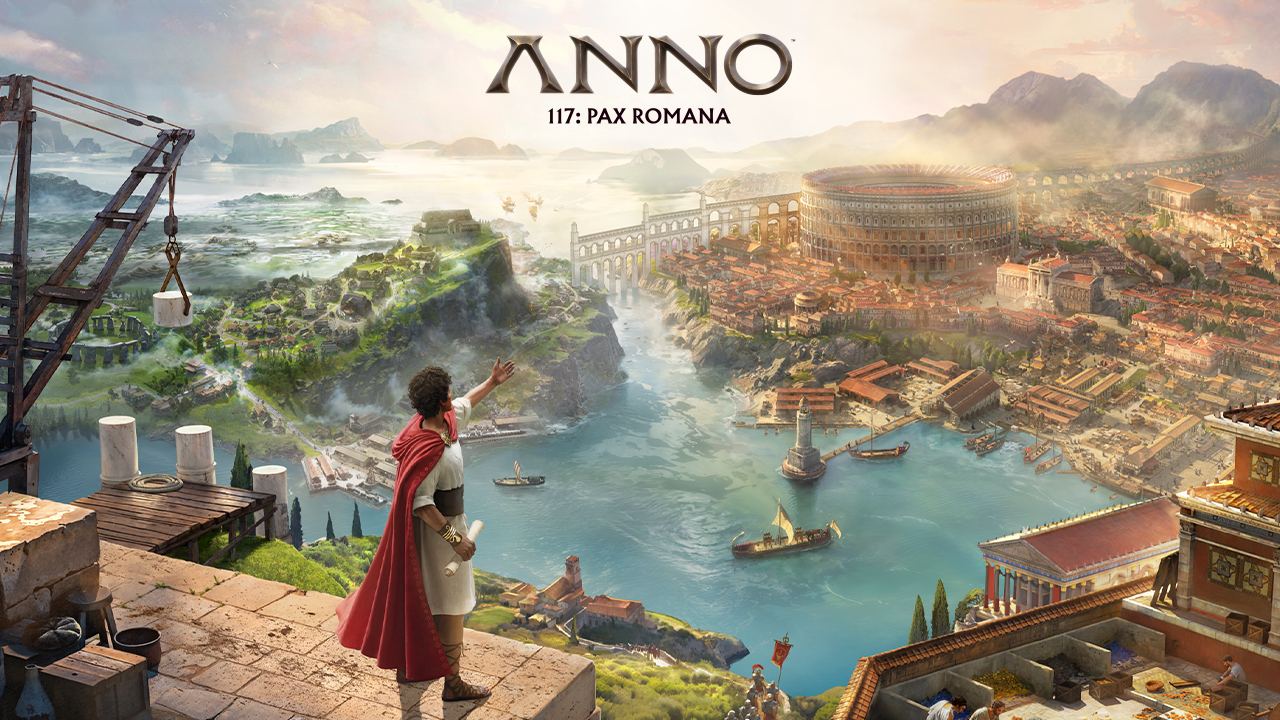
Ubisoft Mainz brings the long-running city-builder to its earliest historical setting yet, Rome in 117 AD. The pitch is simple enough: govern provinces, balance citizen needs with imperial demands, and decide how high a price you are willing to pay for peace. The twist is tone. Compared with the dense sprawl of Anno 1800, Anno 117 trims and tidies, then lays out its systems with a confident hand. The result is a more approachable loop that still asks you to think several steps ahead. It is not a revolution, and series veterans will notice the gentler learning curve, but the craft is obvious. From the dual starting regions to small quality-of-life flourishes, this is a refined entry that invites long sessions and steady growth.

Game snapshot
Developer/Publisher: Ubisoft Mainz
Release date: 13 November 2025
Platforms: PS5, Windows, Xbox Series X|S
Price: £49.99/$59.99 (Standard Edition)
Rating: PEGI 12 | ESRB T (Teen)
Genre: City-building strategy, real-time management
Length: ~20 hours (main story) | 35-40 hours (both campaign paths with side content)
Install Size: ~117 GB (PC requirement; consoles similar)
Presentation and World Design
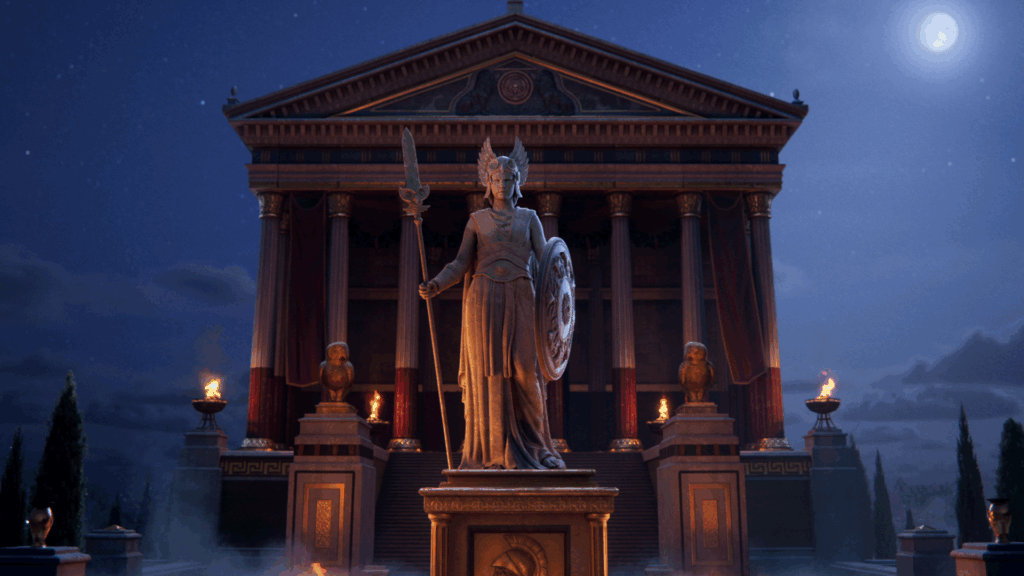
Rome sings here. The Latium and Albion maps contrast marble-and-tile order with wind-worked coasts and a cooler Celtic palette, giving each province an identity that reads at a glance. The art direction is clean and legible when zoomed out, with enough ornament when you pull in close to admire rooftops, forums, and harbours.
Quality-of-life touches help cities feel planned rather than simply paved. Diagonal placements reduce grid rigidity, a planning mode lets you sketch layouts before committing resources, and a day–night cycle politely re-dresses familiar scenes without obscuring information or key overlays. Multiple reviews praise the visual clarity and Roman detail, even if character close-ups still take a back seat to architecture and terrain.
Performance on PS5 is reported as stable, with PS5 Pro primarily improving image quality and lighting rather than radically altering the overall look. Community capture suggests the console versions target 30 frames per second, trading outright smoothness for consistent pacing in large, late-game cities. On balance, presentation stands out as a strength even when the camera is busy tracking far-flung trade routes.
Gameplay and Combat
The familiar Anno loop returns: produce, refine, and route goods to satisfy tiered citizen needs, then use surplus to unlock new buildings, research, and civic upgrades. Chains are a little cleaner than in 1800, and the interface does a good job exposing bottlenecks, overproduction, and efficiencies. That streamlining will please newcomers. Veterans may wonder if the simpler web dents long-term depth. In practice it mostly shifts complexity to scale and logistics. Once several islands and trade lanes are in play, the numbers will still keep you busy.
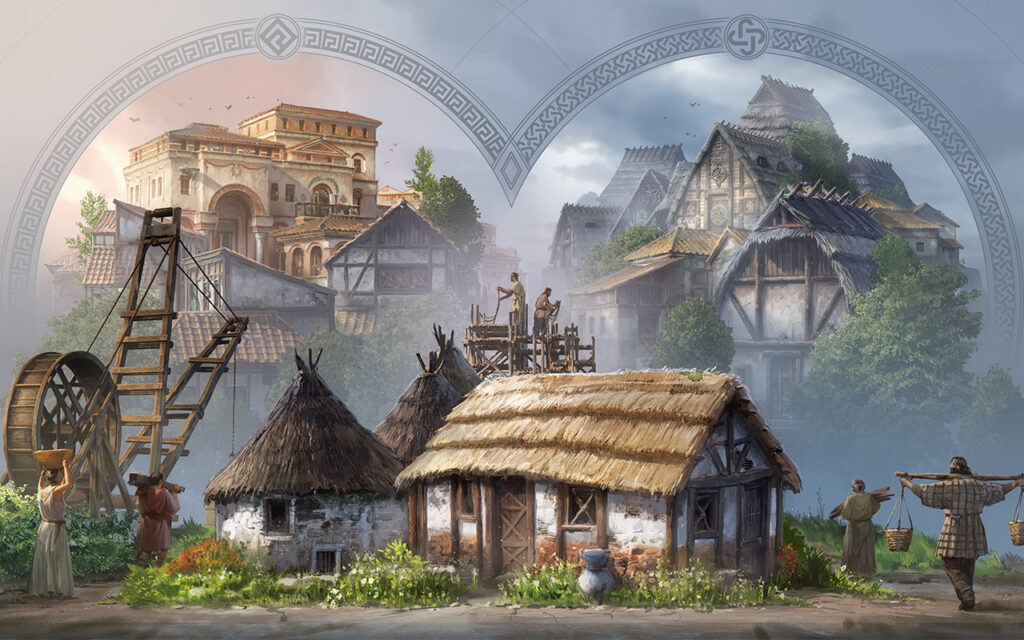
Two structural decisions stand out. First, you choose a starting province. Latium leans into Roman order; Albion pushes back with Celtic texture and trickier terrain, making expansion planning feel different even with familiar toolsets. Second, faith and civic systems nudge you to consider identity as well as output. You can lean into Romanisation or preserve local culture, and the choice echoes through your build priorities and production bonuses.
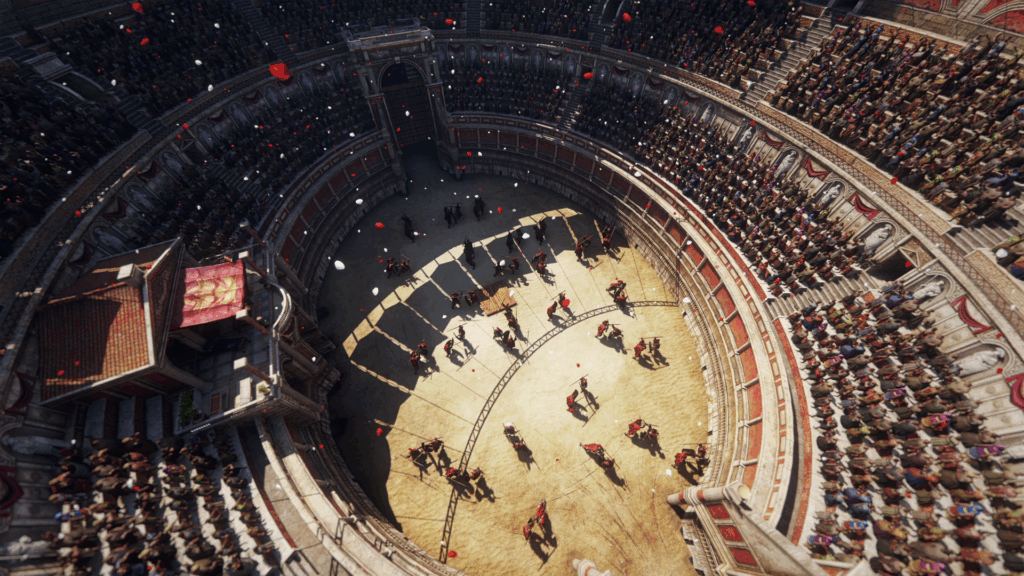
Land warfare returns, but in measured form. It works as a pressure valve and a way to redraw the map rather than a deep tactical layer. Expect rock–paper–scissors interactions and positional play, not a full-blown RTS within your city-builder. If you come looking for a proper strategy battle game, you will find a capable sideshow rather than a headliner. The long game remains about supply, demand, and the art of keeping promises made to both citizens and emperor.
Story and Characters
Anno’s campaigns have often read like extended tutorials with personality. Pax Romana continues that trend with a stronger sense of place. You play a Roman governor dropped into provinces at the empire’s height, and the narrative frames your decisions with gentle questions about loyalty, reform, or quiet resistance. It sprinkles lightly educational context without turning the whole into a lecture.
Story choices tend to flavour rather than wholly redirect the journey. Dialogue and cutscenes frame major chapter beats, and certain decisions nudge faction relationships or resource opportunities, but this is not a sweeping, branching epic. Several outlets describe the story as engaging and surprisingly characterful for a city-builder, yet ultimately still a scaffold for sandbox and systems rather than the main attraction. If you want framing and gentle stakes before diving into endless play, it does the job neatly.
Value and Longevity
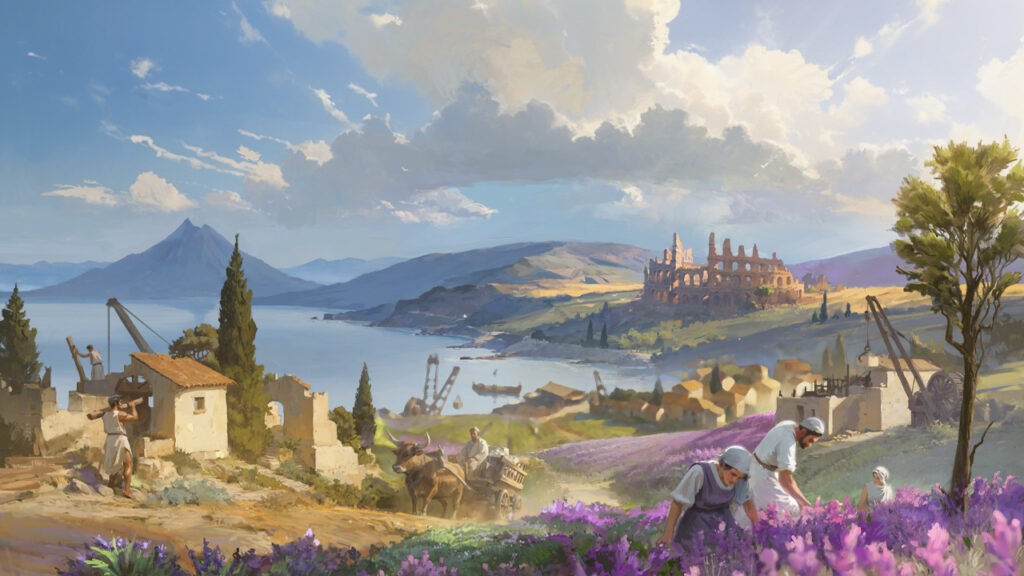
Expect a shorter campaign than Anno 1800. Early player reports suggest you will see the main story arc through in roughly 10–15 hours if you focus on chapter objectives, and potentially much longer if you potter about between quests. As usual for the series, the sandbox and multiplayer modes carry most of the long-tail value, and they are where the more intricate, late-game city puzzles really emerge.
Post-launch support is already sketched out. A Year 1 Pass bundles three DLCs (Prophecies of Ash, The Hippodrome, and Dawn of the Delta) plus cosmetic bonuses, teasing new provinces and themed mechanics beyond the launch map. If you relish long, contemplative city-builders, Pax Romana offers excellent hours per pound, and the roadmap suggests more to come.
Technical Notes
On PS5, Pax Romana feels properly bedded in. UI elements scale cleanly on a living-room screen, text stays legible even when the city is at its busiest, and the overall image is sharp without being over-processed. I ran the game primarily in its performance mode, which holds a steady frame-rate during large fires, busy trade routes, and fast camera sweeps. PS5 Pro adds a touch more clarity and depth to the lighting, but the experience is broadly the same moment to moment. Bugs are present but minor: the odd animation hitch, a tooltip sticking around longer than it should, nothing that cost me a save or a city. Accessibility is decent rather than exhaustive, with sensible options for camera, text, and input, but little in the way of deeper customisation.
Final Word
Anno 117 does not try to out-complex its predecessor. It refines instead, tidying the edges, then opening the door a little wider. That choice may disappoint players who wanted an even busier web of production, yet it pays off for those who enjoy watching a city breathe without pausing every minute to untie knots. The Roman setting is handsome, the interface is considerate, and the campaign gives enough narrative to colour your early hours before sandbox takes over. If you loved the Anno rhythm but bounced off 1800’s heft, this is an easy recommendation. If you live for late-game optimisation and maximalist systems, you will still find plenty to chew on, just with fewer spiky bits.
FAQ
Q. Is Anno 117 a good entry point for newcomers on PS5?
A. Yes. Reviews consistently praise its approachable systems, clearer onboarding, and tidy UI, making it friendly to first-timers on console.
Q. How long is the campaign?
A. Most outlets report a shorter run than Anno 1800, commonly around the mid-teens of hours, with the sandbox offering far more time thereafter.
Q. Does Anno 117 support keyboard and mouse on PS5?
A. Yes, keyboard and mouse are supported on PS5, alongside DualSense.
Q. What about post-launch DLC?
A. Ubisoft has announced a Year 1 Pass with multiple content drops, including a major new
province and themed additions.
Please note that some links in this article are affiliate links. If you found the coverage helpful and decide to pick up the game, or anything else for your collection, through one of those links, we may earn a commission at no extra cost to you. We use this approach instead of filling Spawning Point with intrusive display ads, and rely on this support to keep the site online and fund future reviews, guides, comparisons and other in-depth gaming coverage. Thank you for supporting the site.